



கம்பராமாயணம் 1869 · அயோத்தியா 4.187
பாடல் · The poem
Tap a word to see its gloss in the commentary and where else it occurs.
பொருள் · Meaning in Tamil
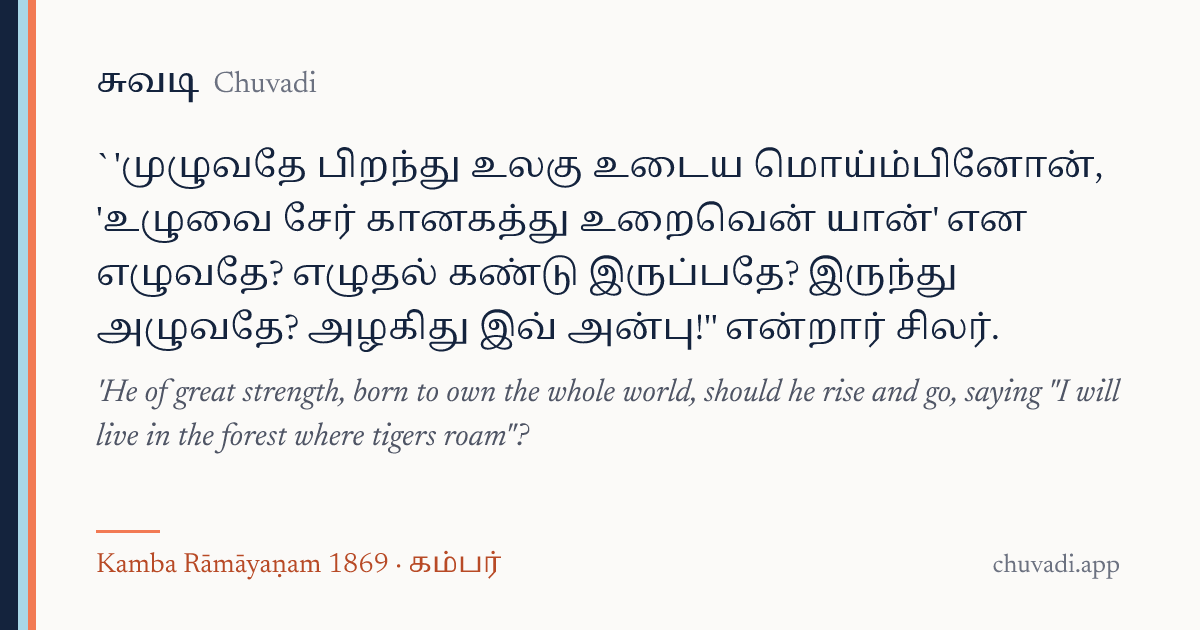
சிலர் -; பிறந்து உலகு முழுவதே உடைய மொய்ம்பினோன் - மூத்தவனாகப் பிறந்து உலகம் முழுவதையும் தனக்கு உடைமையாகப் பெற்ற வலிமை உடைய இராமன்; “உழுவை சேர் கானகத்து உறைவென் யான்” என எழுவதே? - புலி உள்ள காட்டில் தங்குவேன் யான் என்று சொல்லிப் புறப்படுவதா; எழுதல் கண்டு இருப்பதே? - அவன் புறப்படுவதைப் பார்த்தும் (உடன் செல்லாமல்) நாம் இங்கு சும்மா இருப்பதா; இருந்து அழுவதே? -; இவ் அன்பு அழகிதே? - (நாம் இவனிடத்தில் வைத்த அன்பு அழகாயிருந்தது; ' என்றார்.
“எழுவதே? எழுதல் கண்டு இருப்பதே? இருந்து அழுவதே?' இவ் வடியில் ஒரு சொல்லை இன்னொரு சொல் பற்றித் தொடர்ந்து வந்துள்ள அழகு காண்க. “ஒற்றைச் சரமாலையணி' என இதனைக் கூறுவர்; வடமொழியில் “ஏகாவளி' எனப்பெறும்.
ஆங்கிலம் · English translationAI
Translation
- 'He of great strength, born to own the whole world,
- should he rise and go, saying "I will live in the forest where tigers roam"?
- Should we see him go and stay behind? Stay behind
- and weep? How fine this love of ours is!' said some.
What the poem says
Some citizens turn their anger on themselves. Irāmaṉ, the eldest son and rightful master of the world, is leaving for a tiger-haunted forest. Are they going to watch him go, stay at home, and just cry? What a fine love theirs has turned out to be.
The third line chains its words, each phrase picking up the one before: 'rise... seeing him rise, stay... staying, weep'. Tamil rhetoric calls this a single-strand garland; in Sanskrit it is ekāvalī.