



கம்பராமாயணம் 189 · பால 5.21
பாடல் · The poem
Tap a word to see its gloss in the commentary and where else it occurs.
பொருள் · Meaning in Tamil
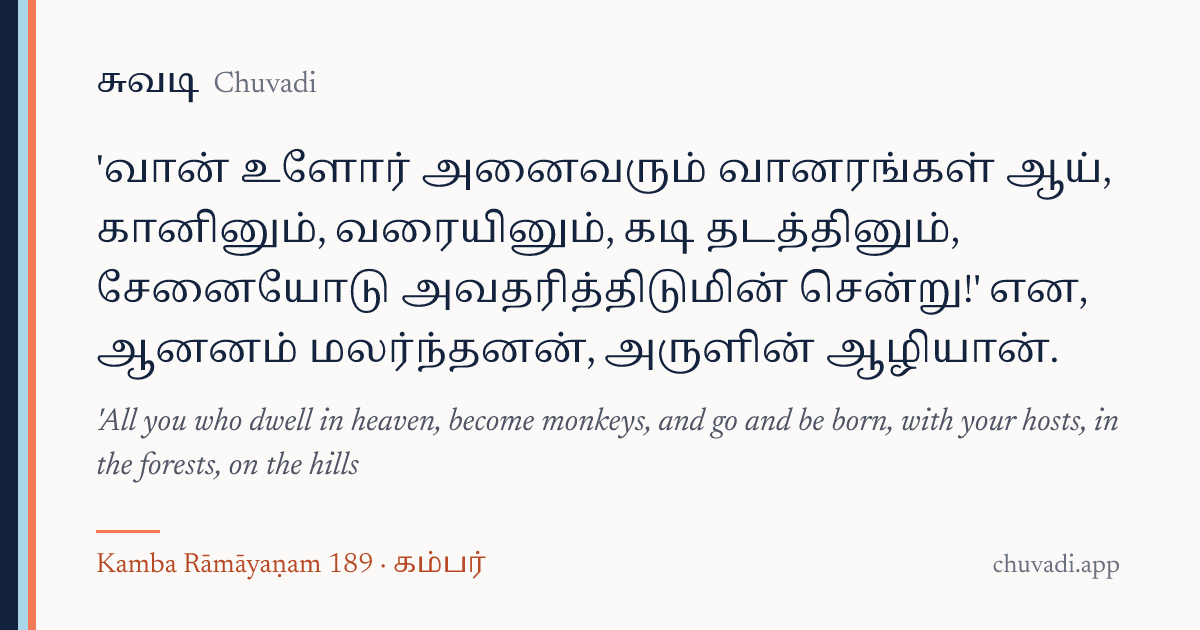
வான் உளோர் அனைவரும் வானரங்களாய் - விண்ணுலகில் வாழும் தேவர்கள் ஆகிய நீங்கள் எல்லோரும் குரங்கினங்களாக, கானினும், வரையினும் கடிதடத்தினும் சென்று சேனையோடு அவதரித்திடுமின் - காடுகளிலும், மலைகளிலும், அம்மலைத் தாழ் வரைகளிலும் சென்று, பிறப்பீராக; என, அருளின் ஆழியான் ஆனனம் மலர்ந்தனன் - என்று, கருணைக் கடலான திருமகள் நாயகன் திருவாய் மலர்ந்தருளினான்.
சேனை: கூட்டம். கூட்டத்தோடு சென்று பிறப்பீராக என்றான் என்பது பொருள். கான்: காடு. கடிதடம்: மணம்மிக்க சோலையுமாம். ஆனனம்: முகம். வடமொழியில் வாயைக் குறிக்கும் சொல் இல்லையாதலால் ஆனனம் என்பதே வாய்க்கும் ஆகிவரும் என்பதால் வாய்திறந்து கூறுதல் என்னும் பொருளில் இது வந்தது.
இராவணன் பிரமனிடம் வரம்பெறும் போது, மனிதர் குரங்குகளை அற்பமாக எண்ணி, முனிவர் தேவர் அசுரர்களால் தனக்கு மரணம் நேரக்கூடாது என்று வரம்கேட்டு மனிதர் குரங்குகளை நினைக்காமல் விட்டான். திருமால், தான் மனிதனாகவும், தேவர்கள் வானரங்களாகவும் செல்வதே இராவணனை அழிக்கும்வழி என எண்ணிக் கூறினார் என்பது கருத்து.
ஆங்கிலம் · English translationAI
Translation
- 'All you who dwell in heaven, become monkeys,
- and go and be born, with your hosts, in the forests, on the hills
- and in the fragrant valleys!' Thus
- the ocean of grace opened his lips and spoke.
What the poem says
Viṣṇu tells the gods to be born on earth as monkeys, in great troops, in the forests and mountains. They will be his army against Irāvaṇaṉ.
The commentary explains the reason. When Irāvaṇaṉ asked Brahmā for invulnerability, he listed gods, sages and demons but scorned to mention men and monkeys. So Viṣṇu will come as a man and the gods as monkeys.