



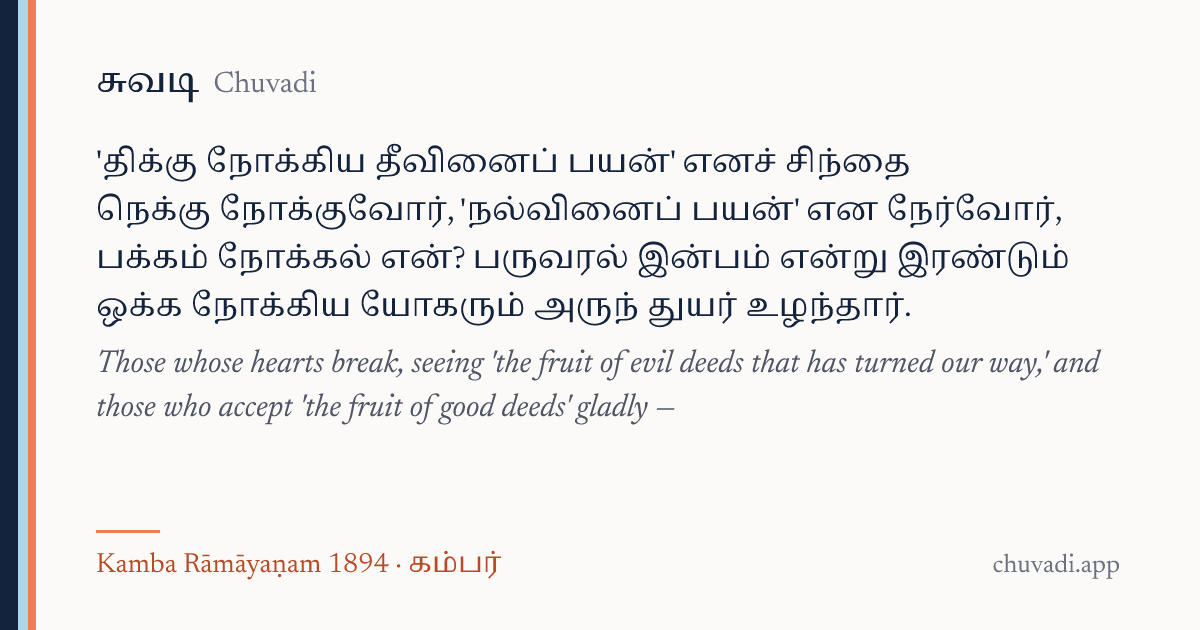
கம்பராமாயணம் 1894 · அயோத்தியா 4.212
பாடல் · The poem
Tap a word to see its gloss in the commentary and where else it occurs.
பொருள் · Meaning in Tamil
பருவரல் இன்பம் என்று இரண்டும் - துன்பம், இன்பம் என்ற இரண்டையும்; ஒக்க நோக்கிய யோகரும் - சமமாகப் பார்க்கின்ற ஞான யோகிகளும்; அருந்துயர் உழந்தார் - அரிய துன்பத்தில் வருந்தினார் (என்றால்); “திக்கு நோக்கிய தீவினைப்பயன்' எனச் சிந்தை நெக்கு நோக்குவோர் - தம் இடத்தை நோக்கி வந்த தீவினையின் பயன் இது என்று மனம் உடைந்து துன்புற்றுப் பார்ப்பவர்; “நல்வினைப் பயன்” என நேர்வோர் - இது நல்வினையால் விளைந்த பயனாகும் என்று உடன்பட்டு மகிழ்வோராகிய; பக்கம் நோக்கல் என் - உலக மக்களிடத்து - ஆராய்ந்து கூற என்ன உள்ளது?
தீவினையில் துவண்டு நல்வினையில் மகிழும் உலகினர் பற்றிச் சொல்ல என்ன உள்ளது? என்றார். ஏனெனின் சமநிலை உடைய ஞானிகளே துயர் வடித்தனர் ஆகலின். 1702, 1763 ஆம் பாடல்களில் வசிட்டன் உணர்வு குறித்தமை இங்கு ஒப்பிட்டுணரத் தக்கது.
ஆங்கிலம் · English translationAI
Translation
- Those whose hearts break, seeing 'the fruit of evil deeds that has turned our way,'
- and those who accept 'the fruit of good deeds' gladly —
- why look at their side? Even the yogis who look on
- sorrow and joy, both alike, suffered bitter grief.
What the poem says
Ordinary people break down when bad fortune comes and rejoice at good fortune, so of course they grieve; there is nothing to say about them. But even the yogis, who have trained themselves to treat pleasure and pain alike, are overwhelmed with sorrow. The poet points back to the earlier verses on the sage Vacittaṉ's grief.