



கம்பராமாயணம் 1898 · அயோத்தியா 4.216
பாடல் · The poem
Tap a word to see its gloss in the commentary and where else it occurs.
பொருள் · Meaning in Tamil
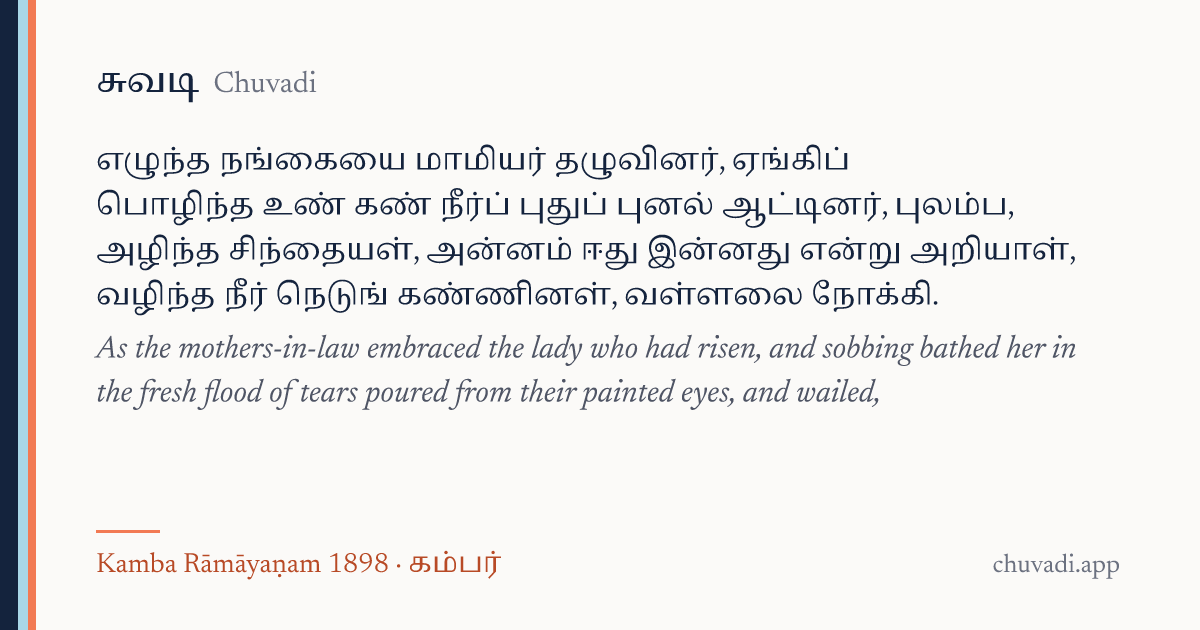
எழுந்த நங்கையை - (கணவனை நோக்கி) எழுந்த சீதையை; மாமியர் -; தழுவினர் - தழுவிக்கொண்டு; ஏங்கி - அவலித்து; பொழிந்த உண்கண் நீர்ப்புதுப்புனல் ஆட்டி - சிந்திய மையுண்ட கண்களிலிருந்து வரும் நீராகிய புதிய நீரில் நீராட்டி; புலம்ப - வருந்த; அழிந்த சிந்தையள் அன்னம் - அதனால் கெட்டழிந்த மனம் உடையளாய சீதை; ஈது இன்னது என்று அறியாள் - இதற்குக் காரணம் இன்னது என்று அறியாதவளாம்; வழிந்த நீர் நெடுங் கண்ணினள் - வழிகின்ற நீரினை உடைய நீண்ட கண்களோடு; வள்ளலை நோக்கி - இராமனைப் பார்த்து,
இதுகாறும் அழுகையை அறியாதவர் அழுத கண்ணீராதலின் 'புதுப்புனல்' என்றார். இது குளகச்செய்யுள்.
ஆங்கிலம் · English translationAI
Translation
- As the mothers-in-law embraced the lady who had risen, and sobbing
- bathed her in the fresh flood of tears poured from their painted eyes, and wailed,
- she, the swan, her mind shattered, not knowing what this was,
- her long eyes streaming with tears, looked at the generous one and —
What the poem says
The queens throw their arms around Cītai and bathe her in tears; these are called 'fresh' waters because these women had never wept before. Distraught and not knowing what has happened, Cītai turns to Irāmaṉ with tears in her eyes. The sentence is left unfinished; her question follows in the next verse.