



கம்பராமாயணம் 1901 · அயோத்தியா 4.219
பாடல் · The poem
Tap a word to see its gloss in the commentary and where else it occurs.
பொருள் · Meaning in Tamil
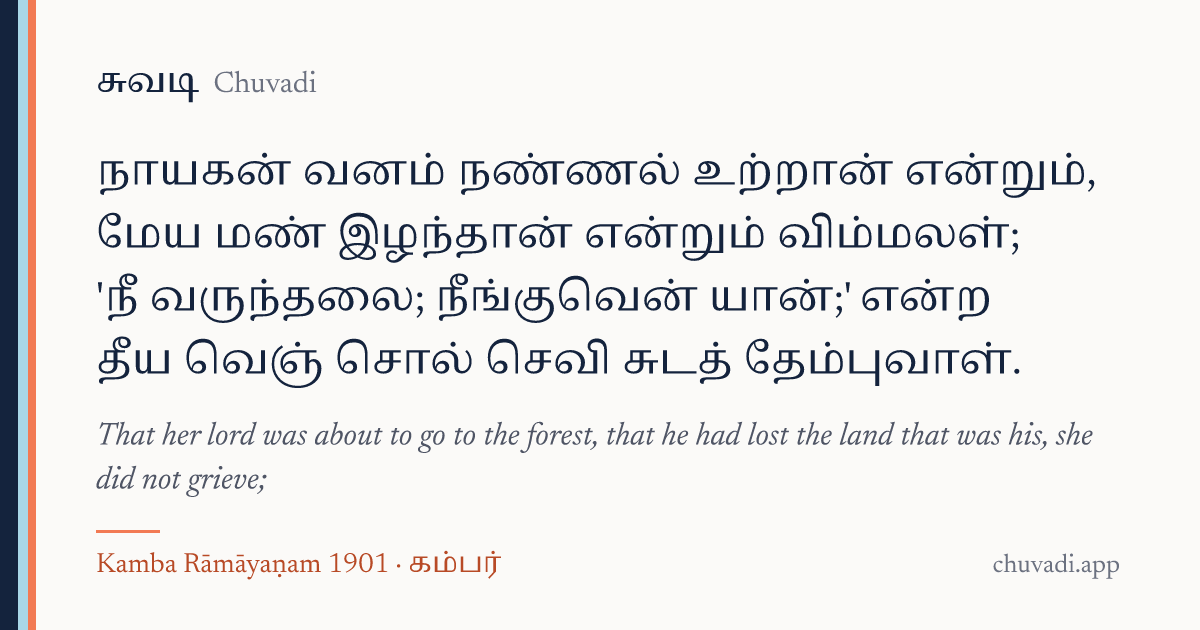
(அது கேட்ட சீதை) நாயகன் வனம் நண்ணல் உற்றான் என்றும் - தன் கணவன் இராமன் காடு செல்லப்போகிறான் என்றும்; மேய மண் இழந்தான் என்றும் - தனக்குரிமையாகப் பொருந்திய இராச்சியத்தை இழந்துவிட்டான் என்றும் (கருதி); விம்மலள் - வருந்தினாள் அல்லள்; “யான் நீங்குவென், நீ வருந்தலை' என்ற தீய வெஞ்சொல் - யான் காடு செல்வேன் நீ வருத்தமுறாதே என்று சொல்லிய மிகக் கொடிய சொல், செவி சுடத் தேம்புவாள் - தன் காதுகளைச் சுட்டெரிக்க அதனால் வாடுவாள் ஆனாள்.
அவன் இழப்புக்கு வருந்தாமல், அவனைத் தான் பிரியும் பிரிவுக்கும், அதனால் வருந்தாதே என்று சொல்லிய சொல்லுக்குமே வருந்தினாள் என்பதாம். எந்நிலையிலும் அவனைப் பிரியாமையே அவள் கருத்தாம். தன்னைப் பிரிவதில் அவன் கவலை உறவில்லையே என்பதும் அவள் ஏக்கமாகும்.
ஆங்கிலம் · English translationAI
Translation
- That her lord was about to go to the forest,
- that he had lost the land that was his, she did not grieve;
- but the cruel, burning words, 'Do not grieve; I am leaving,'
- scorched her ears, and she wept.
What the poem says
Cītai is not upset that Irāmaṉ is losing the kingdom or going to the forest. What wounds her are his words 'I am going; don't grieve', which burn her ears. They mean he plans to leave her behind, and seems untroubled at being parted from her. All she wants is never to be separated from him.