



கம்பராமாயணம் 1902 · அயோத்தியா 4.220
பாடல் · The poem
Tap a word to see its gloss in the commentary and where else it occurs.
பாட வேறுபாடு · Project Madurai reads
பொருள் · Meaning in Tamil
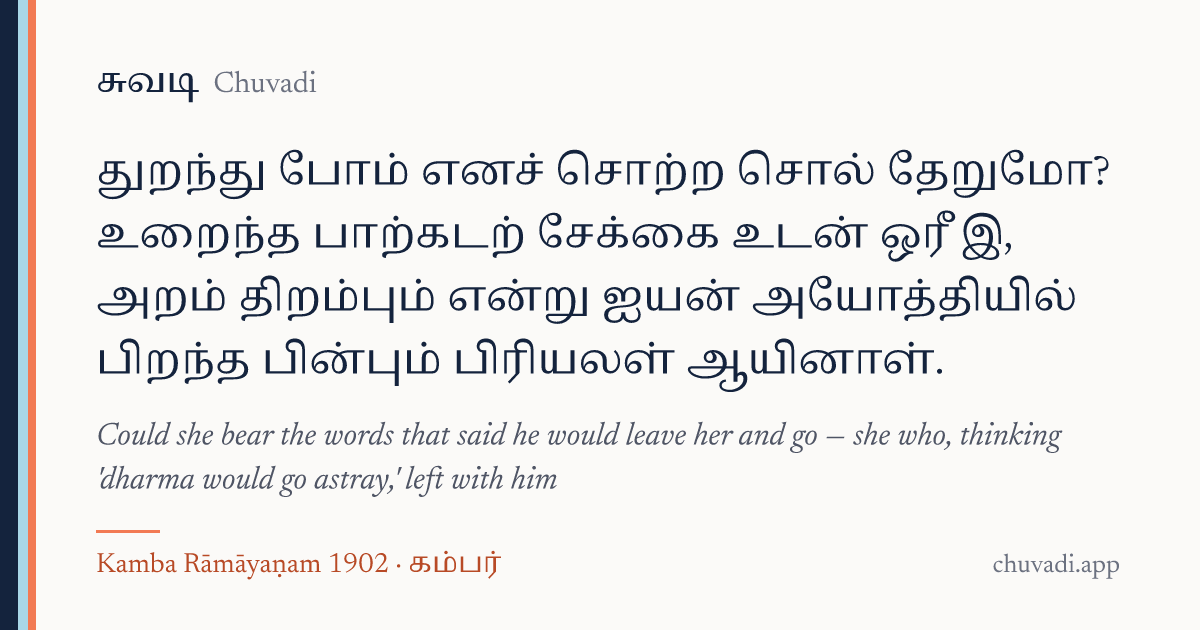
(நாமும் உடன் அவதரிக்காவிட்டால்) “அறம் திறம்பும்” என்று - தருமம் நிலைகெடுமே என்று கருதி; உறைந்த பாற்கடல் சேக்கை தாம் - வசித்த பாற்கடலில் உள்ள ஆதிசேடனாகிய படுக்கையை, உடன் ஒரீஇ - ஒன்றாக விட்டு நீங்கி; ஐயன் - திருமால்; அயோத்தியில் பிறந்தபின்பும் - அயோத்தியில் அவதரித்த பிறகும்; பிரியலள் ஆயினாள் - அவனைப் பிரியாது உடன் உறைய வந்தவள் ஆகிய சீதை; துறந்துபோம் எனச் சொற்ற சொல் - தன்னைப் பிரிந்து விட்டுப் போவேன்” எனப் பொருள்படுமாறு அவன் சொன்ன சொல் கேட்டு; தேறுமோ? - ஆற்றுவளோ?
ஐயன் மட்டும் அவதாரம் செய்தால் “அறம் திறம்பும்' என்று கருதி, அதற்காகவே தானும் உடன் அவதரித்தவள், இப்போது பிரிவதைத் தாங்க இசைவளோ?
ஆங்கிலம் · English translationAI
Translation
- Could she bear the words that said he would leave her and go —
- she who, thinking 'dharma would go astray,' left with him
- the couch on the milk ocean where they dwelt,
- and even after her lord was born in Ayōtti, would not be parted from him?
What the poem says
Cītai is the goddess Tiru, consort of Tirumāl. When he left his serpent couch on the ocean of milk to be born as Irāmaṉ, she came down with him, fearing that righteousness would fail if she did not, and she was never to be apart from him. How could she accept words telling her that he would now go without her?