



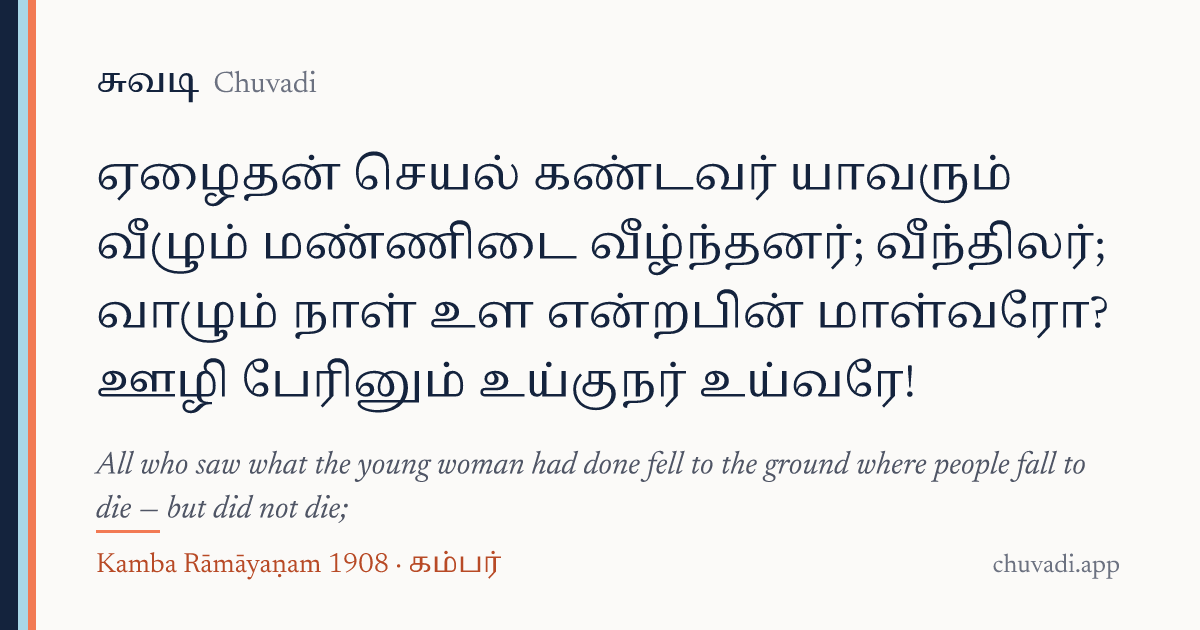
கம்பராமாயணம் 1908 · அயோத்தியா 4.226
பாடல் · The poem
Tap a word to see its gloss in the commentary and where else it occurs.
பொருள் · Meaning in Tamil
ஏழை தன் செயல் - சீதையின் மரவுரி உடுத்த செயலைக்; கண்டவர் யாவரும் - பார்த்த எல்லோரும்; வீழும் மண்ணிடை வீழ்ந்தனர் - இறத்தற்கு இடமான நிலத்தில் விழுந்தார்கள்; வீந்திலர் - இறக்கவில்லை; வாழும் நாள் உள என்றபின் - ஆயுள் நாள் இன்னும் இருக்குமானால் அவர்கள்; மாள்வரோ? - இறப்பார்களோ; ஊழி பேரினும் - பிரளயமே நேரிட்டாலும்; உய்குநர் உய்வர் - பிழைக்கும் விதி உள்ளவர் பிழைப்பர்.
மிக்க சோகமும் உயிர்த்துடிப்பும் நிகழ்ந்தது கண்டவர் வீழ்ந்து இறக்காமைக்குக் காரணம் அவர்களுக்கு ஆயுள் உள்ளமையே அன்றி வேறன்று என்றார். வேற்றுப்பொருள் வைப்பணி. “ஏ' காரம் ஈற்றசை.
ஆங்கிலம் · English translationAI
Translation
- All who saw what the young woman had done
- fell to the ground where people fall to die — but did not die;
- if days of life are still left to them, will people perish?
- Even if the world's end should come, those destined to survive will survive.
What the poem says
Everyone who sees Cītai in bark cloth collapses as if struck dead, yet none of them dies. The poet explains with a general truth: those whose lifespan has not run out will not die, and those fated to survive will survive even the end of the world.