



கம்பராமாயணம் 1919 · அயோத்தியா 5.2
பாடல் · The poem
Tap a word to see its gloss in the commentary and where else it occurs.
பொருள் · Meaning in Tamil
அச்செம்பொன் தேர் - அந்தச் செம்பொன்னால் செய்த (இராமன் ஏறிச்சென்ற) தேர்; கைகள் நீர் பரந்து - பக்கம் எல்லாம் நீர் பரவி; கால் தொடர - வாய்க்கால் போலப் பின்பற்றி வர; கண் உகும் - மக்கள் கண்களில் இருந்து பெருகுகின்ற; வெய்ய நீர் வெள்ளத்து - கொடிய நீர்ப் பெருக்கினிடையே; மெள்ளச் சேறலால் - மெதுவாகச் செல்லுதலால், ஏழ் உலகும் ஒன்றான நீர் - ஏழுலகங்களும் ஒன்றாகிப் போன உகாந்த காலத்துப் பிரளய நீர்ப்பெருக்கில்; உய்ய - உலகம் பிழைக்க வேண்டி; உழல் - மெல்லச் சுற்றித் திரிகிற, தெய்வ மீன் - திருமாலின் அவதாரமாகிய மீனை; ஒத்தது - ஒத்திருந்தது.
மக்கள் வெள்ளம், கண்ணீர் வெள்ளம் ஆகியவற்றிடையே தேர் மெதுவாக மீன்போலச் செல்லுகிறது. திருமாலின் முதல் அவதாரம் மீன்; உகாந்த காலத்து வெள்ளத்தில் உலகைக் காக்க மெல்ல மெல்லச் சுற்றிய அம்மீனை இங்கே மெல்லச் செல்லும் தேர்க்கு உவமையாக்கினார். பிரமனிடத்திருந்த சோமுகன் கவர்ந்து சென்ற வேதங்களை மீட்கத் திருமால் மீனாகத் தோன்றி, பிரளய வெள்ளத்தில் சுழன்று திரிந்து சோமுக அசுரனைத் தேடிப் பிடித்து அழித்து, அவன் கவர்ந்து சென்ற வேதங்களை மீட்டுக் கொணர்ந்த கதையைப் பாகவதத்தில் காண்க. கை - பக்கம். “அரோ” அசை.
ஆங்கிலம் · English translationAI
Translation
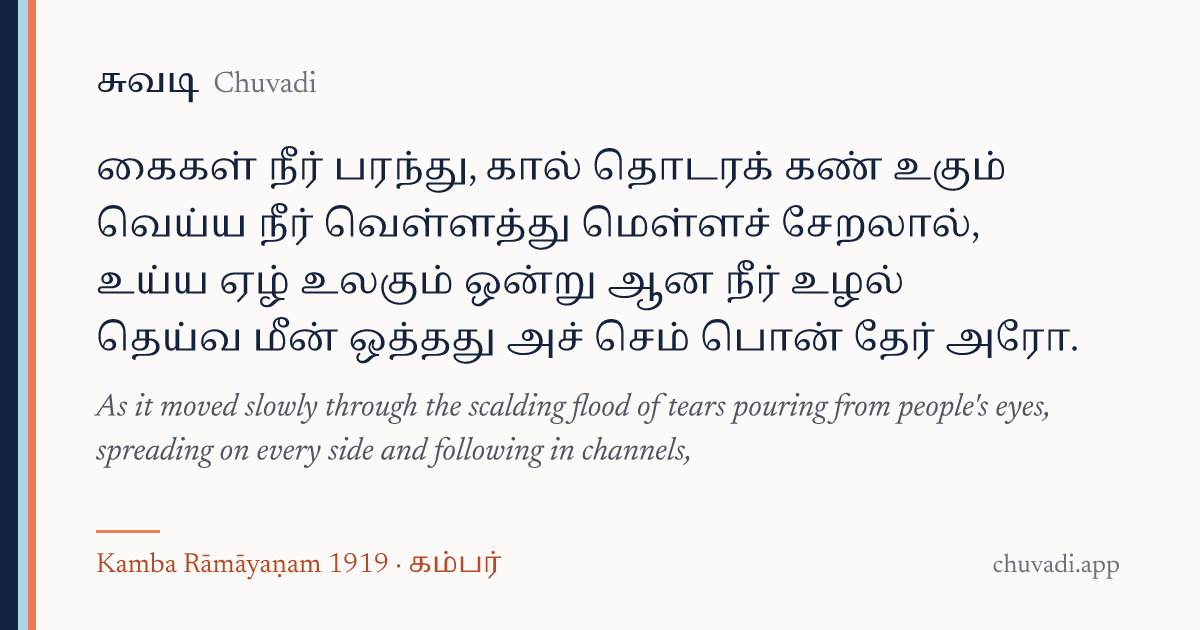
- As it moved slowly through the scalding flood of tears
- pouring from people's eyes, spreading on every side and following in channels,
- that chariot of red gold was like the divine fish
- that roamed the waters where all seven worlds had become one, so that they might be saved.
What the poem says
Irāmaṉ's golden chariot inches forward through the crowd and a flood of tears that spreads all round it and follows in streams. The poet compares it to Tirumāl's first incarnation, the divine fish that swam slowly through the deluge at the end of an age to save the world. In that story the god as a fish searched the flood, killed the demon who had stolen the Vedas from Piramaṉ, and recovered them.