



கம்பராமாயணம் 1920 · அயோத்தியா 5.3
பாடல் · The poem
Tap a word to see its gloss in the commentary and where else it occurs.
பாட வேறுபாடு · Project Madurai reads
பொருள் · Meaning in Tamil
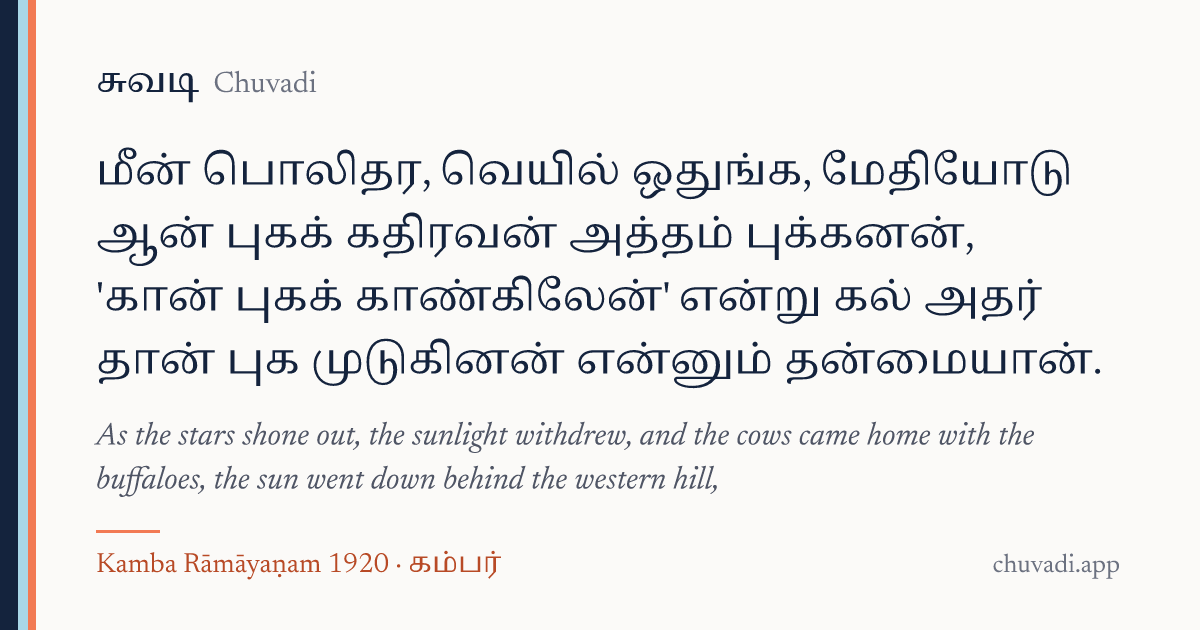
கதிரவன் - சூரியன்; “கான்புகக் காண்கிலேன்' என்று - (இராமன்) காடுசெல்வதைக் காணச் சகியேன் என்கின்ற காரணத்தால்; கல்லதர் - கல் பொருந்திய காட்டு வழியில்; தான்புக முடுகினன் - தானும் செல்லுதற்கு விரைந்தான்; என்னும் தன்மையான் - என்று சொல்லும்படியானவனாக, மீன் பொலிதர - நட்சத்திரங்கள் விளங்க; வெயில் ஒதுங்க - வெயில் ஒளி விலக; மேதியோடு ஆன்புக - மேயச் சென்ற எருமையோடு பசுக்கள் இல்லம் சேர; அத்தம் புக்கனன் - மாலை மறை மலையைச் (அத்தமன கிரி) சேர்ந்தான்.
சூரியன் மறைதலை இராமன் கான்புகச் சகியாமல் தானும் கல்லதர் புக விரைந்தான் என்றது தற்குறிப்பேற்ற அணி, மாலைக் காலத்தே விண்மீன்கள் தோன்றல்; வெயில் மறைதல், மந்தையிலிருந்து ஆவினங்கள் வீடு புகுதல் முதலிய இயற்கை நிகழ்ச்சிகளுக்குக் கவிஞர் தாம் ஒரு குறிப்பேற்றிக் கூறியதால் தற்குறிப்பேற்றமாகிறது.
ஆங்கிலம் · English translationAI
Translation
- As the stars shone out, the sunlight withdrew, and the cows
- came home with the buffaloes, the sun went down behind the western hill,
- as if he had said, 'I cannot watch him enter the forest,'
- and had hurried to enter the stony paths himself.
What the poem says
Evening falls: the stars come out, the light fades, and the cattle and buffaloes come home from pasture. The poet imagines that the sun sets early because it cannot bear to watch Irāmaṉ enter the forest, and so hurries off down the stony tracks of the western mountain itself. Giving a natural event an imagined motive like this is the figure Tamil poetics calls 'imputed intention'.