



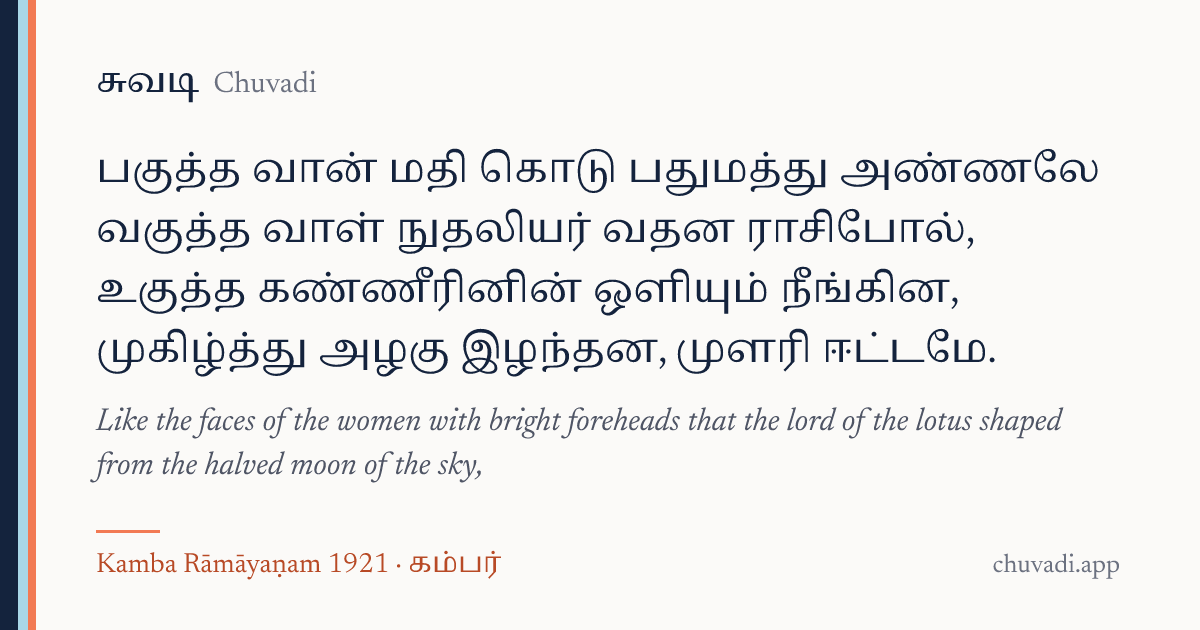
கம்பராமாயணம் 1921 · அயோத்தியா 5.4
பாடல் · The poem
Tap a word to see its gloss in the commentary and where else it occurs.
பாட வேறுபாடு · Project Madurai reads
பொருள் · Meaning in Tamil
பகுத்த வான் மதிகொடு - பிளந்த வானத்துச் சந்திரனைக் கொண்டு; பதுமத்து அண்ணல் - பிரமதேவன்; வகுத்த - செய்தமைத்த; வாள் நுதலியர் - ஒளிபடைத்த, நெற்றியை உடைய அயோத்தி மகளிரது; வதன ராசி போல் - முகங்களின் தொகுதி போல; முளரி ஈட்டம் - தாமரை மலர்க் கூட்டம்; உகுத்த - சிந்திய; கள் நீரினில் - கள்ளாகிய நீரோடு; ஒளியும் நீங்கின - நிறத்தையும் இழந்து; முகிழ்த்து - குவித்து; அழகு இழந்தன -.
பிரமன் படைக்கும்போது சந்திரனை இரண்டாகப் பிளந்து அமைத்தது போல உள்ளது பெண்கள் நெற்றி என்றார். சில மகளிரது நெற்றியைப் பிறை' எனச் சொல்வர் சிலரது நுதலைப் 'பாதிமதி' எனக் கூறுவது புலவர் கற்பனை மரபு. “மாக்கடல் நடுவண் எண்ணாட் பக்கத்துப் பசுவெண்திங்கள் தோன்றியாங்குக், கதுப்பு அயல் விளங்கும் சிறுநுதல்” (குறுந். 129.) என்பது காண்க. அட்டமிச் சந்திரன் என்பது 'அரை நிலவு' அன்றோ. அயோத்திநகர மகளிர் முகம் இராமன் வனம் புகுந்தபடியால் அழுது அழுது கண்ணீரோடு ஒளியிழந்து சாம்பி அழகு கெட்டுள்ளது போல, தாமரையும் உள்ளது. கண்ணீர் என்பதனை மகளிர்க்குக் கொள்ளுங்கால் ஒன்றாகவும், தாமரைக்குக் கொள்ளுங்கால் 'கள்' நீர் எனப் பிரித்தும் கொள்க. இது பிரிமொழிச் சிலேடை. ஒளிநீங்கல், முகிழ்த்தல், அழகு இழத்தல் ஆகியவை செம்மொழிச் சிலேடை. இது சிலேடை உவமையணி யாதலும் உணர்க. அண்ணலே 'ஏ' தேற்றம்;
ஆங்கிலம் · English translationAI
Translation
- Like the faces of the women with bright foreheads
- that the lord of the lotus shaped from the halved moon of the sky,
- the clusters of lotuses lost their glow with the honey-water they shed,
- closed up, and lost their beauty.
What the poem says
As night comes the lotuses close. The poet likens them to the faces of the women of Ayōtti, whose foreheads the creator Piramaṉ shaped from a half-moon. Their faces have lost their glow and beauty with weeping, and the lotuses fold up and lose their colour the same way.
The word kaṇṇīr splits two ways: for the women it is 'tears'; for the flowers it is kaḷ nīr, 'honey-water', the nectar they let fall. A Kuṟuntokai poem likewise compares a small forehead to the eighth-day half-moon.