



கம்பராமாயணம் 1927 · அயோத்தியா 5.10
பாடல் · The poem
Tap a word to see its gloss in the commentary and where else it occurs.
பொருள் · Meaning in Tamil
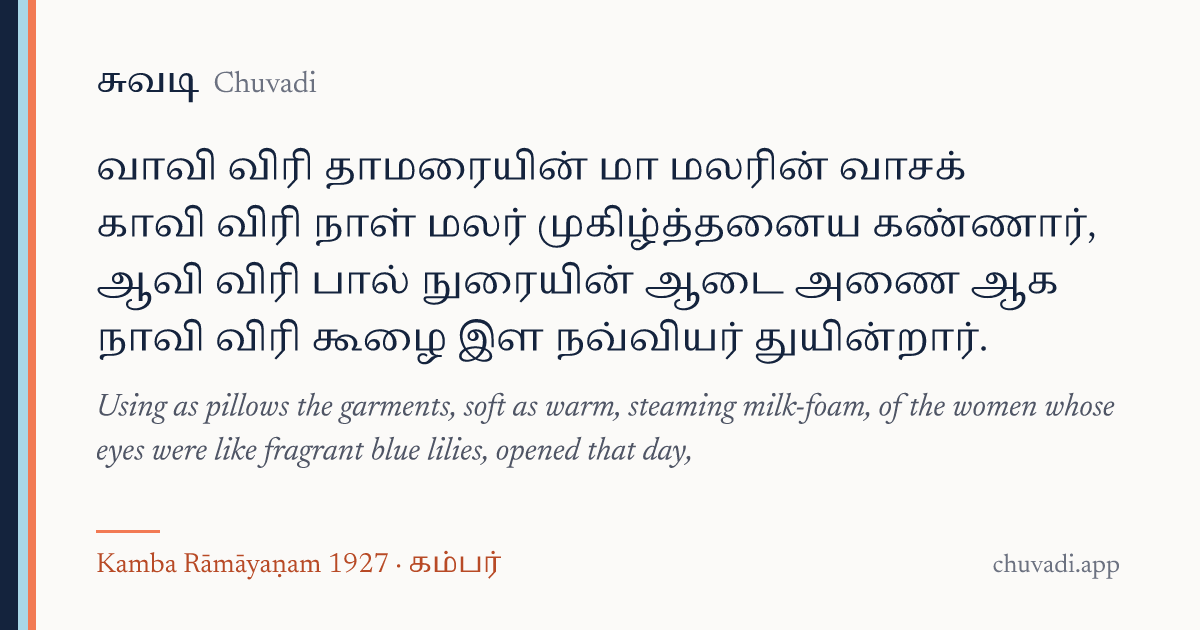
வாவி விரி தாமரையின் - குளத்தின்கண் மலர்ந்த தாமரையாகிய, மா மலரின் - சிறந்த மலரினுள்; வாசம் - வாசனை உள்ள; விரி காவி நாள்மலர் - விரிந்த நீலோற்பல மலர்; முகிழ்த்து அனைய - குவிந்து கிடந்தாற் போன்ற; கண்ணார் - கண்ணை உடைய மாதரது; ஆவி விரி பால் நுரையின் ஆடை - வெப்ப ஆவி வெளிப்படும் பால் நுரைபோன்ற மென்மையான ஆடையை அணையாகக் கொண்டு; நாவி விரி - கஸ்தூரி மணம் வீசப்பெற்ற; கூழை - முடிகூடாத கூந்தலை உடைய; இள நவ்வியர் - இளமையான பெண்மானைப் போலும் சிறுமிகள்; துயின்றார் - உறங்கினார்கள்.
இள நவ்வியர் என்பதால் இவர்கள் சிறுமிகள் என்பதும், 'கண்ணார்' என்பவர் அச்சிறுமியரது தாய்மாரும், அவரனைய பெண்டிரும் என்பதும் போதரும். சிறுமியர் ஆதலின் தாயரது ஆடை அணையாகக் கொண்டு அவர்களிடமே. போல என்று என்க. தாமரைப் பூவிற்குள் நீலோற்பலம் (கருங்குவளை) போல என்று முகத்தில் கிடந்த கண்களைக் கூறினார். இவர்களும் உறக்க அவசத்தில் கண்களை மூடினர் ஆதலின் “கருங்குவளை முகிழ்த்து' என்றார். முகிழ்த்து என்பது மலரும் பருவத்து அரும்பாதல் அறிக. இங்ஙனமே அடுத்த பாடலிலும் பொருள் வருதல் அறியலாம்.
ஆங்கிலம் · English translationAI
Translation
- Using as pillows the garments, soft as warm, steaming milk-foam,
- of the women whose eyes were like fragrant blue lilies, opened that day,
- now folded shut within great lotuses that bloom on the pond,
- the young fawn-like girls with musk-scented hair fell asleep.
What the poem says
Night falls on the camp, and the poet describes people falling asleep. The young girls sleep with their heads on their mothers' clothes, soft as froth on warm milk. The mothers' eyes, now shut, are like blue lilies folded inside lotus flowers: the lily is the eye and the lotus is the face.