



கம்பராமாயணம் 1930 · அயோத்தியா 5.13
பாடல் · The poem
Tap a word to see its gloss in the commentary and where else it occurs.
பொருள் · Meaning in Tamil
இள மகளிர்கள் - இளைய பெண்கள்; தகவும் - நற்குணமும்; மிகு தவமும் - சிறந்த தவமும் (கொண்டானைத் தெய்வம் எனக் கொள்ளுதலும் அவன் குறிப்பின் வழி ஒழுகலும்); இவை தழுவ - இவை பொருந்தி இருப்ப; உயர் கொழுநர் முகமும் அவர் அருளும் - உயர்ந்த கணவரது முகத்தையும் அவர் கருணையையும்; நுகர்கிலர்கள் - அனுபவியாதவர்களாம்; துயர் முடுக - துன்பம் விரைந்து செலுத்த; அகவும் இளமயில்கள் - ஆடுகின்ற இள மயில்கள்; உயிர் அலசியன அனையார் - உயிர் ஒடுங்கிப் போன தன்மையை ஒத்து; மகவு முலை வருட - குழந்தை முலையை நெருடிக்கொண்டிருக்க; துயின்றார் - தூங்கினார்கள்.
பால் உண்ண முலையில் பால் இல்லாமையால் குழந்தை முலை வருடுகிறது எனினும் அமையும். உண்டபின்னும், உண்ணும் போதும் குழந்தை முலை வருடல் இயல்பு.
ஆங்கிலம் · English translationAI
Translation
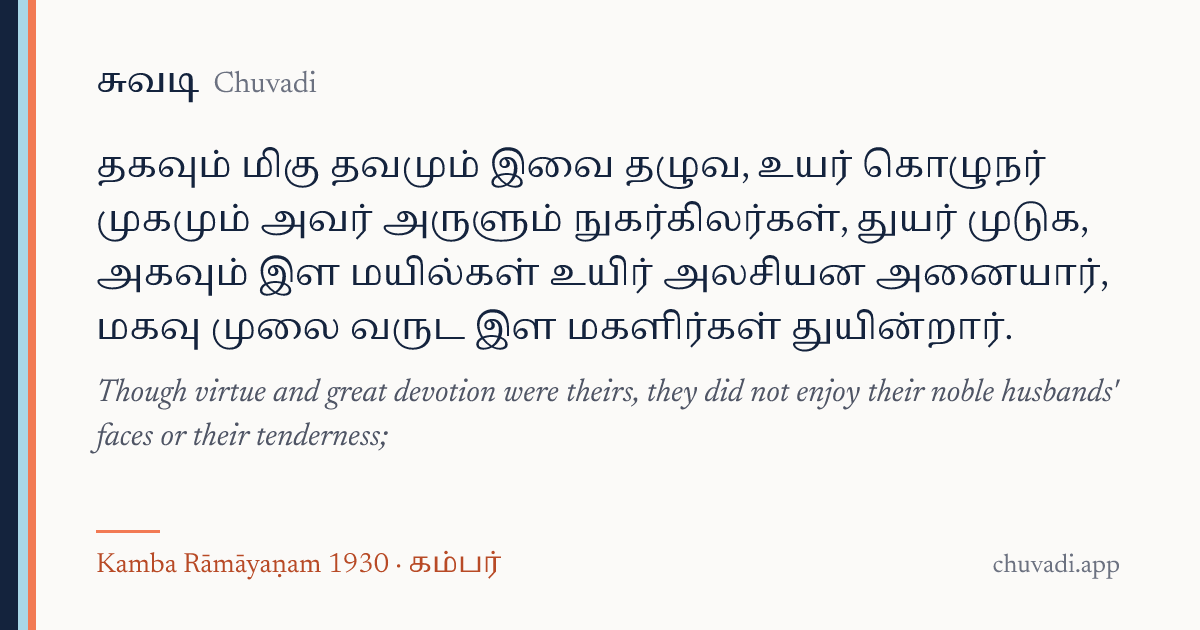
- Though virtue and great devotion were theirs,
- they did not enjoy their noble husbands' faces or their tenderness;
- driven by grief, like young calling peahens whose life had grown faint,
- the young wives slept as their babies stroked their breasts.
What the poem says
Young wives, virtuous and devoted to their husbands, spend this night apart from them, without their company or affection. Worn out with grief like drooping young peahens, they fall asleep while their babies still fumble at their breasts, perhaps because sorrow has left them with no milk.