



கம்பராமாயணம் 194 · பால 5.26
பாடல் · The poem
Tap a word to see its gloss in the commentary and where else it occurs.
பாட வேறுபாடு · Project Madurai reads
பொருள் · Meaning in Tamil
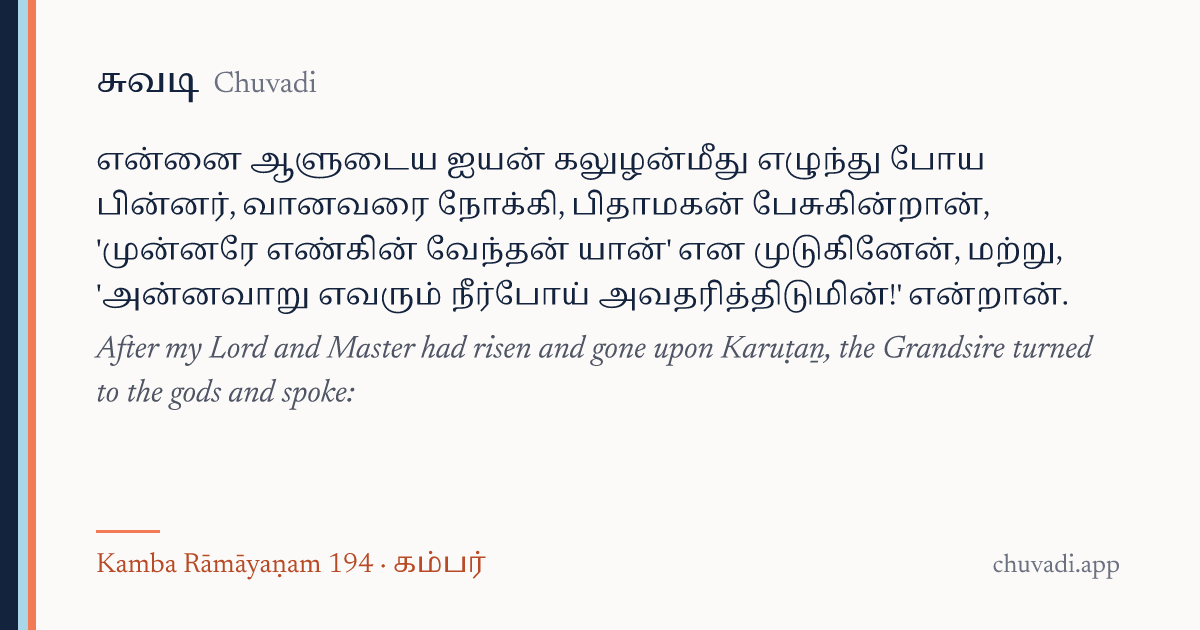
என்னை ஆளுடைய ஐயன் - என்னை ஆட்கொண்ட தலைவனாகிய திருமால்; கலுழன் மீது எழுந்து போய பின்னர் - கருடன்மீது எழுந்தருளிச் சென்றதன் பின்பு; பிதாமகன் வானவரை நோக்கிப் பேசுகின்றான் - நான்முகன், தேவர்களைப் பார்த்துப் பேசலானான்; முன்னரே எண்கின் வேந்தன் யான் என முடுகினேன் - முன்பே, கரடிகட்கு அரசனான ‘சாம்பவந்தன்’ என்பவனாக நான் வந்து பிறந்துள்ளேன்; மற்று, அன்னவாறு நீர் எவரும் போய் அவதரித்திடுமின் என்றான் - மற்றும், அப்படியே நீங்கள் எல்லோரும் சென்று அவதரித்திடுவீராக என்று கூறினான்.
உயிரினங்களின் தலைவர்களுக் கெல்லாம் தந்தை நான்முகன் ஆதலின் ‘பிதாமகன்’ என பிரமனைக் கூறுதல் மரபு. என்னை ஆளுடைய ஐயன் எனக் கூறியது, கம்பருக்குத் திருமாலிடம் மிகுந்த ஈடுபாடு இருந்ததைக் காட்டும். முடுகினேன்: கிட்டினேன் (வந்திருக்கிறேன் என்பது பொருள்). அவதரித்திடுமின்: மின்னீற்று வியங்கோள் கட்டளைப் பொருளில் வந்தது. மற்று: வினைமாற்ற வந்த அசைச் சொல். அன்ன ஆறு: அந்த விதமாக (அவ்வாறே).
ஆங்கிலம் · English translationAI
Translation
- After my Lord and Master had risen and gone upon Karuṭaṉ,
- the Grandsire turned to the gods and spoke:
- 'Long before this I hastened to earth as the king of the bears;
- now all of you go likewise and be born,' he said.
What the poem says
Once Viṣṇu has gone, Brahmā, the Grandsire of all beings, tells the gods that he has already been born on earth as Cāmpavantaṉ (Jāmbavān), king of the bears.
He urges the rest of them to follow his example and take birth at once. The poet again calls Viṣṇu 'my Lord and Master', a sign of Kampaṉ's personal devotion.