



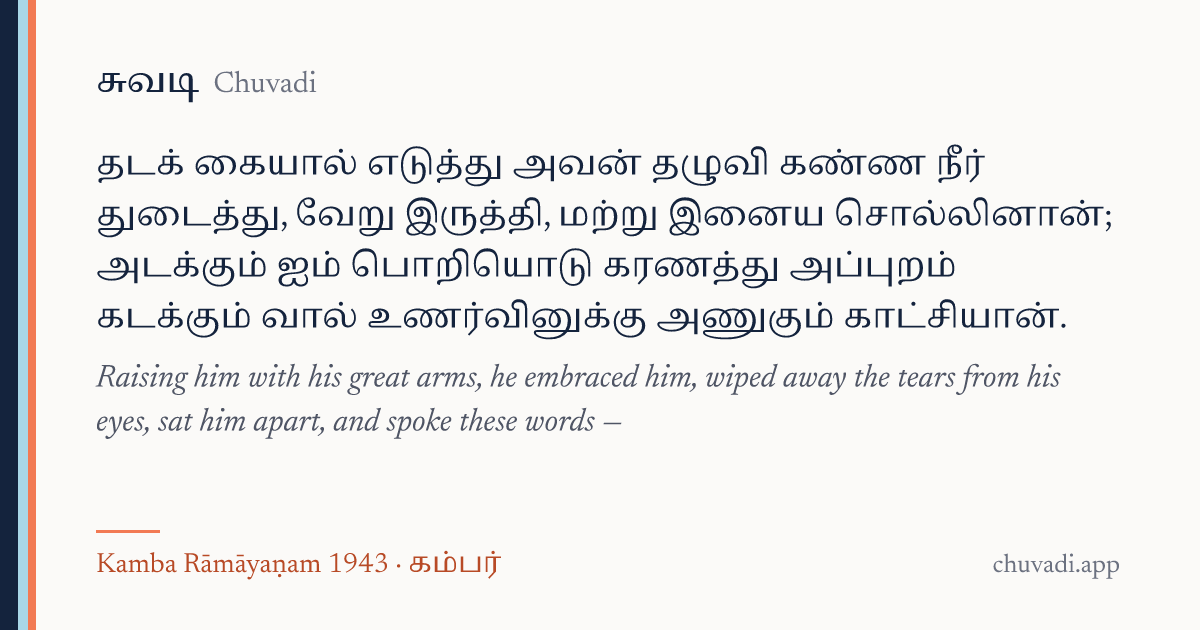
கம்பராமாயணம் 1943 · அயோத்தியா 5.26
பாடல் · The poem
Tap a word to see its gloss in the commentary and where else it occurs.
பாட வேறுபாடு · Project Madurai reads
பொருள் · Meaning in Tamil
அடக்கும் ஐம்பொறியோடு - (புலன்வழிச் செல்லாது) அடக்கிய ஐம்பொறிகளோடு; கரணத்து அப்புறம் - அந்தக்கரணமாகிய மன முதலியவற்றுக்கு அப்பால்; கடக்கும் - கடந்து செல்கின்ற; வால் உணர்வினுக்கு - தூய மெய்ஞ்ஞானத்துக்கு; அணுகும் காட்சியான் - நெருங்கிப் புலனாகின்ற தோற்றம் உடைய பரம்பொருளாகிய இராமன்; அவன் - அந்தச் சுமந்திரனை; தடக்கையால் எடுத்து - (தனது) பெரிய கைகளினால் தூக்கி, தழுவி -; கண்ணநீர் - கண்ணிலிருந்து வரும் நீரை; துடைத்து -; வேறு இருத்தி - தனியாக இருக்கவைத்து; இனைய - இத்தகைய (பின்வரும்) சொற்களை; சொல்லினான் - சொன்னான்.
பொறிபுலன்களுக்கு அப்பாற்பட்டு அந்தக்கரணங்களையும் கடந்து நிற்பவனாய் யோகிகளின் மெய்யுணர்வுக்கே புலப்படுபவனாய் உள்ளவன் பரம்பொருள் என்பது கூறப்பட்டது. வனவாசத்தை ஒப்புக்கொள்ளாத கருத்தினன் சுமந்திரன் ஆதலால், அவனை இசைவித்துத் திருப்பி அனுப்பவேண்டித் தனியே அழைத்துச் சென்று பேசினான் இராமன் என்க.
ஆங்கிலம் · English translationAI
Translation
- Raising him with his great arms, he embraced him, wiped away
- the tears from his eyes, sat him apart, and spoke these words —
- he who is seen only by the pure awareness that passes beyond
- the restrained five senses and the inner faculties.
What the poem says
Irāmaṉ lifts Cumantiraṉ up, holds him, wipes his tears, and takes him aside to talk to him alone, since he must persuade him to go back. The poet reminds us who Irāmaṉ really is: the Supreme, who lies beyond the senses and the mind and is reached only by the pure awareness of yogis.