



கம்பராமாயணம் 1945 · அயோத்தியா 5.28
பாடல் · The poem
Tap a word to see its gloss in the commentary and where else it occurs.
பாட வேறுபாடு · Project Madurai reads
பொருள் · Meaning in Tamil
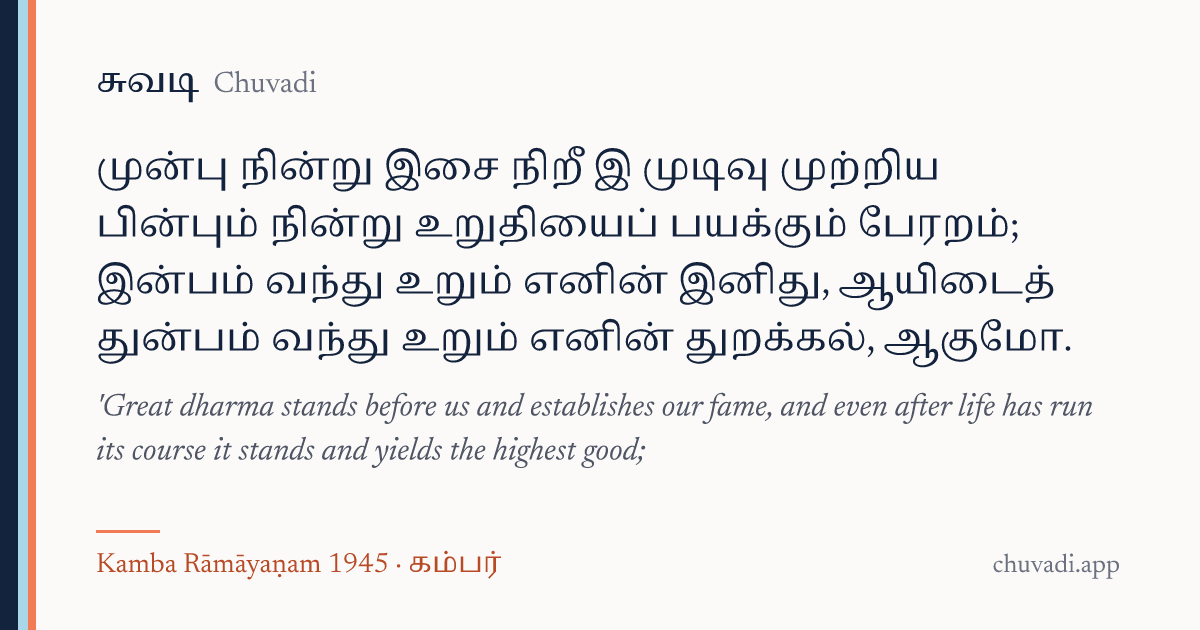
“பேர் அறம் - பெருமை பொருந்திய தருமம்; முன்பு நின்று இசை நிறீஇ - (தன்னை மேற்கொள்பவனுக்கு இவ்வுலகில்) முன்னதாகப் புகழை நிலை நிறுத்தி; முடிவு முற்றிய பின்பும் நின்று - இந்த வாழ்வு முடிவுக்கு வந்தபிறகும் இருந்து (மறுமையில்); உறுதியைப் பயக்கும் - நன்மைப் பயனாகிய மேல் உலகத்தைத் தரும்; இன்பம் வந்து உறும் எனின் இனிது - (வாழ்வில்) இன்பம் வந்து நேருமாயின் இனிமையானது; ஆயிடை - அவ்விடத்து; துன்பம் வந்து உறும் எனின் - துன்பம் வந்து நேருமாயின்; துறக்கல் ஆகுமோ?” - அவ்வறத்தைக் கைவிட ஆகுமோ?
இன்ப துன்பங்கள் கலந்ததே வாழ்வு. அறவழி நடப்பார்க்கு இன்பமே வரும். ஆயினும், ஒருவேளை துன்பம் வருமாயினும் அதுபற்றி அறத்தைக் கைவிடல் ஆகாது என்பதாம். அறம் என்ற சொல்லின் முழுப் பொருளும் தருமம் என்பதன்கண் அடங்காது. பொருள் விளங்க வேண்டிய அளவுக்கே அறம் என்பதற்குத் தருமம் என்று உரை காண்கிறோம். 'நன்றாங்கால் நல்லவாக் காண்பவர் அன்றாங்கால், அல்லல் படுவது எவன்” என்னும் குறளை (குறள். 379) இங்கு நோக்குக.
ஆங்கிலம் · English translationAI
Translation
- 'Great dharma stands before us and establishes our fame,
- and even after life has run its course it stands and yields the highest good;
- if joy comes along the way, that is sweet; but if, along the way,
- sorrow comes, can it then be cast aside?'
What the poem says
Irāmaṉ continues. Righteousness brings fame in this life and its reward after death. If it brings happiness along the way, well and good, but it cannot be given up when it brings suffering instead. A Tirukkuṟaḷ couplet asks the same: those who welcome good fortune as fate, why do they complain when bad fortune comes?