



கம்பராமாயணம் 1957 · அயோத்தியா 5.40
பாடல் · The poem
Tap a word to see its gloss in the commentary and where else it occurs.
பொருள் · Meaning in Tamil
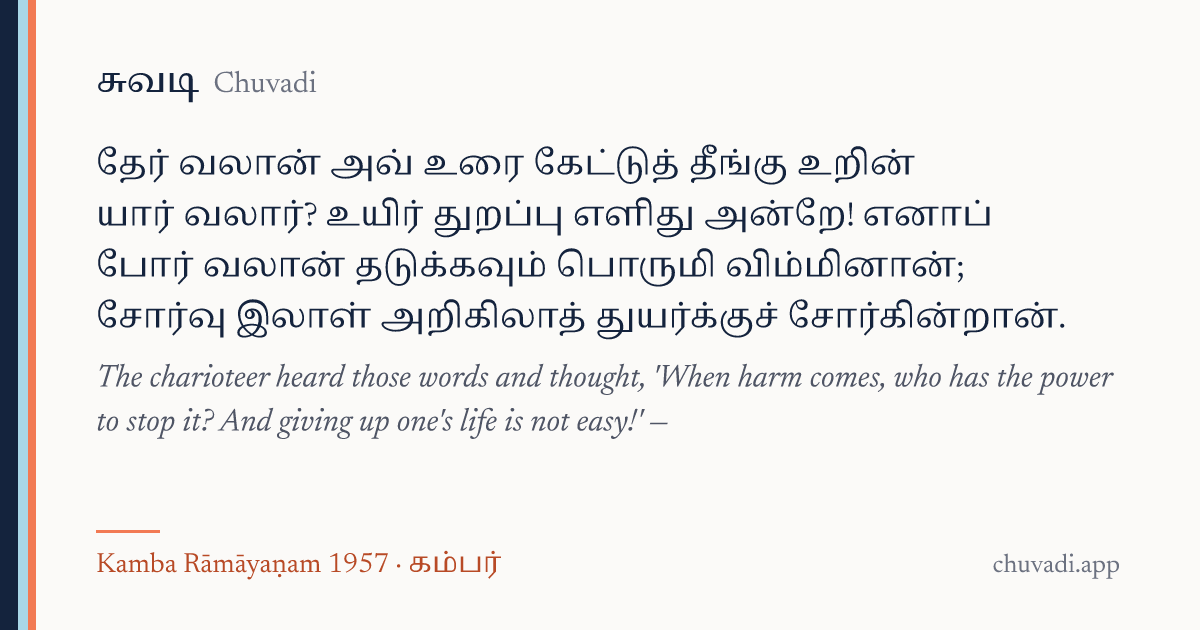
தேர் வலான் - சுமந்திரன்; அவ் உரை கேட்டு - சீதை சொன்ன அச் சொற்களைக் கேட்டு; சோர்வு இலாள் - சிறிதும் தளர்ச்சி இல்லாதவளாய சீதை; அறிகிலாத் துயர்க்கு - (வனவாசத்தால் படக் கூடியதாக இப்போது அவள் அறியாமல் இருக்கின்ற) துன்பத்தைக் குறித்து; சோர்கின்றான் - மனம் வருந்துகின்றவனாய்; “தீங்கு உறின் - (ஊழ்வினையால்) தீமை உண்டானால்; யார் வலார்? - தடுக்கவல்லவர்கள் யார்; உயிர் துறப்பு - உயிரை விடுதல் என்பது; எளிது அன்றே” - (அவ்வளவு) சுலபமானது அல்லவே; ' எனா - என்று; போர் வலான் - போரில் வல்ல இராமன் தடுக்கவும்; பொருமி விம்மினான் - மனத்தில் குமைந்து வாய்விட்டுப் பொருமினான்.
சீதை வனம் புகுந்தால் நேரக் கூடிய துன்பத்துக்குச் சிறிதும் கவலையுறாது தான் வளர்த்த கிளியும், பூவையும் பற்றிக் கவலைப்படுகிறாளே என்று அவள் குழந்தைத் தன்மைக்கு மனம் இரங்கிப் பொருமுவான் ஆயினன் சுமந்திரன். இராமனுடன் செல்வதனாலேயே சிறிதும் சோர்வு இல்லாதவளாகச் சீதை இருக்கிறாள் ஆதலின் “சோர்விலாள்” என்றார். உயிர் துறத்தல் என்பதும் எளிய செயல் அன்று; நான் விரும்பிய போது உயிர் போகாது, அது போக வேண்டிய நேரத்தில்தான் போகும். ஆகவே, துன்பம் வரின் அனுபவிக்க வேண்டியிருக்குமே அன்றி அதிலிருந்து தப்ப உயிர் துறப்பதும் நம் விருப்பப்படி நடக்கக் கூடியதல்லவே என்று கருதி வருந்துகிறான் சுமந்திரன்.
ஆங்கிலம் · English translationAI
Translation
- The charioteer heard those words and thought, 'When harm comes,
- who has the power to stop it? And giving up one's life is not easy!' —
- and though the hero of battle tried to check him, he sobbed and choked,
- fainting at the sorrow that she, unwearied, did not yet know.
What the poem says
Cītai's innocent message about her birds breaks Cumantiraṉ's heart. She is cheerful because she is with Irāmaṉ, and has no idea of the hardships ahead. He reflects that no one can stop what fate brings, and that one cannot simply die to escape it either, since life leaves only when its time comes. Though Irāmaṉ tries to calm him, he breaks down sobbing.