



கம்பராமாயணம் 196 · பால 5.28
பாடல் · The poem
Tap a word to see its gloss in the commentary and where else it occurs.
பாட வேறுபாடு · Project Madurai reads
பொருள் · Meaning in Tamil
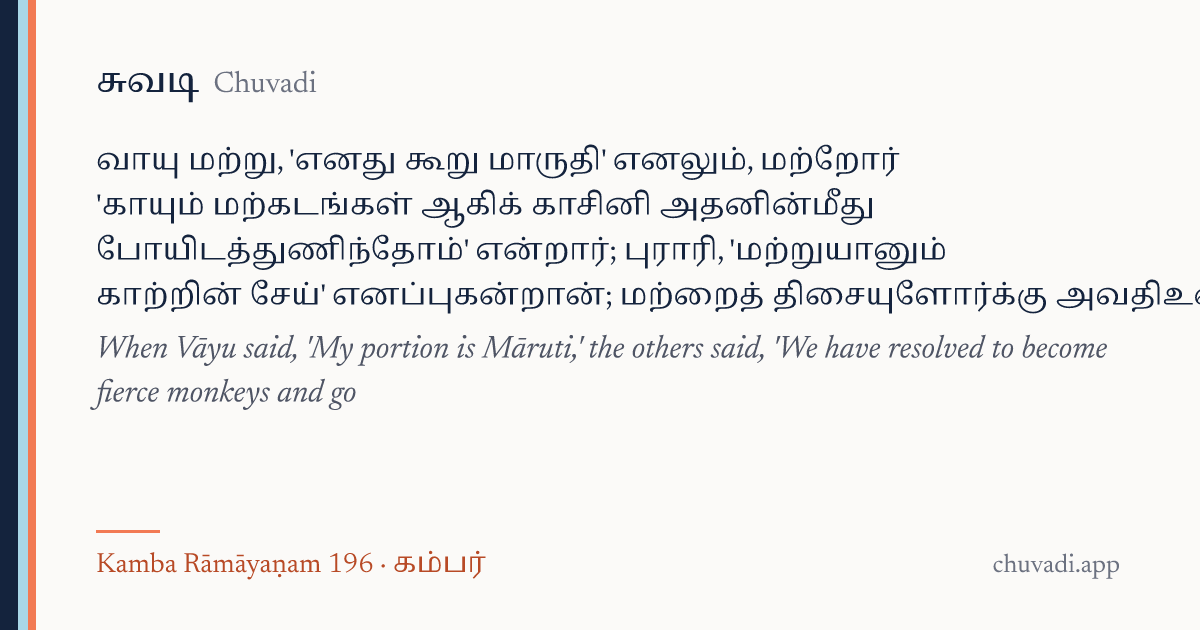
வாயு மற்று எனது கூறு மாருதி எனலும் - காற்றுத் தேவனான வாயு எனது அம்சம் மாருதி என்று சொல்லலும்; மற்றோர் காயுமற் கடங்களாகி காசினி அதனின் மீது போயிடத் துணிந்தோம் என்றார் - மற்ற தேவர்கள் எல்லோரும் பகைவரைச் சினக்கும் வானரங்கள் ஆகி, பூமியிலே சென்று பிறக்க முடிவு செய்துவிட்டோம் என்றார்கள்; புராரி மற்று யானும் காற்றின் சேய் எனப் புகன்றான் - திரிபுரத்தை எரித்த சிவபிரான் யானும் வாயுகுமாரனான அனுமனாகப் பிறக் கிறேன் என்று கூறலானான்; மற்றைத் திசையுளோர்க்கு அவதி உண்டோ - எனவே, மற்றுமுள்ள எல்லாத்திசைகளிலும் வாழ்பவர்க்கும் எந்தத் துன்பமும் உண்டோ (இல்லை என்பதாம்).
மருத்து: காற்று. மருத்தின் மகன் மாருதி (அனுமன்). புராரி: திரிபுரத்தை அழித்தவரான சிவபிரான். காற்று எனது அம்சம் என அனுமன், மற்றத் தேவர்கள் எல்லோரும் வானரங்களாகப் பிறக்க நாங்கள் முடிவெடுத்து விட்டோமென, சிவபிரான் தானும் காற்றின் சேயான அனுமனாய் அவதரிப்பதாகக் கூறினார் என்பது கருத்து. அவதி: வருத்தம் (துன்பம்). எனவே, இனிஎங்கு வாழ்பவர்களுக்கும் எந்தத் துன்பமும் இல்லையாம் என்றார்.
காசினி: உலகம். மற்கடம்: குரங்கு. காய்தல்: சினத்தல். போய் இட: போயிட. ‘இட’ என்ற துணை வினை எதிர்காலம் உணர்த்தி நின்றது. போக என்பது பொருள்.
ஆங்கிலம் · English translationAI
Translation
- When Vāyu said, 'My portion is Māruti,' the others said,
- 'We have resolved to become fierce monkeys and go
- down onto the earth'; and the Destroyer of the Three Cities said, 'I too
- will be the son of the Wind' — what grief could remain for those of the other quarters?
What the poem says
Vāyu, the wind god, says his portion will be Māruti, that is Aṉumaṉ, the son of the Wind. All the other gods agree to be born as monkeys.
Then Śiva, who destroyed the three flying cities of the demons, declares that he too will be born as the Wind's son. This follows a tradition that Aṉumaṉ is a form of Śiva. With such allies, the poet asks, how could any being anywhere still suffer?