



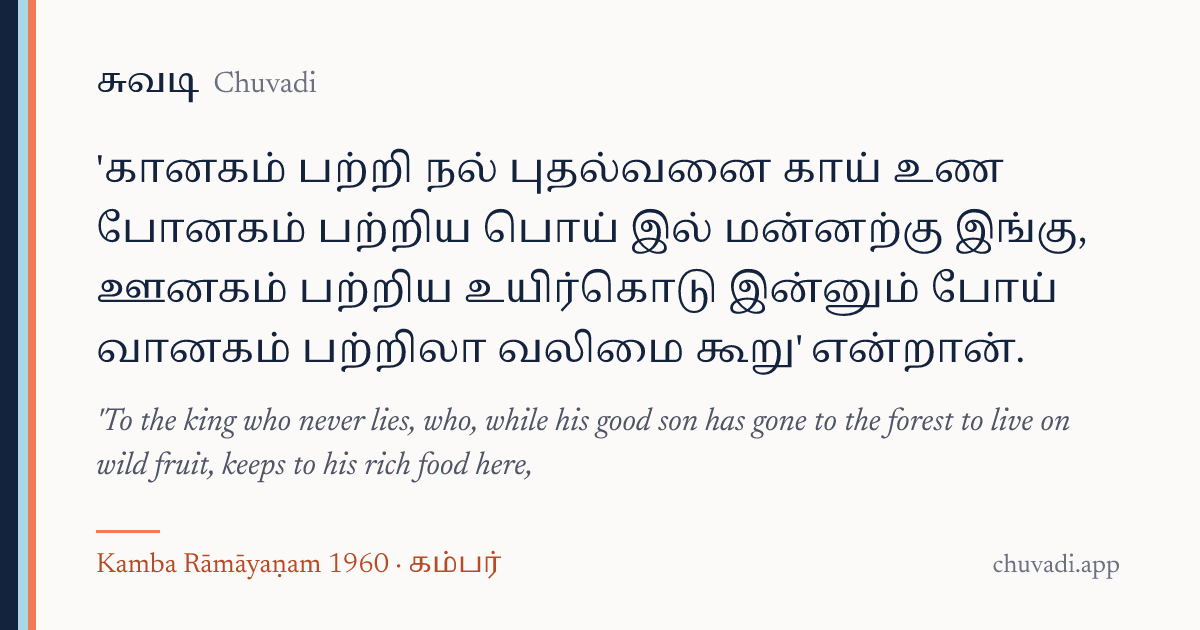
கம்பராமாயணம் 1960 · அயோத்தியா 5.43
பாடல் · The poem
Tap a word to see its gloss in the commentary and where else it occurs.
பாட வேறுபாடு · Project Madurai reads
பொருள் · Meaning in Tamil
“நல் புதல்வன் - (தன்னுடைய) நல்ல மகன்; கானகம் பற்றி - காட்டை அடைந்து; காய் உண - (காட்டில் கிடைக்கும்) காய் முதலியவற்றை உண்ண; போனகம் பற்றிய - (அரண்மனையில் இருந்து) அறுசுவை உண்டி அருந்துகின்ற, பொய் இல் மன்னர்க்கு - சத்திய வேந்தனுக்கு; இங்கு - இவ்வுலகில், ஊன் அகம் பற்றிய உயிர்கொடு - உடம்பிடத்தைப் பற்றியுள்ள உயிரைப் பிடித்துக்கொண்டு (வாழ்ந்து கொண்டிருந்து), இன்னும் போய் வானகம் பற்றிலா வலிமை - இன்னமும் இறந்து போய் மேல் உலகத்தை அடையாத வலிமையை; கூறு” - ஆற்றலை நினைவூட்டிச் சொல், ' என்றான் -.
போனகம் - அறுசுவை உணவு. “பொய்யில் மன்னன்' என்றது மேலது போல் இகழ்வுரை. அன்பற்ற மன்னனுக்குச் சத்தியம் ஒரு கேடா' என்று ஆத்திரம் அடைகிற இலக்குவனின் மனப்பாங்கு வெளிப்படுகிறது. இராமன்பால் கொண்ட பேரன்பினால் பேசுகிறான் ஆதலின் தசரதனை முழுமையாக அறிந்திலன் என்க. “ஏன் தசரதனும் இராமனுடன் கானகம் வந்திருக்கக் கூடாது' என்பது இலக்குவனின் குறிப்பாக இப்பாடலில் தோன்றும்.
ஆங்கிலம் · English translationAI
Translation
- 'To the king who never lies, who, while his good son has gone to the forest
- to live on wild fruit, keeps to his rich food here,
- tell of the strength by which, clinging to the life lodged in his flesh,
- he has not yet gone off to heaven,' he said.
What the poem says
Ilakkuvaṉ's bitter message to his father: while his good son eats wild fruit in the forest, the king sits at his feast in the palace. Cumantiraṉ should congratulate him on being strong enough to cling to life instead of dying of grief. His love for Irāmaṉ blinds him to his father's real suffering.