



கம்பராமாயணம் 1969 · அயோத்தியா 5.52
பாடல் · The poem
Tap a word to see its gloss in the commentary and where else it occurs.
பாட வேறுபாடு · Project Madurai reads
பொருள் · Meaning in Tamil
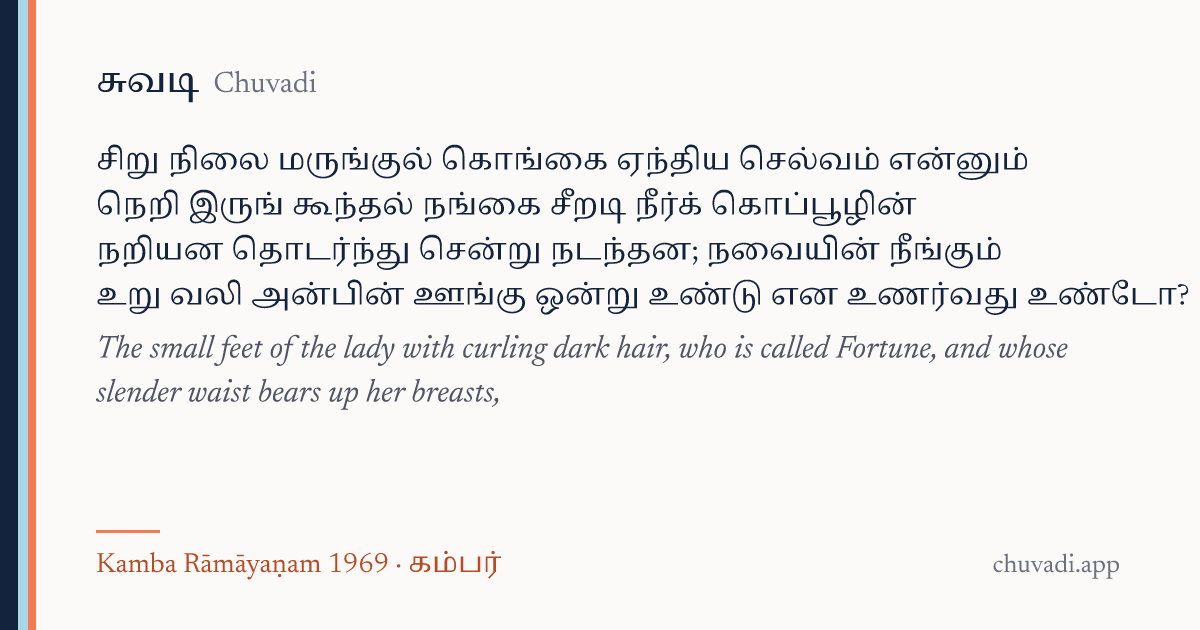
சிறுநிலை மருங்குல் - மிகவும் இளைத்த (சிறிய நிலைமை உடைய) இடையுடன்; கொங்கை - (பருத்த) முலைகளை; ஏந்திய - தாங்கிய; செல்வம் என்னும் - திரு என்று சொல்லப்பெறும்; நெறி இருங்கூந்தல் நங்கை - நெறிப்புடைய கரிய கூந்தலை உடைய சீதையின்; சீறடி - சிறிய பாதம்; நீர்க் கொப்பூழின் நறியன - நீரின்கண் தோன்றும் குமிழியைக் காட்டிலும் மென்மையானவை (ஆயினும்); தொடர்ந்து சென்று நடத்தலின் - இராமனைப் பின்பற்றிச் சென்று நடக்கின்றபடியால்; “நவையின் நீங்கும் - துன்பத்தில் நீங்கிய; உறுவலி அன்பின் - மிக்க வலிமை உடைய அன்பைக் காட்டிலும்; ஒன்று - வலியுடைய ஒரு பொருள்; ஊங்கு உண்டு” - இங்கே உள்ளது; என உணர்வது உண்டோ - என்று அறிய முடியுமா (முடியாது என்றபடி).
அன்பு எதையும் சாதிக்கும். சீதையின் மெல்லிய அடி இராமனுடைய வேகத்துக்கும், காட்டின் கடுமைக்கும் ஈடு கொடுத்து நடக்கிறதென்றால் இராமன்பால் அவள் கொண்ட அளப்பருங் காதலே அதற்குக் காரணம் என்பதாம். அடியை நீர்க்குமிழி போன்ற மென்மை உடையது என்பது அரிய உவமை.
ஆங்கிலம் · English translationAI
Translation
- The small feet of the lady with curling dark hair, who is called Fortune,
- and whose slender waist bears up her breasts,
- softer than bubbles on water, followed along and walked on;
- can one think there is anything stronger than love, which frees us from all harm?
What the poem says
Cītai's feet are softer than bubbles on water, yet they keep pace with Irāmaṉ over the rough forest ground. The only explanation is her immense love for him. Nothing is stronger than love.