



கம்பராமாயணம் 1971 · அயோத்தியா 5.54
பாடல் · The poem
Tap a word to see its gloss in the commentary and where else it occurs.
பொருள் · Meaning in Tamil
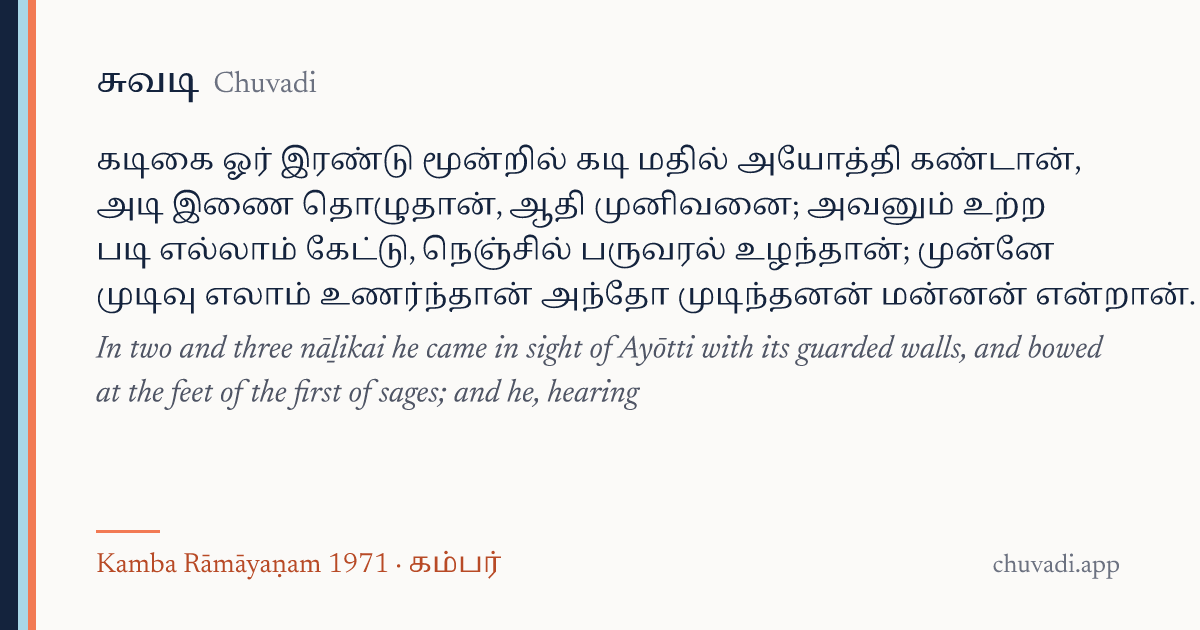
கடிகை ஓர் இரண்டு மூன்றில் - ஐந்து நாழிகைப் போதில்; கடிமதில் அயோத்தி கண்டான் - காப்பமைந்த மதிலையுடைய அயோத்தி நகரத்தை அடைந்து; ஆதி முனிவனை - வசிட்டனை; அடி இணை தொழுதான் - பாதத்தில் வணங்கினான்; அவனும் - வசிட்ட முனிவனும், உற்றபடி எலாம் கேட்டு - வனத்தில் நடந்தவையெல்லாம் கேட்டறிந்து; நெஞ்சில் பருவரல் உழந்தான் - மனத்தில் துக்கம் கொண்டு வருந்தி; முன்னே முடிவு எலாம் உணர்ந்தான் - இனி வரப் போவதை எல்லாம் உணர்ந்தவனாய்; “அந்தோ முடிந்தனன் மன்னன்” என்றான் - ஐயோ! அரசன் இறந்து போனான் என்றான்.
இராமன் திரும்பாமல் வனம் சென்றுவிட்டான் என்ற செய்தியைச் சுமந்திரன் மூலம் அறிந்த வசிட்டன் 'இனி அரசன் இறந்து போவது உறுதி' என்கின்ற கருத்தில் 'முடிந்தனன் மன்னன்' என்றான். “தெளிவின்கண் எதிர்காலம் இறந்தகாலம் ஆயிற்று; டப அபவுட் ஐந்து நாழிகை இரண்டு மணி. கடிகை - நாழிகை.
ஆங்கிலம் · English translationAI
Translation
- In two and three nāḻikai he came in sight of Ayōtti with its guarded walls,
- and bowed at the feet of the first of sages; and he, hearing
- all that had happened, suffered grief in his heart; knowing
- beforehand how it all would end, he said, 'Alas, the king is finished.'
What the poem says
Within five nāḻikai, about two hours, Cumantiraṉ reaches Ayōtti and goes straight to Vacittaṉ, as Irāmaṉ asked. When the sage hears that Irāmaṉ has gone on into the forest, he foresees the outcome and says, 'Alas, the king is finished.' He speaks of the king's coming death as if it had already happened, so certain is it.