



கம்பராமாயணம் 1972 · அயோத்தியா 5.55
பாடல் · The poem
Tap a word to see its gloss in the commentary and where else it occurs.
பாட வேறுபாடு · Project Madurai reads
பொருள் · Meaning in Tamil
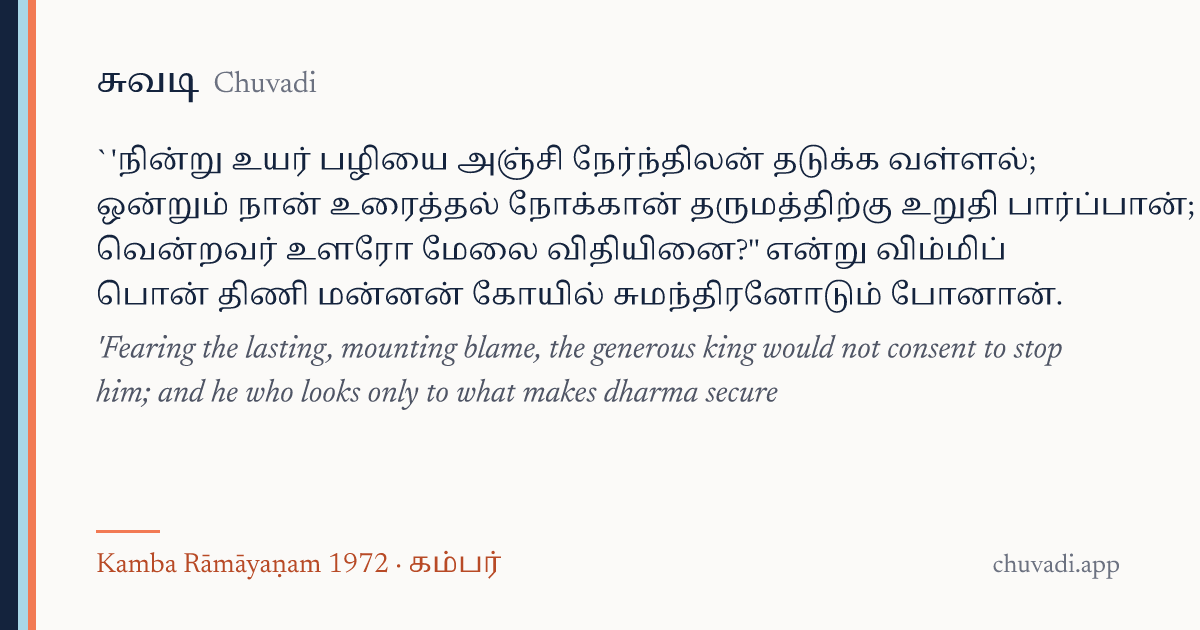
“வள்ளல் - தசரதன்; நின்று உயர் பழியை அஞ்சி - உலகத்தில் நிலைத்து நின்று மேன்மேல் வரும் பழிக்குப் பயந்து; தடுக்க நேர்ந்திலன் - இராமன் காடு செல்வதைத் தடுக்க உடன்பட்டானில்லை; தருமத்திற்கு உறுதி பார்ப்பான் - தருமம் நிலைபெறும் தன்மையை எப்பொழுதும் நாடுபவனாகிய இராமன்; நான் உரைத்தல் ஒன்றும் நோக்கான் - (வனம் போக வேண்டாம் என்ற) நான் சொல்லியது ஒரு வார்த்தையும் கருதான் ஆயினன்; மேலை விதியினை வென்றவர் உளரோ?” - பழைய வினையை வெற்றி கொண்டவர் யாராவது இருக்கிறார்களா?; ' என்று விம்மி - என்று புலம்பிக்கொண்டு; சுமந்திரனோடும் -; மன்னன் பொன் திணி கோயில் - தசரதனது பொன்னாற் செய்த அரண்மனைக்குள்; போனான் -.
வசிட்டன் உரைத்தது “ஐய! நீ ஒருவி ஓங்கிய, கல்தடம் காணுதி என்னின், கண் அகல் மல் தடந் தானையான் வாழ்கிலான்' என்பது (1760). நகர் நீங்கு படலம் 160 ஆம் பாடலும் (1764.) இதனுடன் கருதத்தக்கதாகும்.
ஆங்கிலம் · English translationAI
Translation
- 'Fearing the lasting, mounting blame, the generous king would not consent to stop him;
- and he who looks only to what makes dharma secure
- paid no heed to anything I said; is there anyone who has overcome
- the fate laid down before?' So sobbing, he went with Cumantiraṉ into the king's palace, thick with gold.
What the poem says
Vacittaṉ laments as he walks. The king would not stop Irāmaṉ for fear of eternal disgrace, and Irāmaṉ, who thinks only of upholding righteousness, ignored the sage's own pleas. No one can defeat what fate has decreed. Weeping, he goes with Cumantiraṉ into the golden palace to face the king.