



கம்பராமாயணம் 1985 · அயோத்தியா 5.68
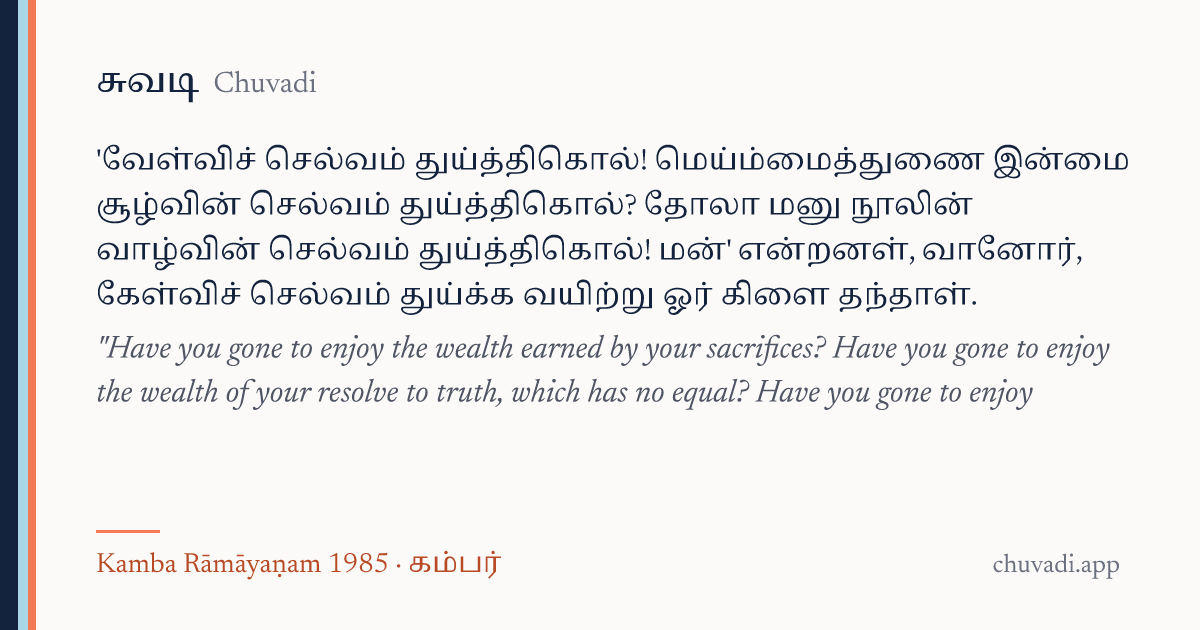
பாடல் · The poem
Tap a word to see its gloss in the commentary and where else it occurs.
பொருள் · Meaning in Tamil
வானோர் - தேவர்கள்; கேள்விச் செல்வம் - இராமன் புகழ் கேட்டல் ஆகிய செல்வத்தை; துய்க்க - அனுபவிக்க; வயிற்று ஓர் கிளை தந்தாள் - தன் வயிற்றிலிருந்து ஒப்பற்ற புதல்வனைத் தந்தவளாகிய கோசலை (தயரதனை நோக்கி); “வேள்விச் செல்வம் துய்த்தி கொல்? - முன் செய்த வேள்விகளின் பயனை துய்த்திகொல் - அனுபவிக்கச் சென்றாயோ; மெய்ம்மை - சத்தியம் என்கிற; துணை இன்மை - தனக்குச் சமானம் இல்லாத; சூழ்வின் செல்வம் - ஒன்றை உறுதியாகப் பற்றிய உன் ஆலோசனையின் பயனை; துய்த்திகொல் - அனுபவிக்கச் சென்றாயோ; தோலா - தோல்வி அடையாத; மனு நூலின் வாழ்வின் செல்வம் - மனு முறைப்படி அரச வாழ்வு நடத்தியதால் ஆகிய பயனை; துய்த்திகொல்” - அனுபவிக்கச் சென்றாயோ; என்றனள் -
கேள்வி - கேட்டற்குரிய புகழ். 'தீங்கவி செவிகள் ஆரத் தேவரும் பருகச் செய்தான்' (32) என்ற கருத்து இங்கு நினையத் தக்கது. கிளை - உறவு. கோசலைக்கு உறவாவது புதல்வன் என்பதே. வேள்வி, சத்தியம், செங்கோன்மை இவற்றைக் காத்தொழுகிய தசரதன் இவற்றின் பயனை அனுபவிக்கச் சென்றானோ என்றாள். “கொல்” ஐயவினா. “மன்” கழிவுப்பொருள்; அவன் இப்போது அவுல் கழிந்தது கழிந்தது என்னும் பொருளில் வந்தது. இடைச்சொல்.
ஆங்கிலம் · English translationAI
Translation
- "Have you gone to enjoy the wealth earned by your sacrifices? Have you gone to enjoy
- the wealth of your resolve to truth, which has no equal? Have you gone to enjoy
- the wealth of a life lived by the unfailing law of Maṉu? Alas!" said she
- who gave from her womb a son so that the gods might enjoy the wealth of hearing his fame.
What the poem says
Kōcalai, who bore Irāmaṉ so that even the gods might delight in hearing his glory, asks her dead husband whether he has departed to enjoy the rewards of the three things he guarded all his life: the sacrifices he performed, his unmatched commitment to truth, and his just rule according to the law code of Maṉu.
The repeated question marks her uncertainty and grief, and the closing particle expresses that something is now lost and past. The irony is sharp: his loyalty to his word is exactly what killed him.