



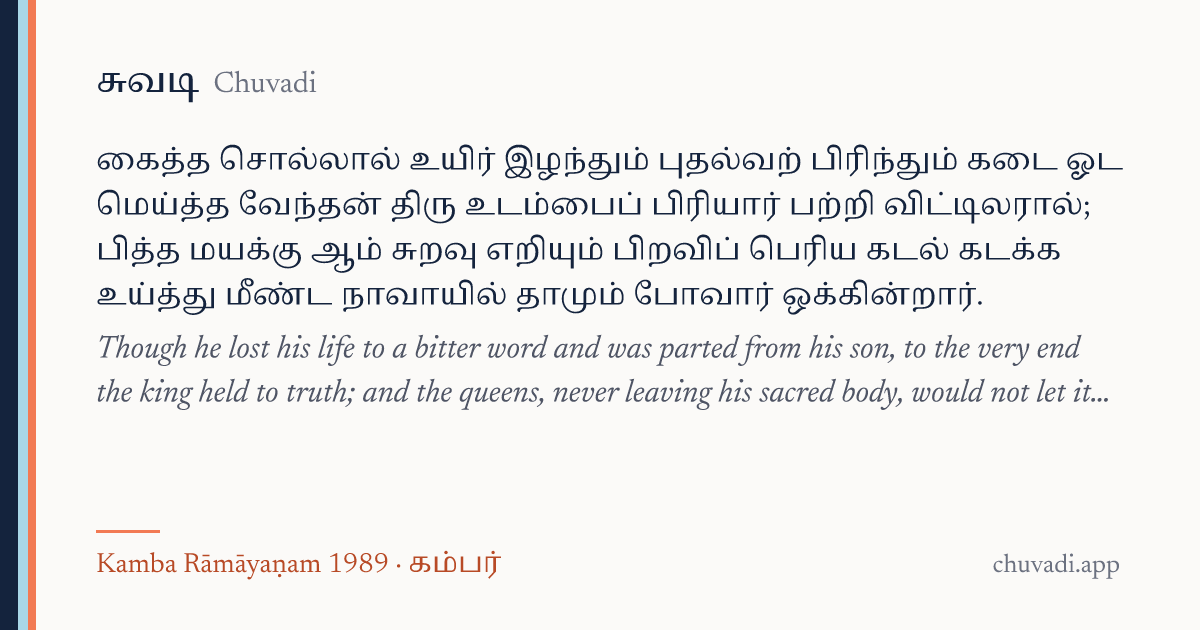
கம்பராமாயணம் 1989 · அயோத்தியா 5.72
பாடல் · The poem
Tap a word to see its gloss in the commentary and where else it occurs.
பொருள் · Meaning in Tamil
புதல்வன் பிரிந்தும் - மகனைப் பிரிந்தும்; கைத்த சொல்லால் உயிர் இழந்தும் - மனம் வெறுக்கத் தக்க (கைகேயி கூறிய) கொடிய சொல்லால் தன் உயிரே நீங்கப்பெற்றும், கடை ஓட - இறுதிவரையிலும்; மெய்த்த வேந்தன் - மெய்யையே பற்றிநின்ற தசரத மன்னனுடைய; திருவுடம்பை - திருமேனியை; பற்றிப் பிரியார் விட்டிலர் - பிடித்துக் கொண்டு பிரியாதவர்களாய் விடாதவர்களாய் உள்ள தேவிமார்; பித்த மயக்கு ஆம் சுறவு எறியும் - பித்துக் கொள்வதற்குக் காரணமாய அவிச்சை என்னும் சுறா மீன் துள்ளிச் சஞ்சரிக்கும்; பிறவிப் பெரிய கடல் கடக்க - பிறவி என்னும் பெரிய கடலைத் தாண்டுதற்கு; உய்த்து மீண்ட நாவாயில் - (முன்பு ஒருவரை) அக்கரை செலுத்தித் திரும்பி வந்த மரக்கலத்திலே; தாமும் போவார் ஒக்கின்றார் - தாமும் போக இருக்கின்றவர்களை ஒத்திருந்தார்கள்.
பிரிதற்கரிய மகன் பிரிந்தாலும், உயிரே பிரிந்தாலும் இறுதிவரை சத்தியத்தைவிடாமல் நின்றவன் தயரதன் என்றார். பித்த மயக்கு - மண், பெண், பொன் என்னும் மூவாசைகளை உண்டாக்குகின்ற அவிச்சை. அவிச்சை என ஒன்றைமட்டும் குறித்தாலும் அவிச்சை, அகங்காரம், அவர, விழைவு, வெறுப்பு என்னும் ஐந்தினையும் கொள்க. இவற்றைப் “பஞ்சக் கிலேசம்” என்பர். இந்தச் சுறா மீன்கள் இயங்கும் கடல் என்று பிறவியை உருவகம் செய்தார். தசரதன் உடல் மரக்கலம். முதலில் தசரதன் உயிரை அம்மரக்கலம் மேல் உலகு ஆய அக்கரைக்குச் செலுத்தியது. இப்போது அவ்வுடலாகிய மரக்கலத்தை இத்தேவிமார் பற்றியிருப்பது, தாமும் தசரதனின் உயிர் சென்ற இடத்துக்குச் செல்வதற்குப் புணையாகப் பற்றியது போல் உள்ளது என்றார். 'ஆல்' அசை.
ஆங்கிலம் · English translationAI
Translation
- Though he lost his life to a bitter word and was parted from his son, to the very end
- the king held to truth; and the queens, never leaving his sacred body, would not let it go;
- they were like those who would cross the great sea of births, where the sharks of madness and delusion leap,
- in the very ship that had carried another across and come back.
What the poem says
Tacarataṉ kept his word to the last, though it cost him his son and then his life, struck down by Kaikēyi's harsh demand. His queens cling to his body and will not let go.
The poet turns this into an allegory. The cycle of rebirth is a vast ocean in which ignorance and its related afflictions, the five kleśas of Indian philosophy, swim like sharks. The king's body is a ship that has already carried his soul across to the far shore of the upper world and returned. The queens hold onto it as if they too mean to board that ship and follow him.