



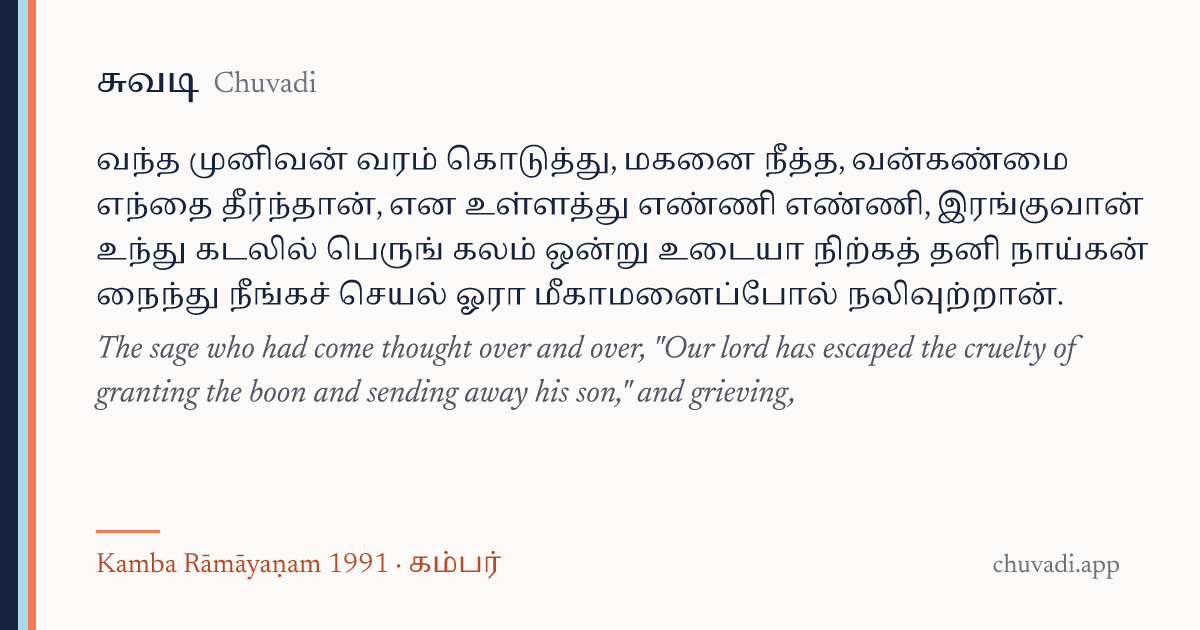
கம்பராமாயணம் 1991 · அயோத்தியா 5.74
பாடல் · The poem
Tap a word to see its gloss in the commentary and where else it occurs.
பாட வேறுபாடு · Project Madurai reads
பொருள் · Meaning in Tamil
வந்த முனிவன் - அங்கே வந்த வசிட்டன்; வரம் கொடுத்து மகனை நீத்த வன்கண்மை - வரத்தைக் கொடுத்து மகனைப் பிரிந்த கொடுமையை; எந்தை - தயரதன்; தீர்ந்தான் - நீங்கினான்; என - என்று; உள்ளத்து - மனத்தில்; எண்ணி எண்ணி இரங்குவான் - நினைத்து நினைத்து மனம் தளர்பவனாய்; உந்து கடலில் - அலை மோதும் கடலில்; பெருங்கலம் ஒன்று உடையாநிற்க - பெரிய கப்பல் ஒன்று உடைந்துவிட; தனி நாய்கன் - தனிப்பட்ட கப்பல் தலைவன் இறந்துபட; செயல் ஓரா மீகாமனைப் போல் - தான் செய்வது இன்னது எனத் தெரியாமல் திகைத்துத் தடுமாறுகின்ற மாலுமியைப் போல; நைவுற்றான் - வருந்தினான்.
மன்னவன் உடல் மரக்கலம் - மன்னவன் மரக்கலத் தலைவன் - வசிட்டன் மாலுமி என உவமை கொள்க.
ஆங்கிலம் · English translationAI
Translation
- The sage who had come thought over and over, "Our lord has escaped the cruelty
- of granting the boon and sending away his son," and grieving,
- like a helmsman who cannot tell what to do when a great ship breaks apart
- on the surging sea and its sole master perishes, he was stricken.
What the poem says
Vacittaṉ reflects that the king has passed beyond the harshness of having granted Kaikēyi's boons and banished his own son. Death has released him from that pain.
The sage himself is like a helmsman whose great ship has broken up in a stormy sea and whose master has drowned, leaving him at a loss. The king's body is the ship, the king its master, and Vacittaṉ the steersman left to guide the kingdom.