



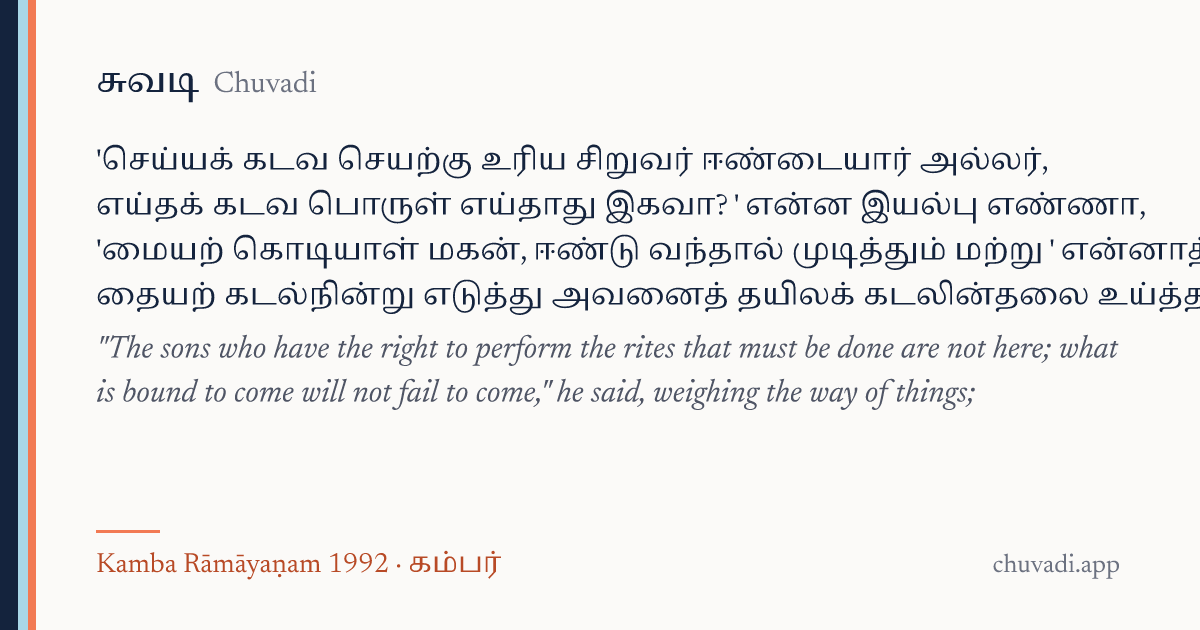
கம்பராமாயணம் 1992 · அயோத்தியா 5.75
பாடல் · The poem
Tap a word to see its gloss in the commentary and where else it occurs.
பாட வேறுபாடு · Project Madurai reads
பொருள் · Meaning in Tamil
“செய்யக் கடவ - (தசரதன் இறந்த பின்னர்) அவனுக்குச் செய்தற்குரிய கடமைகளை; செயற்கு உரிய - செய்தற்கு உரிமை உடைய; சிறுவர் - குமாரர்கள்; ஈண்டையார் அல்லர் - இங்கே இல்லை; எய்தக் கடவ பொருள் எய்தாது இகவா” - வரவேண்டியவைகள் வராது போகா; என்ன - என்று; இயல்பு எண்ணா - உலக இயல்பும் ஊழின் இயல்பும் கருதி; “மையல் கொடியாள் மகன் - மன மயக்கம் கொண்ட கொடியவளான கைகேயியின் மகனாகிய பரதன்; ஈண்டு வந்தால் - அயோத்திக்கு வந்து சேர்ந்தபிறகு; முடித்தும் - (அரசனது) உத்திரிகிரியைகளைச் செய்து முடிப்போம்; என்ன - என்று கருதி; தையல் கடல் நின்று எடுத்து - கோசலை சுமித்திரை கைகேயி மற்றும் அறுபதினாயிரம் மகளிர்களாய பெருங்கடலில் இருந்து தசரதனை எடுத்து; அவனை; தயிலக்கடலின் தலை உய்த்தான் - கடல்போல் மிகுந்த தயிலத்தினிடத்தில் கொண்டு சேர்த்தான்.
“மற்று” அசைநிலை. பரதன் உரிமைக்கு ஆகான் என்று வசிட்டனிடமே தசரதன் மறுத்திருப்பதும், அது வசிட்டனுக்குத் தெரிந்துண்மையும், பின்னர்ப் பரதன் வந்து கடன் செய்ய முனைந்தபோது “அரசன் நின்னையும் துறந்து போயினான்” என்று பரதனை (2231) வசிட்டனே தடுப்பதுண்மையும் இருக்க, இங்கே வசிட்டனே மையல் கொடியாள் மகன் ஈண்டு வந்தால் முடித்தும் என்று கூறுவது எங்ஙனம் பொருந்தும் என்ற ஒரு சிலர்க்கு ஐயம் எழுவது உண்மையே. தற்போது பரதனே கோசல நாட்டுக்கு அதிபதி ஆதலின், சக்கரவர்த்தி வராமல் அரசாங்க சம்பந்தமான எதுவும் வேறு யாரும் செய்ய இயலாது என்பதும், அடுத்துச் செயற்குரிமை படைத்தவன் சத்ருக்கனன் ஆயினும் பரதன் வராமல் சத்துருக்கனன் வரமாட்டான் என்பதும் கருதியே வசிட்டன் அவ்வாறு கூறினான் என்பது உய்த்துணரப்படுதலின் ஐயத்துக்கு இடமில்லை என அறிக. “தையற் கடல் நின்று எடுத்து அவனைத் தயிலக் கடலின் தலை உய்த்தான்” என்ற சொல்லழகு அறிந்து இன்புறத் தக்கது. “உறற்பால நீக்கல் உறுவர்க்கும் ஆகா” “உறற்பால தீண்டா விடுதல் அரிது” (நாலடி. 4,9.) என்பவற்றை இங்கு “எய்தக் கடவ பொருள் எய்தாது இகவா” என்பதுடன் இணைத்துக் கருதுக.
ஆங்கிலம் · English translationAI
Translation
- "The sons who have the right to perform the rites that must be done are not here;
- what is bound to come will not fail to come," he said, weighing the way of things;
- "When the son of that deluded, cruel woman comes here, we will complete them," he said,
- and lifting the king out of the sea of women, he laid him in a sea of oil.
What the poem says
Vacittaṉ reasons that none of the sons entitled to perform the funeral rites is present, and that what fate has decreed cannot be avoided. He decides to wait for Paratan, Kaikēyi's son, and meanwhile has the body taken from among the mourning queens and placed in a vat of oil to preserve it. The play between the sea of women and the sea of oil is a celebrated turn of phrase.
Readers have asked why Vacittaṉ waits for Paratan when the king had disowned him and Vacittaṉ will later stop him from performing the rites. The commentary answers that Paratan is now the ruler, so nothing official can be done without him, and Catturukkaṉaṉ, who has the next right, will not come without Paratan.