



கம்பராமாயணம் 1995 · அயோத்தியா 5.78
பாடல் · The poem
Tap a word to see its gloss in the commentary and where else it occurs.
பொருள் · Meaning in Tamil
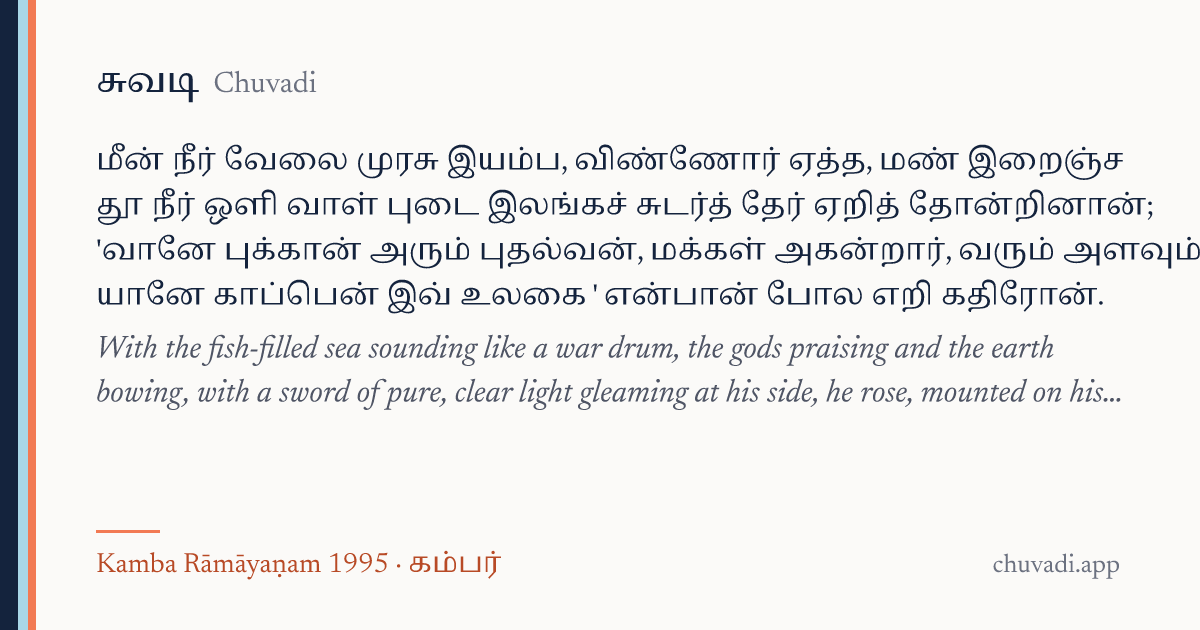
எறி கதிரோன் - வெயிலொளியை வீசுகின்ற சூரியன்; “அரும் புதல்வன் - நம் குலத்து அரிய மகனாகிய தசரதன்; வானே புக்கான் - சுவர்க்க லோகம் புகுந்தான்; மக்கள் அகன்றார் - அவனுடைய மக்கள் காட்டிலும், கேகய நாட்டிலும் ஆக அகன்று சேய்மையில் உள்ளார்கள்; வரும் அளவும் - ஆட்சிக்குரிய அவர்கள் வருகின்றவரையிலும்; இவ் உலகை யானே காப்பென்” - இந்த உலகத்தை நானே ஆட்சி செய்து காப்பாற்றுவேன்; என்பான்போல் - என்று சொல்லுபவனைப் போல; மீன் நீர் வேலை முரசு இயம்ப - மீன்களையுடைய நீர் பொருந்திய கடலாகிய முரசம் ஒலிக்க; விண்ணோர் ஏத்த - தேவர்கள் துதிக்க; மண் இறைஞ்ச - மண்ணுலகில் உள்ளார் காலை வழிபாடு செய்து வணங்க; தூநீர் ஒளிவாள் புடை இலங்க - தூய நீர்மையுடைய ஒளியாகிய வாள் பக்கத்தில் விளங்க; சுடர்த் தேர் ஏறித் தோன்றினான் - சுடராகிய தேரில் ஏறித் தோன்றினான்.
தசரதன் சூரியகுலத்தவன் ஆதலின், சூரியனுக்கு அவன் “அரும் புதல்வன்” ஆயினன். தன்குல ஆட்சியாளர் இறந்தும், அகன்றும் தடுமாறியபடியால் சந்ததிகள் வந்து ஆட்சிப் பொறுப்பு ஏற்கும் வரையிலும் தான் உலகை ஆளத் தோன்றியதாகத் தற்குறிப்பேற்றம் செய்தார். அரசன் வருங்கால் முரசு இயம்பல், தேவர் வாழ்த்தல், உலகர் வணங்கல், வாள் புடை இருத்தல், தேர் ஏறுதல் முதலிய உளவாதலின் அவற்றையும் சூரியன் வருகைக்கு ஏற்பப் பொருத்தினார். “ஒளி வாள்” ஒளியுடைய வாள் என்று அரசனுக்கும், மிக்க ஒளி என்று சூரியனுக்கும் வரும். “வாள்” என்றாலும் “ஒளி” என்பதே பொருள் ஆதலின், “ஒளிவாள்” ஒருபொருட் பன்மொழியாம். “மிக்க ஒளி” என்றாகும். 'சுடர்த்தேர்' என்பது சுடருடைய தேர் என்று அரசனுக்கும், சுடர்களாகிய தேர் என்று சூரியனுக்கும் வரும். மற்றவை வெளிப்படை.
ஆங்கிலம் · English translationAI
Translation
- With the fish-filled sea sounding like a war drum, the gods praising and the earth bowing,
- with a sword of pure, clear light gleaming at his side, he rose, mounted on his blazing chariot,
- as if saying, "My dear son has entered heaven, his children are far away; until they come
- I myself will guard this world": the sun who casts his rays.
What the poem says
Dawn breaks after the king's death. Since Tacarataṉ belongs to the Solar dynasty, the Sun is pictured as his ancestor, rising to rule the world himself until the king's absent sons return. This is a poetic fancy in which a natural event is given an imagined motive.
Every detail suits both a king and the sun: the roaring sea is his drum, the gods hail him, people below bow in morning worship, and his bright sword and chariot of flame are at once royal emblems and the sun's own radiance.