



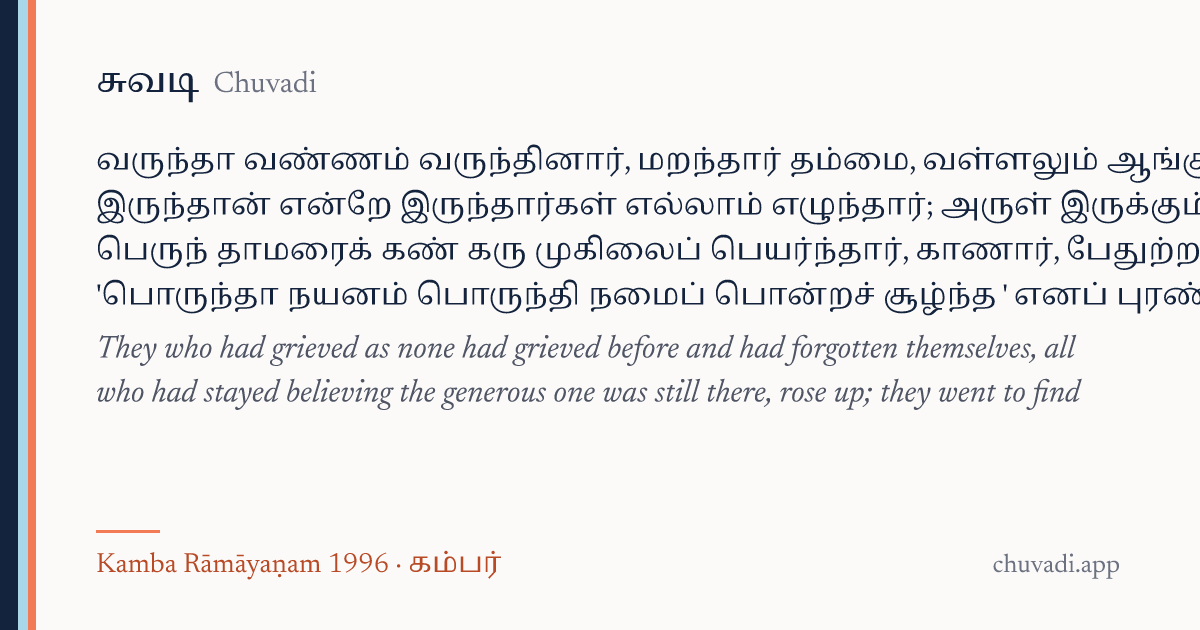
கம்பராமாயணம் 1996 · அயோத்தியா 5.79
பாடல் · The poem
Tap a word to see its gloss in the commentary and where else it occurs.
பொருள் · Meaning in Tamil
வருந்தாவண்ணம் வருந்தினார் - இதுவரை யாரும் வருந்தாத முறையில் வருந்தினவர்களும்; தம்மை மறந்தார் - தம்மையே மறந்தவர்களும் ஆகிய (இராமனுடன் காடு சென்ற) நகரமாந்தர்கள்; “வள்ளலும் ஆங்கு இருந்தான்” என்றே இருந்தார்கள் எல்லாம் - இராமனும் அங்கே தான் இருக்கின்றான் என்று கருதி இருந்த எல்லோரும்; எழுந்தார் - புறப்பட்டு; பெயர்ந்தார் - இராமன் தங்கியிருந்த இடத்துக்குச் சென்று; அருள் இருக்கும் பெருந்தாமரைக்கண் கரு முகிலை - அருள் வீற்றிருக்கும் பெரிய தாமரை மலர்போன்ற கண்களை உடைய கரு முகில் வண்ணனாகிய இராமனை; காணார் - காணாது; பேதுற்றார் - மயக்கம் அடைந்து; “பொருந்தா நயனம் பொருந்தி - மூடாத கண்கள் மூடி; நமைப் பொன்றச் சூழ்ந்த” - நம்மை அழியும் படி ஆலோசித்துச் செய்தன; என - என்று சொல்லி; புரண்டார் - தரையில் வீழ்ந்து புரளத் தொடங்கினார்கள்.
துக்கத்தால் இதுவரை மூடாத கண்கள் “இராமனுடன் இருக்கிறோம். இராமனுடனேயே காட்டிலும் இருக்கப் போகிறோம்” என்னும் களிப்பினால் உறங்கிவிட்டன; அதுவே நமக்கு விபத்தாயிற்று என்று வருந்தினர் நகரமாந்தர். அருள் குடியிருக்கும் கண்களை உடையான் அவன் என்று இவ்விடத்தில் கூறியது நகரமாந்தரை உறங்கச் செய்ததும் அவன் செய்த அருளே என்பதை உணர்த்தி நயம் செய்கிறது. அவதார நோக்கத்துக்கு இடையூறு ஆக நகரமாந்தர் தன்னுடன் வராமைப்பொருட்டும், பின்னர்த் தன்னைய பரத குணாநுபவங்களை நகர மாந்தர் அனுபவித்தற்கும் ஆக அவர்களை உறங்கச் செய்தது அருளாலே என அறிக.
ஆங்கிலம் · English translationAI
Translation
- They who had grieved as none had grieved before and had forgotten themselves,
- all who had stayed believing the generous one was still there, rose up; they went to find
- the dark cloud with great lotus eyes where grace dwells, and did not find him, and were bewildered;
- "Our eyes that never closed have closed and plotted our ruin!" they cried, and rolled on the ground.
What the poem says
The people of Ayōttī who had followed Irāmaṉ into the wilderness wake at dawn and discover that he has gone. Overcome by sorrow, they had not slept for days; then, comforted by the thought of being with him, they fell asleep, and now they blame their own eyes for betraying them.
By mentioning Irāmaṉ's eyes full of grace here, the poet hints that their sleep was itself his kindness: he spared them the hardships of the forest, kept them from hindering the purpose of his incarnation, and left them to live on and later witness Paratan's virtue.