



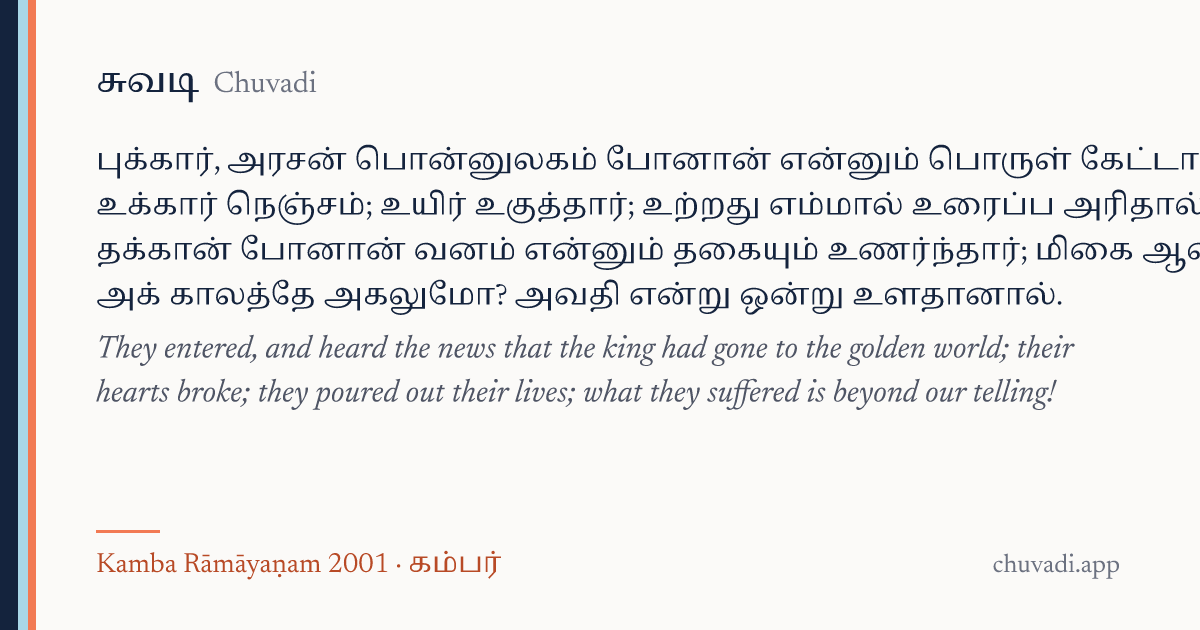
கம்பராமாயணம் 2001 · அயோத்தியா 5.84
பாடல் · The poem
Tap a word to see its gloss in the commentary and where else it occurs.
பொருள் · Meaning in Tamil
புக்கார் - நகரிற் புகுந்த மக்கள்; “அரசன் பொன்னுலகம் போனான்” என்னும் பொருள் கேட்டார் - தசரதன் தேவர் உலகம் சென்றான் என்கிற செய்தியைக் கேட்டு; நெஞ்சம் உக்கார் - மனம் உடைந்து; உயிர் உகுத்தார் - உயிர் சிந்தினார்கள்; உற்றது எம்மால் உரைப்ப அரிது - அவர்கள் அடைந்த துன்பம் எம்மால் சொல்லுதற்கு இயலாது; “தக்கான் வனம் போனான்” - இராமன் வனம் சென்றான்; என்னும் தகையும் உணர்ந்தார் - என்கின்ற தன்மையும் அறிந்தார்கள்; மிகை ஆவி - எஞ்சி நின்ற உயிர்; அவதி என்று ஒன்று உளதானால் - உயிர் போகும் கால எல்லை என்று ஒன்று இருக்குமானால்; அக் காலத்தே அகலுமோ? - செய்தி கேட்ட அக்காலத்தேயே போகுமா? (போகாது).
உயிர் போவதற்கு வகுத்த கால எல்லையால் உயிர் தங்கியுள்ளதே அன்றி வேறன்று என நகரமாந்தர் துயரம் கூறியபடியாம். “ஆல்” அசை. அரசன் இறந்து போன செய்தி கேட்டு உகுந்த உயிர் போக மிகுதி உயிர் இராமன் வனம் போனதறிந்தும் போகாமைக்குக் காரணம் அது நீங்கும் கால எல்லை என்ற ஒன்று விதியால் வகுக்கப்பட்டிருப்பதனால் தான் என்று கூறினார்.
ஆங்கிலம் · English translationAI
Translation
- They entered, and heard the news that the king had gone to the golden world;
- their hearts broke; they poured out their lives; what they suffered is beyond our telling!
- They learned too that the worthy one had gone to the forest; would the life that was left
- depart at that moment, when there is such a thing as an appointed hour?
What the poem says
Back in the city the citizens learn the truth: the king is dead and Irāmaṉ has really gone to the forest. The first blow, the king's death, nearly kills them, and the poet says their pain is beyond his power to describe.
Why did the rest of their life not leave them when they learned of Irāmaṉ's exile? Only because each life has a fixed term set by destiny, and it cannot end before that hour comes.