



கம்பராமாயணம் 2009 · அயோத்தியா 6.6
பாடல் · The poem
Tap a word to see its gloss in the commentary and where else it occurs.
பொருள் · Meaning in Tamil
அருப்பு ஏந்திய கலசத்துணை - அரும்பைத் தன் உச்சியில் கொண்டுள்ள இரண்டு பொற்கலசங்கள்; அமுது ஏந்திய மதமா ஏந்திய மருப்பு - அமுதைத் தன்னிடத்தே வைத்துக்கொண்டுள்ள மதச் செருக்குடைய ஆண் யானையின் உயர்ந்த தந்தங்கள்; எனல் ஆம் முலை - என்று சொல்லத்தக்கதாகிய முலைகளையும்; மழை ஏந்திய குழலாள் - மேகத்தை ஒத்த கூந்தலையும் உடைய சீதை; கருப்பு ஏந்திரம் - கரும்பாலை; முதலாயின கண்டாள் - முதலியவற்றை (அங்கங்கே) கண்டவளாய், பொருப்பு ஏந்திய தோளானொடு - மலையை ஒத்த திண்ணிய தோளை உடைய இராமனோடு; விளையாடினள் போனாள் - விளையாடிக்கொண்டு சென்றாள்.
அரும்பு என்றது முலைக்காம்புகளை. அருப்பு - வலித்தல் விகாரம். எந்திரம் எனும் சொல் செய்யுளிசை நோக்கி ஏந்திரம் என நீண்டது. வழியிடைக் காட்சிகள் கண்டு சீதை வேதனை தெரியாமல் மகிழ்ந்து சென்றாள் என்பதாம். ஏந்திய.... சொற்பொருட் பின்வரு நிலையணி.
ஆங்கிலம் · English translationAI
Translation
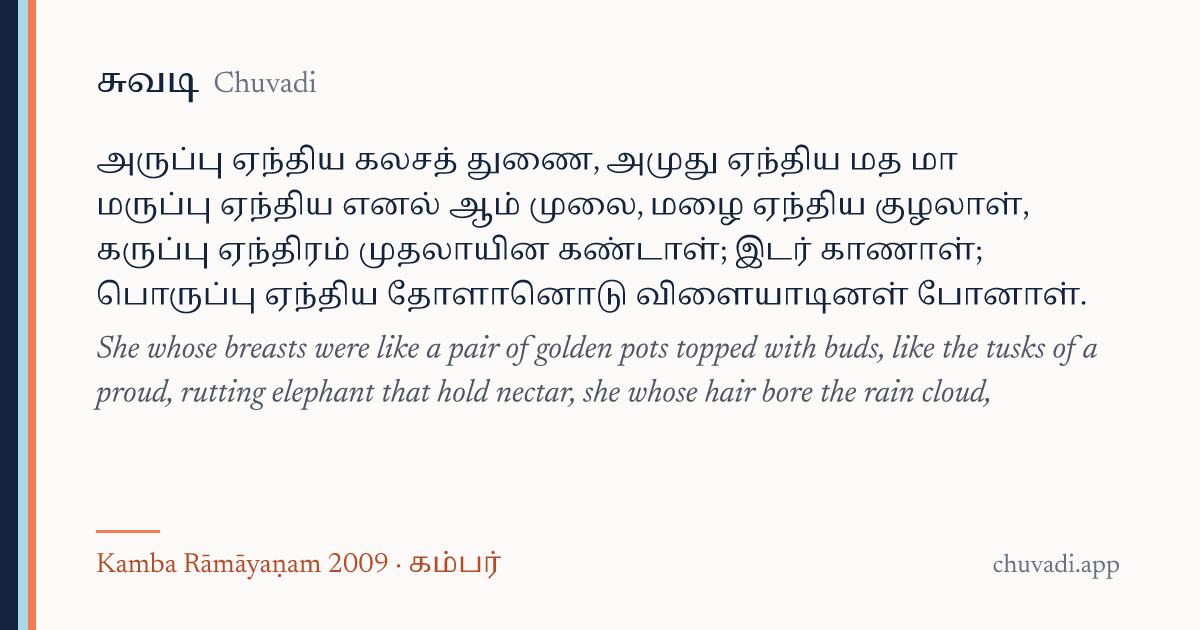
- She whose breasts were like a pair of golden pots topped with buds, like the tusks
- of a proud, rutting elephant that hold nectar, she whose hair bore the rain cloud,
- saw sugarcane presses and other such things; she saw no hardship;
- she went along playfully with him whose shoulders were like mountains.
What the poem says
Cītai watches the sights of the farming country, such as sugarcane presses, and in the company of Irāmaṉ, whose shoulders are as strong as hills, she feels none of the hardship of the road. She walks along cheerfully, as if at play.
Her beauty is described in the conventional terms of Tamil poetry. The word for bearing or holding is repeated in each line, a figure of deliberate repetition of word and sense.