



கம்பராமாயணம் 2010 · அயோத்தியா 6.7
பாடல் · The poem
Tap a word to see its gloss in the commentary and where else it occurs.
பாட வேறுபாடு · Project Madurai reads
பொருள் · Meaning in Tamil
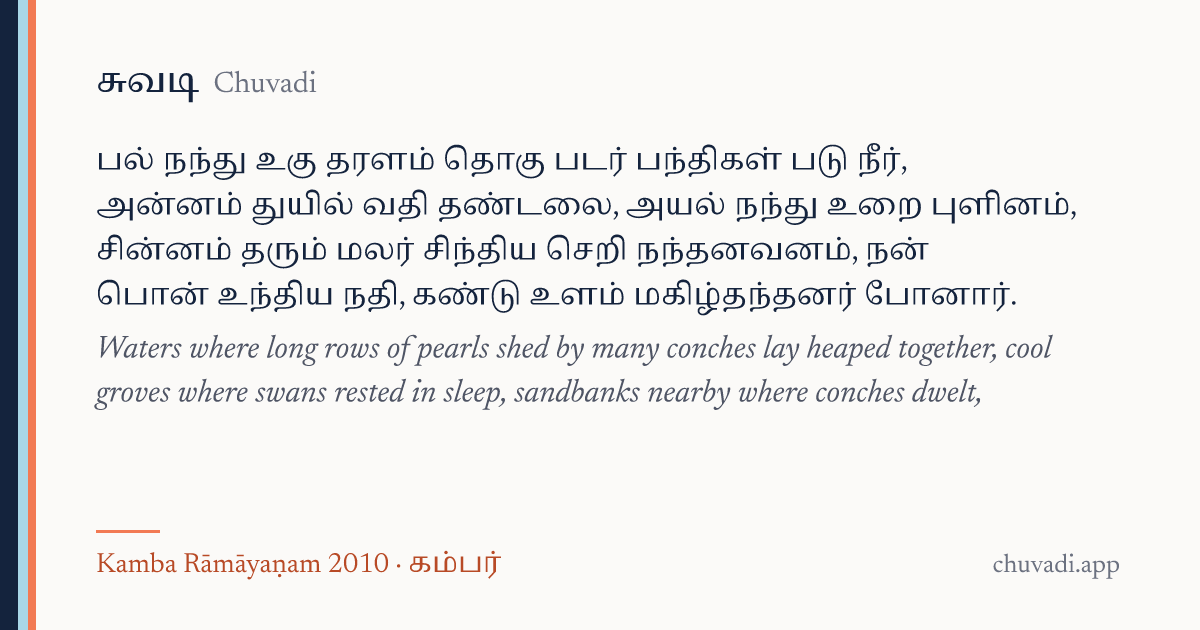
பல் நந்து உகு - பல சங்குகள் சுக்கிய; தொகு தரளம் படர் பந்திகள் படுநீர் - திரண்ட முத்துகளின் தொடர்ந்த வரிசைகள் பொருந்திய நீர்த்துறைகளையும்; அன்னம் துயில் வதி தண்டலை - அன்னப் பறவைகள் தூங்குகின்ற சோலைகளையும்; அயல் நந்து உறை புளினம் - அருகே சங்குகள் தங்கியுள்ள மணல் மேடுகளையும்; சின்னம் தரும் மலர் சிந்திய செறி நந்தனவனம் - விடுபூவாக விழும் மலர்களைச் சிதறிய நெருங்கிய பூந்தோட்டங்களையும்; நன் பொன் உந்திய நதி - நல்ல பொற்பொடிகளைத் தள்ளுகின்ற ஆறுகளையும்; கண்டு - பார்த்து; உளம் மகிழ்ந்தனர் போனார் - மனம் மகிழ்ச்சி அடைந்தவர்களாய்ச் சென்றார்கள்.
இராமன் கங்கை சேரும் முன் தமசா நதிக் கரையில் தங்கி, தேவ சுருதி, கோமதி என்னும் ஆறுகளைக் கடந்தான் என்று வால்மீகி கூறியது கருதி இங்கே 'படு நீர்' 'பொன் உந்திய நதி' என்றார் என்க.
ஆங்கிலம் · English translationAI
Translation
- Waters where long rows of pearls shed by many conches lay heaped together,
- cool groves where swans rested in sleep, sandbanks nearby where conches dwelt,
- dense flower gardens strewn with loose fallen blossoms, and fine
- rivers that rolled along gold dust: seeing these, they went on with gladdened hearts.
What the poem says
The three travellers pass through the rich landscape of the Kōcala country: river fords lined with pearls from conch shells, groves where swans sleep, sandbanks where conches lie, gardens carpeted with fallen flowers, and rivers carrying gold dust in their current.
The mention of several waters and rivers echoes Vālmīki's account, in which Irāmaṉ camps by the Tamasā and crosses other rivers before reaching the Ganges.