



கம்பராமாயணம் 2011 · அயோத்தியா 6.8
பாடல் · The poem
Tap a word to see its gloss in the commentary and where else it occurs.
பொருள் · Meaning in Tamil
முது மேதிகள் - கிழட்டு எருமைகள்; கதிர் மேய்வன - நெற்கதிர்களை மேய்ந்து; கடைவாய் பால் பாய்வன - தமது கடை வாயிலிருந்து (மணி பிடியாத அந்நெற்கதிர்களின் அரிசிப்) பால் ஒழுகப் பெற்றவையாய்; கால் பாய்வன - தமது கால்களால் (நீர்நிலைகளில்) பாய்வனவாம்; நறைபாய்வன மலர்வாய் அளிபடர - தேன் ஒழுகப் பெற்றனவாய மலர்களிடத்து வண்டுகள் மேல் செல்லும்படி; சேல்பாய்வன கயல் பாய்வன - சேலும் கயலும் துள்ளிப் பாய்வனவாம்; பாய் புனல் - பாய்ந்து செல்லும் ஆற்றுநீரிலே; செங்கால் மட அன்னம் போல் - சிவந்த காலை உடைய பெண் அன்னப் பறவைகள் போல; மடவார் - பெண்கள்; படி - முழுகுகின்ற; நெடு நாடு அவை போனார் - நீண்ட கோசல தேசத்தைக் கடந்து சென்றார்கள்.
கோசல நாட்டின் நீர்வளம் குறித்ததாம். நெற்கதிர் முற்றாப் பசுங்கதிர் ஆதலின், அதனை உண்ட மேதிகளின் வாயில் பால் சோர்ந்தது. அத்துடன் அம்மேதிகள் நீர்நிலைகளிற் பாய்கின்றன. வண்டுகள் மேல் எழுந்து செல்லும்படி மலர்களின் மேல் கயலும் மீனும் துள்ளுவன. அன்னப் பறவைகள் போல் பெண்கள் நீரில் மூழ்குகிறார்கள் என்று கோசல நாடு நீர்வளத்தால் மிக்குள்ளமையைப் புலப்படுத்தினார் என்க.
ஆங்கிலம் · English translationAI
Translation
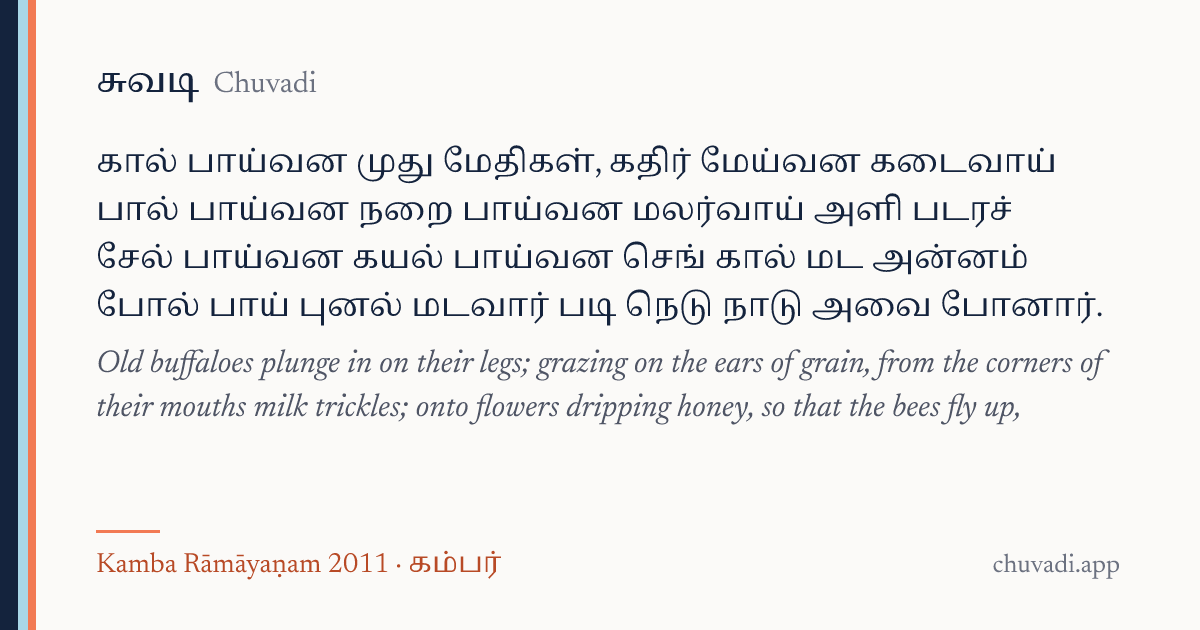
- Old buffaloes plunge in on their legs; grazing on the ears of grain, from the corners of their mouths
- milk trickles; onto flowers dripping honey, so that the bees fly up,
- the cēl fish leap and the kayal fish leap; in the rushing water, like red-legged gentle swans,
- young women bathe: through such broad lands they went.
What the poem says
Another picture of the fertile Kōcala country. Old water buffaloes graze on unripe ears of rice, and the milky sap of the green grain dribbles from their mouths as they wade into the ponds. Fish leap onto honey-laden flowers, scattering the bees, and women bathe in the streams like graceful swans.
All of it shows how abundant the land's water is. The travellers pass on through this long, rich country toward the Ganges.