



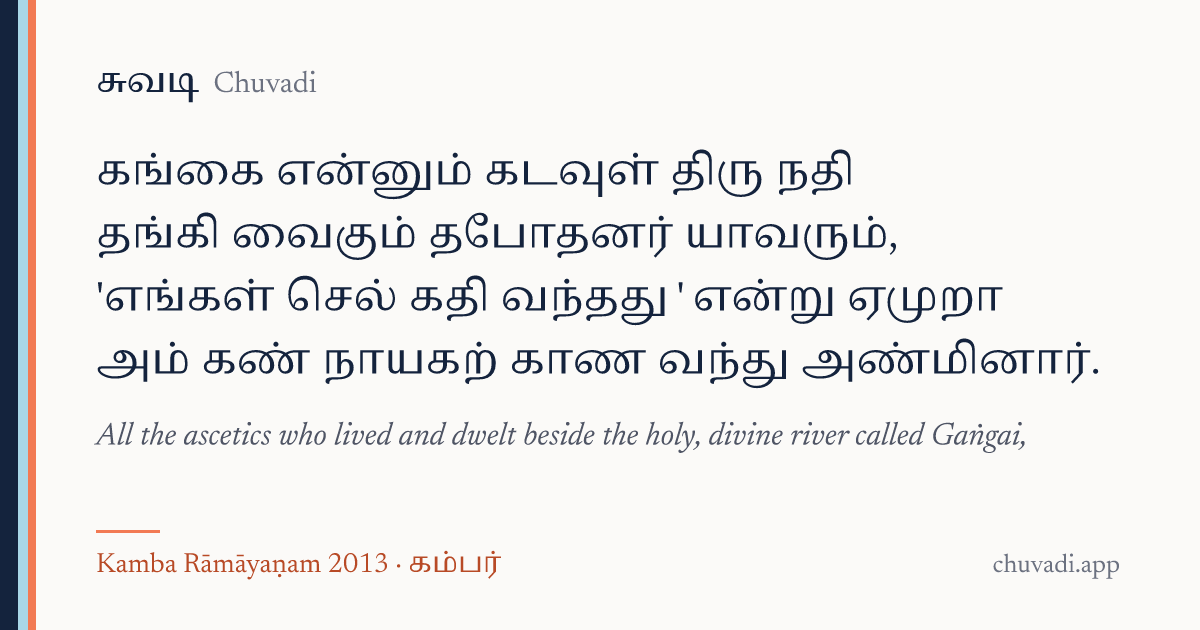
கம்பராமாயணம் 2013 · அயோத்தியா 6.10
பாடல் · The poem
Tap a word to see its gloss in the commentary and where else it occurs.
பொருள் · Meaning in Tamil
கங்கை என்னும் கடவுள் திருநதி - கங்கை என்று சொல்லப்படும் தெய்வத்தன்மை உடைய அழகிய ஆற்றின் கரையில்; தங்கி வைகும் தபோதனர் யாவரும் - தங்கி இருக்கின்ற முனிவர்கள் எல்லாரும்; “எங்கள் செல் கதி வந்தது” என்று ஏமுறா - எங்கள் மோட்சமாகிய செல்லும் பேறு எதிர்ப்பட்டது என்று மனத்தின்கண் இன்பம் அடைந்து; அம்கண் நாயகன் காண - அருளுடைய கண்களை உடைய இராமனைக் காண்பதற்கு; வந்து அண்மினார் - வந்து அணுகினார்கள்.
பரம்பொருளே இராமனாக அவதரித்துள்ளமை உணர்ந்தவர் ஆதலின், “எங்கள் செல்கதி வந்தது” என்று முனிவரர் இன்புற்றனர் என்க. கண்ணுக்கு அழகு, அருளாதலின் “அம்” - அழகு எனப்பொருள் கொண்டது.
ஆங்கிலம் · English translationAI
Translation
- All the ascetics who lived and dwelt
- beside the holy, divine river called Gaṅgai,
- rejoicing, "The goal we journey toward has come to us,"
- came near to see the lord with lovely eyes.
What the poem says
The sages living by the Ganges know that Irāmaṉ is the Supreme Being in human form. To them his arrival means that their final goal, liberation, has come to meet them in person, and they hurry joyfully to see him.
His eyes are called lovely, and the commentary notes that what makes eyes beautiful is the grace that shines in them.