



கம்பராமாயணம் 2014 · அயோத்தியா 6.11
பாடல் · The poem
Tap a word to see its gloss in the commentary and where else it occurs.
பாட வேறுபாடு · Project Madurai reads
பொருள் · Meaning in Tamil
பெண்ணின் நோக்கும் சுவையை - பெண்ணிடத்துக் கருதப்படும் ஐம்புல இன்பத்தை; பிறர் பிறர்க்கு - ஒருவர் மற்றொருவர்க்கு; எண்ணி - நினைத்து; நோக்கி - பார்த்து; இயம்ப அரும் - எடுத்துச் சொல்லமுடியாத; இன்பத்தை - இன்பச்சுவையை; பண்ணின் நோக்கும் பராவமுதை - இசைவடிவான வேதத்தினால் அறியப்படும் மேலான அமுத வடிவான பரம்பொருளை; பசுங்கண்ணின் - குளிர்ந்த கண்களால்; நோக்கினார் - பார்த்து; உள்ளம் களிக்கின்றார் - மனம் மகிழ்ச்சியடைவாராயினர்.
“கண்டு கேட்டு உண்டு உயிர்த்து உற்றறியும் ஐம்புலனும், ஒண்டொடி கண்ணே உள” என்னும் குறளை (குறள். 1101.) நோக்கியது பெண்ணின் நோக்கும் சுவை என்பது. “கண்டு கேட்டு உற்றுமோந்து உண்டு உழலும் ஐங்கருவி கண்ட இன்பம் தெரிவு அரிய அளவு இல்லாச் சிற்றின்பம்...... கண்ட சதிர் கண்டொழிந்தேன், அடைந்தேன் உன் திருவடியே” (திவ்ய. 3328) என்னும் நம்மாழ்வார் பாசுரமும் காண்க. “ஐம்புலன்கள் ஆர வந்து என்னுள்ளே புகுந்த விசைமாலமுதப்பெருங்கடல்” என்றார் இறைவனை மணிவாசகரும் (திருவா. திருச்சதகம் - 20) “எவ்வாறொருவர்க்கு இசைவிப்பது” (கந்தர் அநுபூதி 30) என்று அருணகிரியாரும், “இயம்ப அரும் இன்பத்தை” என்பதனோடு ஒப்பு நோக்கத்தக்கன. பண் என்பது இசையாம், இங்கு இசை வடிவான வேதம்.
ஆங்கிலம் · English translationAI
Translation
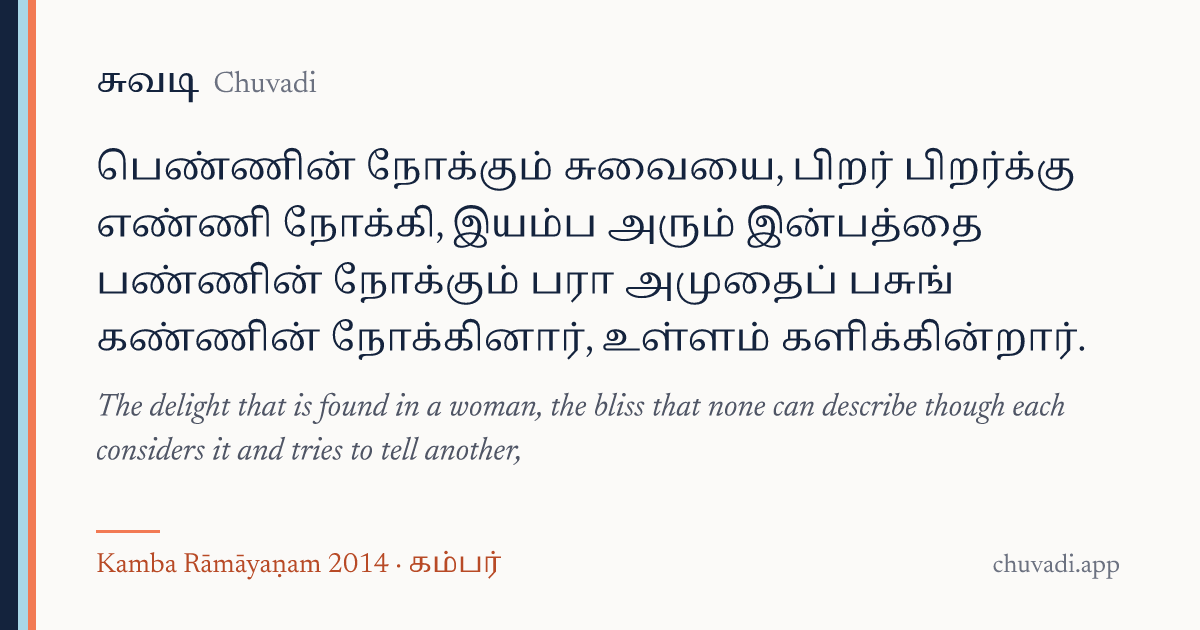
- The delight that is found in a woman,
- the bliss that none can describe though each considers it and tries to tell another,
- the supreme nectar perceived through song: him
- they gazed upon with cool, tender eyes, and their hearts rejoiced.
What the poem says
The sages look upon Irāmaṉ and are filled with joy. He is described as containing in himself the whole delight of the senses that love poetry locates in a beloved woman, as the Tirukkuṟaḷ says all five senses find their pleasure in her. He is also the indescribable bliss that no one can put into words for another.
He is the supreme nectar known through song, meaning the Vedas, which are chanted. Devotional poets such as Nammāḻvār, Māṇikkavācakar and Aruṇakiri similarly speak of God as filling all five senses and as a joy beyond telling.