



கம்பராமாயணம் 2018 · அயோத்தியா 6.15
பாடல் · The poem
Tap a word to see its gloss in the commentary and where else it occurs.
பொருள் · Meaning in Tamil
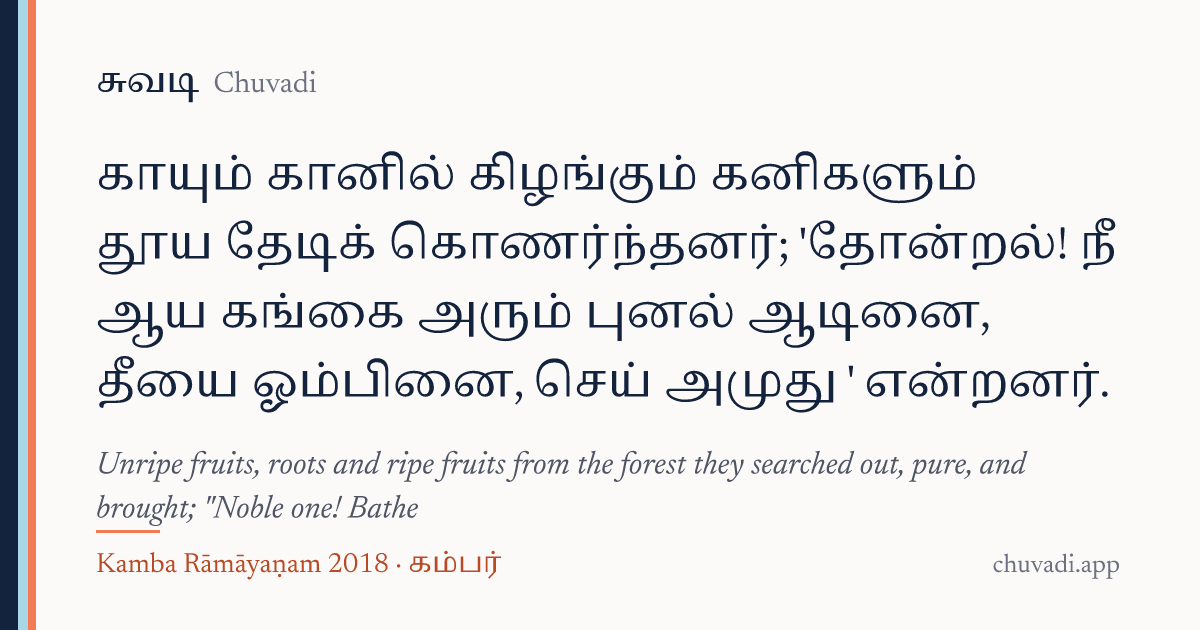
(அம் முனிவர்கள்), கானில் - காட்டிலிருந்து; காயும் கிழங்கும் கனிகளும் தூய தேடிக் கொணர்ந்தனர் - காய், கிழங்கு, பழம் ஆகியவற்றைத் தூயவையாய்த் தேடிக் கொண்டுவந்தவர்களாய்; (இராமனை நோக்கி) “தோன்றல்! - யாவரினும் சிறந்து விளங்குபவனே! நீ -; ஆய கங்கை அரும் புனல் ஆடினை - அப்படிப்பட்ட கங்கையின் அரிய நீரில் முழுகியவனாய்; தீயை ஓம்பினை - எரியை வளர்த்து (வழிபாடு) முடித்து; அமுது செய்” - உண்பாயாக, என்றனர் - என்று சொன்னார்கள்.
தோன்றல் - பிறர் அறியுமாறு புகழுடன் விளங்கலாம். ஆய கங்கை - தூயதாகிய கங்கை என்றவாறு. நீராடி, எரியோம்பி, அமுது செய்தல் நித்திய கரும நெறியாம்.
ஆங்கிலம் · English translationAI
Translation
- Unripe fruits, roots and ripe fruits from the forest
- they searched out, pure, and brought; "Noble one! Bathe
- in the precious waters of the holy Gaṅgai,
- tend the sacred fire, and then take your meal," they said.
What the poem says
The sages gather clean forest food, such as fruits and edible roots, and invite Irāmaṉ to follow the daily routine of a twice-born man: bathe in the sacred Ganges, perform the fire offering, and then eat.
They address him as the noble one, a title for someone whose fame shines out for all to see.