



கம்பராமாயணம் 2019 · அயோத்தியா 6.16
பாடல் · The poem
Tap a word to see its gloss in the commentary and where else it occurs.
பாட வேறுபாடு · Project Madurai reads
பொருள் · Meaning in Tamil
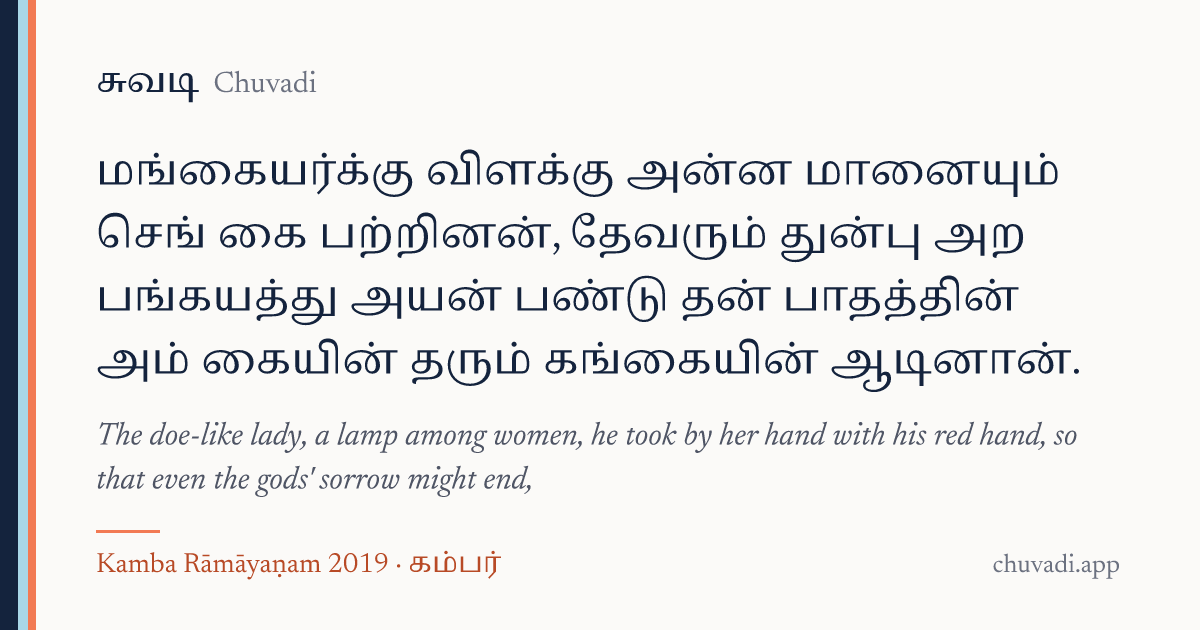
மங்கையர்க்கு விளக்கு அன்ன மானையும் - (இராமன்) பெண்களுக்குத் தீபம் போன்றவளாகிய சீதையையும்; தேவரும் துன்பு அற - தேவர்களும் துன்பம் நீங்கும்படியாக; செங்கை பற்றினன் - தன் சிவந்த கைகளாற் பிடித்துக் கொண்டு; பங்கயத்து அயன் - தாமரை மலரில் வீற்றிருக்கும் பிரம தேவன்; பண்டு - முன்னொருகால்; தன் பாதத்தின் - திருமாலாகிய தன் திருவடிகளில்; அம் கையின் - பிரமனாகிய தன் கையில் உண்டாகிய கமண்டல நீரால்; தரும் - உண்டாக்கிய; கங்கையின் - கங்கை யாற்றில், ஆடினான் - முழுகினான்.
திருமால் திருவிக்கிரமனாக அவதாரம் எடுத்த பொழுது அப் பெருமானது திருவடி சத்தியலோகம் செல்ல, அங்கிருந்த அவர்தம் மகனாகிய பிரம தேவன் தன் தந்தையாரது திருவடி யென்று கருதித் தன் கையில் உள்ள கமண்டல நீரால் பாதங்களை விளக்கி வழிபாடு செய்ய, அத்திருவடிநீரே கங்கையாறாகப் பெருகியது என்பது விஷ்ணு புராணம். தன்னிடத்துண்டாகிய கங்கையில் தானே மூழ்கினான் என்பதாம்.
ஆங்கிலம் · English translationAI
Translation
- The doe-like lady, a lamp among women,
- he took by her hand with his red hand, so that even the gods' sorrow might end,
- and bathed in the Gaṅgai, which Brahmā of the lotus long ago
- brought forth with his fair hand upon the feet that were his own.
What the poem says
Irāmaṉ leads Cītai, the light of all women, by the hand into the Ganges and bathes. His journey, which will end the gods' suffering at the hands of Irāvaṇaṉ, is quietly recalled.
The verse alludes to the Vaiṣṇava legend of the river's origin. When Viṣṇu as Trivikrama strode across the universe, his foot reached Brahmā's heaven. Brahmā, his son, washed that foot with water from his water pot, and the water flowed down as the Ganges. So Irāmaṉ, who is Viṣṇu, is bathing in a river that came from his own feet.