



கம்பராமாயணம் 2020 · அயோத்தியா 6.17
பாடல் · The poem
Tap a word to see its gloss in the commentary and where else it occurs.
பாட வேறுபாடு · Project Madurai reads
பொருள் · Meaning in Tamil
கன்னி நீக்க அருங் கங்கையும் - அழியாத தன்மை என்றும் நீங்குதல் இல்லாத கங்கையும், கைதொழா - கைகளால் (இராமனை) வணங்கி; “பாருளோர் - இப் பூமியில் உள்ளோர்; பன்னி நீக்க அரும் பாதகம் - சொல்லிப் போக்க முடியாத பாவங்களை; என்னின் - என் மூலமாக, (முழுகி) நீக்குவர் - போக்கிக் கொள்வார்கள்; யானும் - நானும்; இன்று - இன்றைக்கு; என் தந்த உன்னின் - என்னைத் தந்த திருமாலாகிய உன்னால்; நீக்கினென் - (என் பாவங்களைப்) போக்கிக் கொண்டேன்; யான் உய்ந்தனென்” - நானும் பிழைத்தேன்; என்றாள் - என்று சொன்னாள்.
பிறர் செய்த பாவங்களைப் போக்கும் கங்கை இன்று தன்னைத் தந்த இறைவனாகிய இராமனே முழுகியதால் தன் பாவங்களைப் போக்கிக் கொண்டு மகிழ்ந்தாளாகக் கூறினார்.
ஆங்கிலம் · English translationAI
Translation
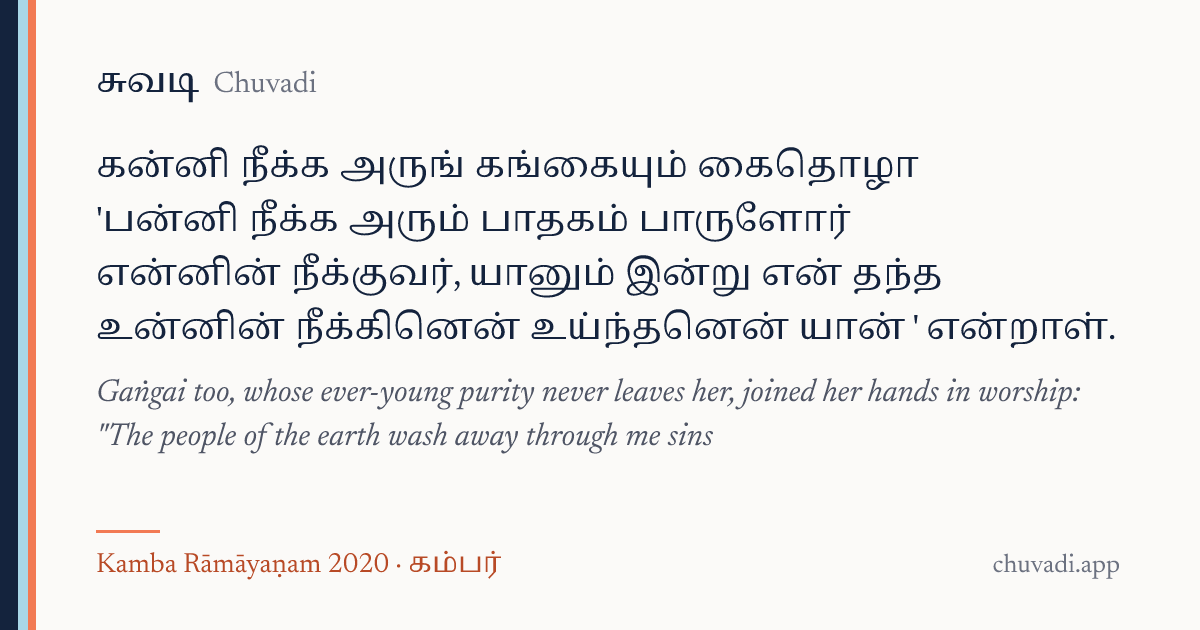
- Gaṅgai too, whose ever-young purity never leaves her, joined her hands in worship:
- "The people of the earth wash away through me sins
- too grave to speak of; and today I have washed away mine
- through you, who gave me birth; I am saved," she said.
What the poem says
The river goddess Gaṅgai herself worships Irāmaṉ. People everywhere come to her to cleanse sins so great they cannot be named, she says, but today she has been cleansed in turn, because the very God from whose feet she flowed has bathed in her.
Her lasting purity is described with a word meaning maidenhood: she never loses it.