



கம்பராமாயணம் 2021 · அயோத்தியா 6.18
பாடல் · The poem
Tap a word to see its gloss in the commentary and where else it occurs.
பாட வேறுபாடு · Project Madurai reads
பொருள் · Meaning in Tamil
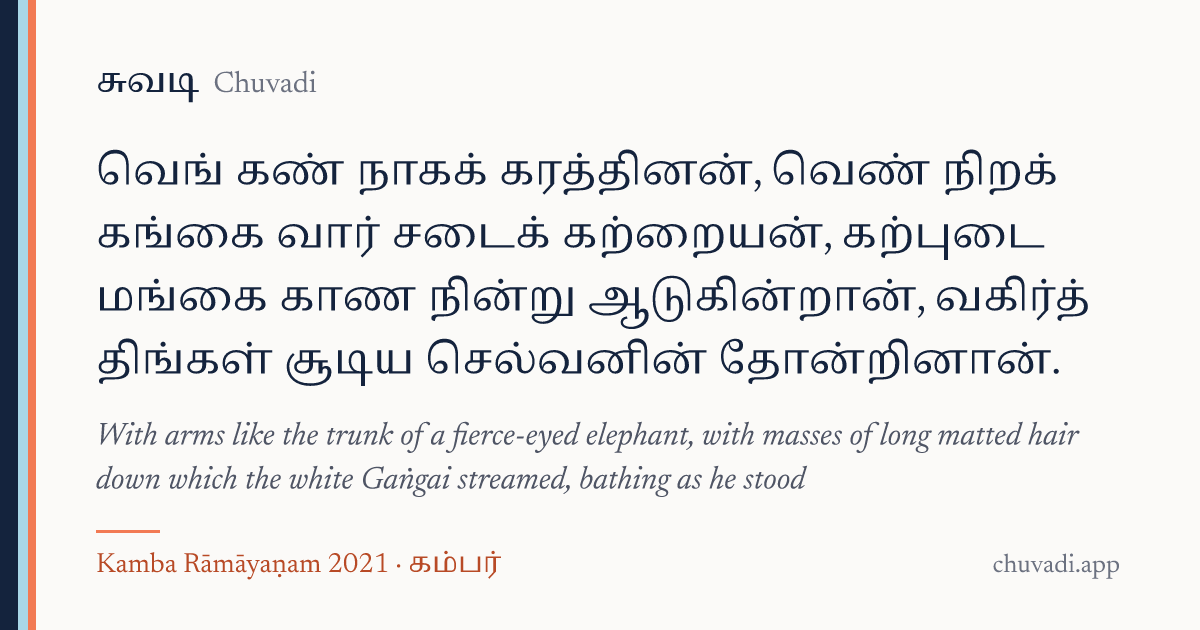
வெங் கண் நாகக் கரத்தினன் - கொடிய கண்ணை உடைய யானையின் துதிக்கை போன்ற நீண்ட கைகளை உடையவனான இராமன்; வெண் நிறக் கங்கை வார் சடைக் கற்றையன் - வெண்மையான நிறமுடைய கங்கை ஒழுகப் பெறுகின்ற சடைத் தொகுதிகளை உடையவனாய்; கற்புடை மங்கை காண - கற்பிற் சிறந்த சீதை காணும்படியாக; நின்று ஆடுகின்றான் - (நீரில்) நின்று நீராடுகின்றான்; வகிர்த் திங்கள் - பிளந்த சந்திரனை; (பிறையை) சூடிய - தலை மேல் சூடிய; செல்வனின் - சிவ பெருமானைப் போல; தோன்றினான் - தோற்றமளித்தான்.
கங்கை யொழுகும் சடையோடு பார்வதி காண ஆடுகின்ற பரம சிவனைப் போல, இராமனும் சீதை காணக் கங்கை நீர் ஒழுகுகின்ற சடையோடு ஆடுகின்றானாம். இங்கே ஆடுதல் என்பது சொல் அளவுக்கு சிவபெருமானோடு இராமனை ஒப்புறுத்தி இன்புறுத்துவதாம். அங்கே ஆடுதல் நடனம், இங்கே நீராடுதல் என்று பொருளால் வேறுபடும். மங்கை காணல், கங்கை நீர் ஒழுகும் சடை உடைமை இருவர்க்கும் பொது.
ஆங்கிலம் · English translationAI
Translation
- With arms like the trunk of a fierce-eyed elephant, with masses of long matted hair
- down which the white Gaṅgai streamed, bathing as he stood
- while his chaste lady watched, he looked like
- the blessed lord who wears the sliver of the moon.
What the poem says
As Irāmaṉ stands in the river with the white water streaming down his ascetic's matted locks, while Cītai watches, he resembles Civaṉ (Śiva), the god who wears the crescent moon and carries the Ganges in his hair, dancing as his consort Pārvatī looks on.
The comparison works partly through a pun: the Tamil word for bathing also means dancing. Civaṉ dances, Irāmaṉ bathes, but both have the Ganges in their matted hair and a beloved wife watching.