



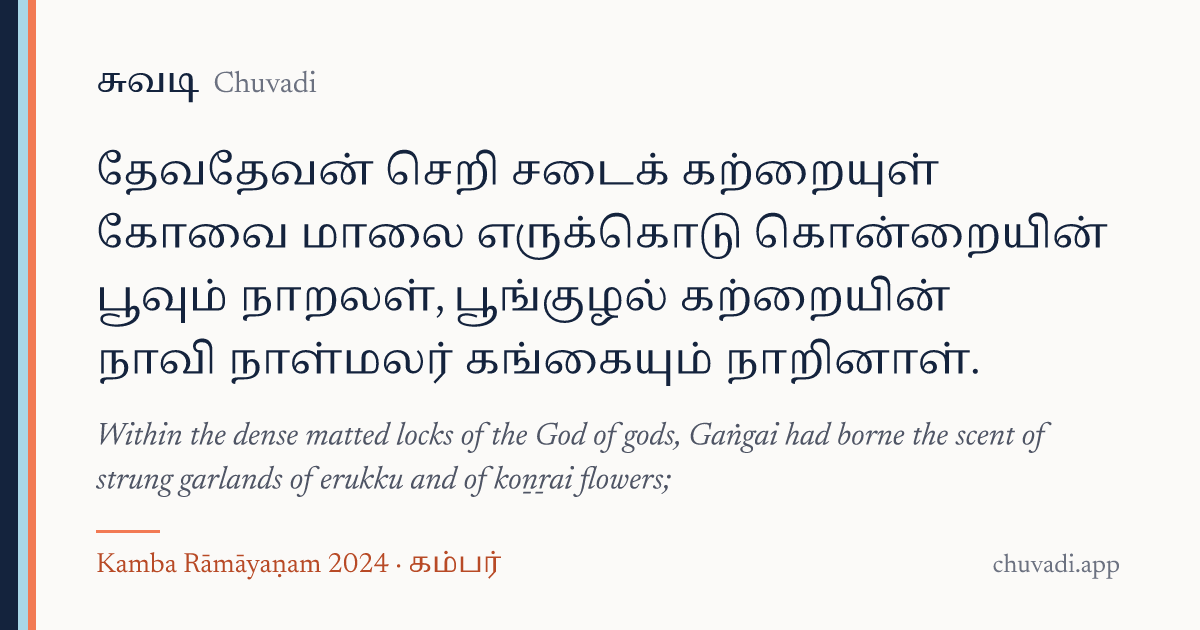
கம்பராமாயணம் 2024 · அயோத்தியா 6.21
பாடல் · The poem
Tap a word to see its gloss in the commentary and where else it occurs.
பாட வேறுபாடு · Project Madurai reads
பொருள் · Meaning in Tamil
கங்கையும் - கங்கா தேவியாகிய நதியும்; தேவ தேவன் - சிவ பிரானது; செறி சடைக் கற்றையுள் - செறிந்த சடைக் கற்றைக்குள்; (நெடுநாள் இருந்ததனால் உளதான) கோவை மாலை எருக்கொடு - எருக்கம் பூமாலைச் சரத்தோடு; கொன்றையின் பூவும் - கொன்றை மலர் மணமும்; நாறலள் - இப்பொழுது வீசப் பெறாதவளாய்; பூங்குழல் கற்றையின் - (சீதையின்) அழகமைந்த கூந்தல் தொகுதியில் உள்ள; நாவி - கத்தூரிப் புனுகு எண்ணெய் மணமும்; நாள்மலர் - அன்றலர்ந்த மலர்களின் மணமும்; நாறினாள் - வீசப் பெற்றாள்.
சிவபிரான் சடையில் நெடுநாளாக உள்ள கங்கை அங்கே உள்ள கொன்றை, எருக்கு முதலிய மலர்மணம் வீசவேண்டியிருக்க, சீதை ஆடுதலால் அது நீங்கி சீதையின் கூந்தல் நாவி, மலர் மணம் வீசப் பெற்றவளாக ஆனாள் என்பது உயர்வு நவிற்சியணி. இக் கற்பனை முன்னும் வந்தது (42).
ஆங்கிலம் · English translationAI
Translation
- Within the dense matted locks of the God of gods,
- Gaṅgai had borne the scent of strung garlands of erukku and of koṉṟai flowers;
- now she no longer smelled of them, but of the musk and the fresh flowers
- of the lady's lovely tresses.
What the poem says
Gaṅgai has long lived in the matted hair of Civaṉ, the God of gods, and so ought to smell of the erukku and koṉṟai flowers that adorn him. But after Cītai bathes in her, the river carries instead the fragrance of the musk oil and fresh flowers from Cītai's hair.
This is a deliberate poetic exaggeration, a figure the commentary notes the poet has used before.