



கம்பராமாயணம் 2029 · அயோத்தியா 6.26
பாடல் · The poem
Tap a word to see its gloss in the commentary and where else it occurs.
பொருள் · Meaning in Tamil
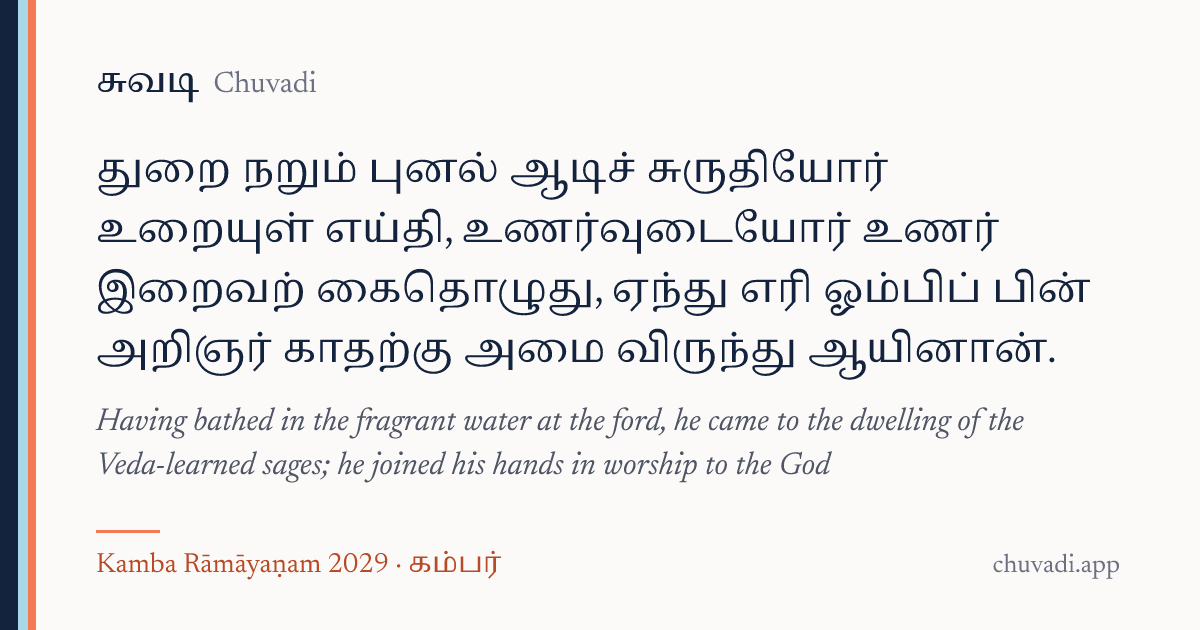
(இராமன்) துறை நறும் புனல் ஆடி - கங்கைத் துறையில் மணம் வீசும் நீரில் குளித்து; சுருதியோர் உறையுள் எய்தி - வேத முனிவரர் தவச்சாலையை அடைந்து; உணர்வுடையோர் உணர் - ஞானிகளால் உணரப்படுகின்ற; இறைவனைக் கை தொழுது - பரம்பொருளைக் கை கூப்பி வணங்கி; ஏந்து எரி ஓம்பி - உயர்ந்துள்ள யாகாக்கினியை வழிபட்டு; பின் - பிறகு; அறிஞர் - ஞானியராய முனிவரது; காதற்கு - அன்பினுக்கு; அமை விருந்து ஆயினான் - பொருந்திய விருந்தினனாக ஆனான்.
இராமனும் பரம்பொருளை வழிபட்டான் என்பது தான் எடுத்துக்கொண்ட அவதாரத்துக்கு ஏற்ப, தன்னை மனிதனாகவே கருதிப் பரம்பொருளை வழிபட்டான் என்க.
ஆங்கிலம் · English translationAI
Translation
- Having bathed in the fragrant water at the ford, he came to the dwelling
- of the Veda-learned sages; he joined his hands in worship to the God
- whom the wise perceive; he tended the rising fire; and then
- he became a guest fit for the love of those wise men.
What the poem says
After bathing in the Ganges, Irāmaṉ goes to the sages' hermitage, worships the Supreme Being, performs the fire ritual, and then sits down as the honoured guest of the sages, who receive him with great affection.
It may seem odd that Irāmaṉ, himself the Supreme Being, worships God. The commentary explains that in keeping with the human role he has taken on in this incarnation, he behaves as a man and performs a man's worship.