



கம்பராமாயணம் 2030 · அயோத்தியா 6.27
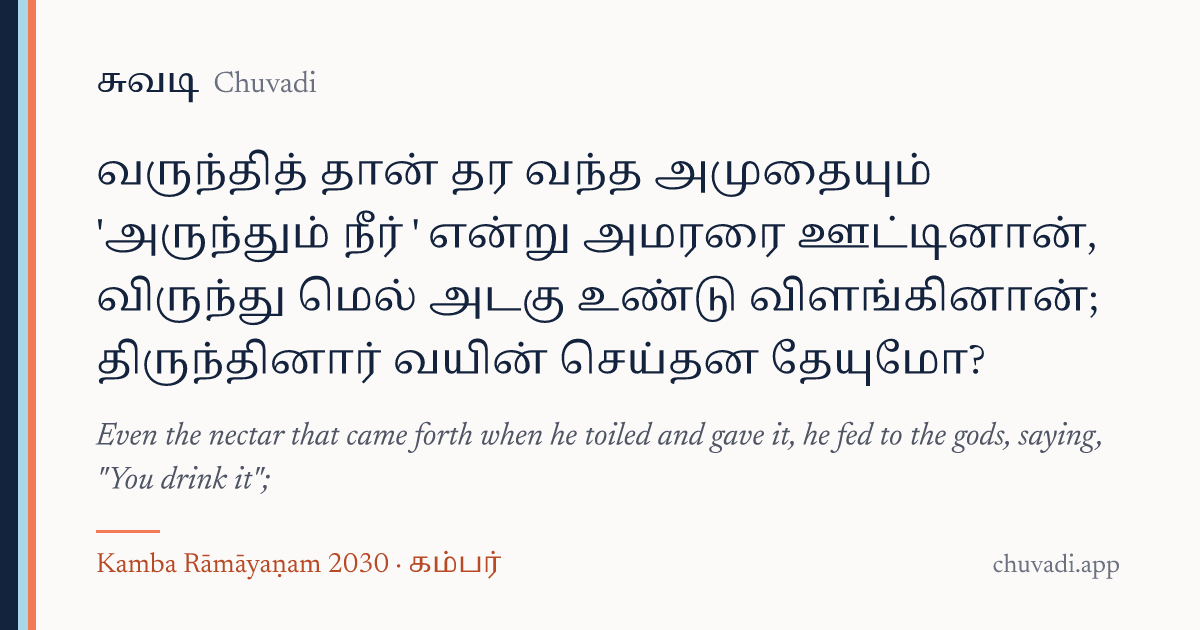
பாடல் · The poem
Tap a word to see its gloss in the commentary and where else it occurs.
பொருள் · Meaning in Tamil
வருந்தி - பாற்கடல் கடைந்து வருத்தமுற்று முயன்று; தான் தர வந்த அமுதத்தையும் - தான் கொடுக்க வந்த அமுதத்தையும்; அமரரை - தேவர்களை; “நீர் அருந்தும் - நீங்கள் உண்ணுங்கள்” என்று; ஊட்டினான் - (தான் உண்ணாது அவர்களை) உண்பித்தவனாகிய இராமன்; விருந்து - முனிவர் இட்ட விருந்தாக; மெல் அடகு - மென்மையான கீரையை; உண்டு விளங்கினான் - உண்டான்; திருந்தினார் வயின் செய்தன தேயுமோ - மனம் செம்மைப்பட்டவர்களிடத்துச் செய்த செயல்கள் உயர்வு தாழ்வு பற்றிக் குறைபடுமோ? (படாது என்றபடி).
தேவர் அமுதத்தையும் உண்ணாது தேவர்களை உண்பித்த இராமன், முனிவர்கள் இட்ட கீரை உணவை விரும்பி உண்டது எவ்வாறு என்பதை இறுதி அடி விளக்குகிறது. மனம் செம்மைப்பட்டவர்கள் பொருளின் உயர்வு தாழ்வு கருத மாட்டார்கள். பொருளைக் கொடுத்தவர்களின் அன்பையே கருதி உயர்வாக ஏற்றுக்கொள்வார்கள். இராமன் முனிவர்களின் அன்பைக் கருதி அவர்கள் கொடுத்த கீரை உணவை அமுதிலும் சிறந்ததாக ஏற்றுக்கொண்டார். வேற்றுப் பொருள்வைப்பணி.
ஆங்கிலம் · English translationAI
Translation
- Even the nectar that came forth when he toiled and gave it,
- he fed to the gods, saying, "You drink it";
- yet he ate the tender greens of the feast and was glad;
- can what is done for the upright ever be lessened?
What the poem says
As Viṣṇu, Irāmaṉ once laboured to churn the ocean of milk and then gave away the nectar of immortality to the gods without tasting it himself. Now he gladly eats a simple meal of cooked forest greens offered by the sages.
The last line explains why: for those whose minds are pure, the worth of a gift lies in the love of the giver, not in its cost, so the humble greens are better to him than nectar. The line states a general truth to support the particular case, a figure Tamil poetics calls corroboration by another matter.