



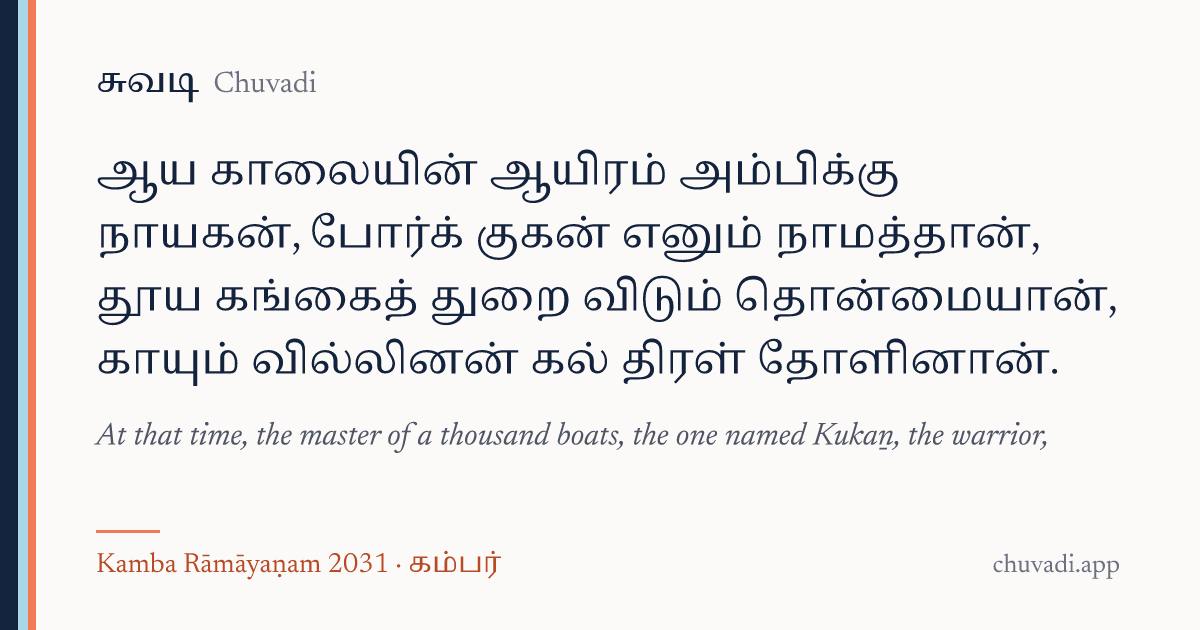
கம்பராமாயணம் 2031 · அயோத்தியா 6.28
பாடல் · The poem
Tap a word to see its gloss in the commentary and where else it occurs.
பொருள் · Meaning in Tamil
ஆய காலையின் - அந்த நேரத்தில்; ஆயிரம் அம்பிக்கு நாயகன் - ஆயிரம் நாவாய்களுக்குத் தலைவனும், தூய கங்கைத் துறை விடும் தொன்மையான் - தூய்மையான கங்கைக் கரையில் நெடுங்காலமாகப் படகு விடும் தன்மை உடையவனும்; காயும் வில்லினன் - பகைவரைச் சீறி அழிக்கும் வில்லுடையவனும்; கல் திரள் தோளினான் - மலை போல் திரண்ட தோளை உடையவனும் ஆகிய; போர் - போர்த் தொழிலில் வல்ல; குகன் எனும் நாமத்தான் - குகன் என்ற பெயரை உடையவன்.
குளகச் செய்யுள். “இருந்த வள்ளலைக் காண வந்து எய்தினான்” (1961) என்னும் செய்யுள் அடியிற் சென்று முடியும். இனி வரும் செய்யுள்களில் குகனைப் பற்றிய அறிமுகத்தைத் தொடர்கிறார் கவிஞர்.
ஆங்கிலம் · English translationAI
Translation
- At that time, the master of a thousand boats,
- the one named Kukaṉ, the warrior,
- who had of old plied the ferry at the holy Gaṅgai's ford,
- with a fierce bow and shoulders like massed rock,
What the poem says
This verse begins the episode of Kukaṉ, chief of the hunters and boatmen who live along the Ganges. He commands a thousand boats, has long run the ferry across the holy river, and is a mighty archer with shoulders like boulders.
The sentence is left open here. The poet now devotes a series of verses to describing Kukaṉ, and the sentence is completed only several verses later, when Kukaṉ comes to see Irāmaṉ.