



கம்பராமாயணம் 2033 · அயோத்தியா 6.30
பாடல் · The poem
Tap a word to see its gloss in the commentary and where else it occurs.
பாட வேறுபாடு · Project Madurai reads
பொருள் · Meaning in Tamil
கொம்பு - ஊது கொம்பு; துத்தரி - துத்தரி என்னும் பறை; கோடு - சங்கு; அதிர்பேரிகை - ஒலிக்கின்ற பெருமுரசு; பம்பை - இருதலைப் பறை முதலிய; பம்பு படையினன் - வாத்தியங்கள் நிரம்பிய சேனையை உடையவன்; பல்லவத்து அம்பன் - தளிர் போலச் சிவந்த நிறம் படைத்த அம்பினை உடையவன்; அம்பிக்கு நாதன் - நாவாய்களுக்குத் தலைவன்; அழிகவுள் தும்பி ஈட்டம் புரை கிளை சுற்றத்தான் - மதநீர் பெருகுகின்ற யானைத் தொகுதியை ஒத்த உறவினர்களால் சுற்றப்பட்டவன்.
கொம்பு முதலியன வேடரின் வாத்திய விசேடம். பல்லவம் என்பதே அம்பு என்னும் பொருள் உடையது ஆதலின் பல்லவமாகிய அம்பு எனலும் ஆம். 'கூர்ப்புறு பல்லவம் கொண்ட தூணி' என்பது கந்தபுராணம். “ஆயிரம் அம்பிக்கு நாயகன்” (1953.) என்றவர் மீண்டும் அம்பிக்கு நாதன் என்றது இராமபிரானுக்குக் குகன் உதவும் தன்மையில் அம்பி சிறப்பிடம் பெறுதலின் பலவிடங்களிலும் கூறுவர்.
ஆங்கிலம் · English translationAI
Translation
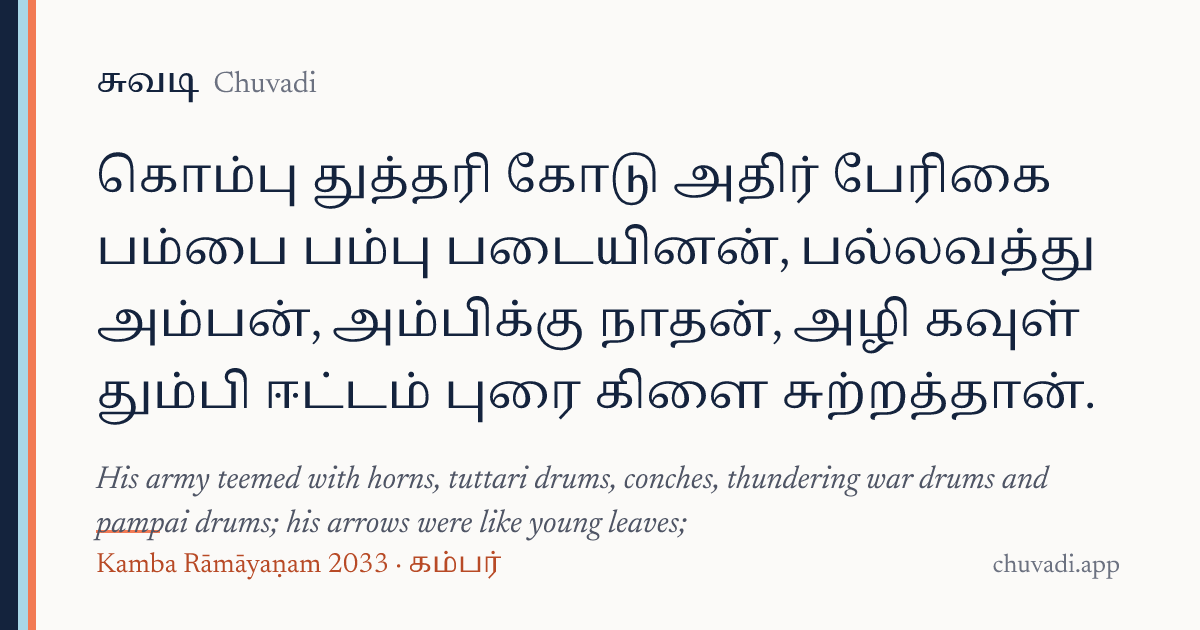
- His army teemed with horns, tuttari drums, conches, thundering war drums
- and pampai drums; his arrows were like young leaves;
- he was lord of the boats; he was surrounded by a band of kinsmen
- like a herd of elephants with musth streaming down their cheeks.
What the poem says
Kukaṉ's company is loud with the instruments of the hill and forest peoples: blowing horns, several kinds of drum, and conch shells. His arrows are red like tender young leaves, or, taking another meaning of the word, are themselves the kind of arrow called pallavam.
He is again called lord of the boats, since his boats will soon matter to Irāmaṉ. His kinsmen around him are as powerful and fierce as a herd of elephants in rut.