



கம்பராமாயணம் 2039 · அயோத்தியா 6.36
பாடல் · The poem
Tap a word to see its gloss in the commentary and where else it occurs.
பொருள் · Meaning in Tamil
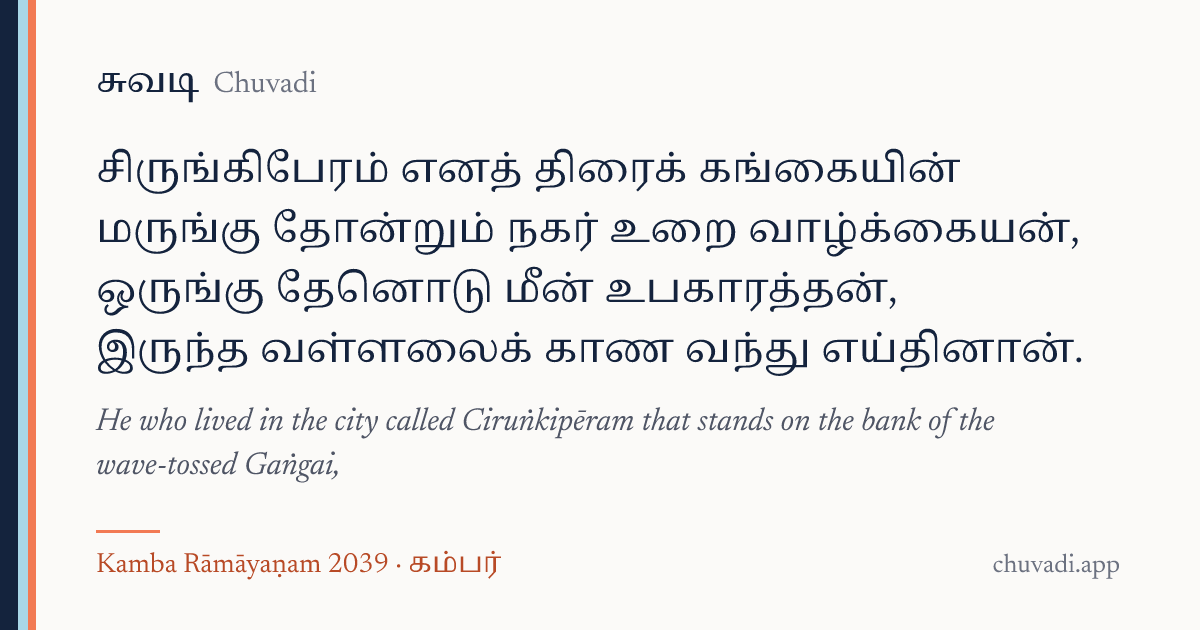
சிருங்கி பேரம் என - சிருங்கி பேரம் எனப் பெயர் பெற்று; திரைக் கங்கையின் - அலை வீசும் கங்கை யாற்றின்; மருங்கு தோன்றும் நகர் - பக்கத்தில் தோன்றுகின்ற நகரிலே; உறை வாழ்க்கையன் - தங்கி வாழ்கின்ற வாழ்க்கையை உடையவன் ஆகிய அவன்; இருந்த வள்ளலை - (முனிவர் தவச்சாலையில்) தங்கியிருந்த இராமபிரானை; காண - காண்பதற்கு; ஒருங்கு தேனொடு மீன் உபகாரத்தன் - ஒரு சேரத் தேனும் மீனும் என்ற கையுறைப் பொருளை ஏந்தியவனாய், வந்து எய்தினான் - வந்து சேர்ந்தான்.
சிருங்கி பேர நகர் அரசன் குகன், அயோத்தி அரசனாகிய இராமனைக் கையுறைப் பொருளாகத் தேனும் மீனும் கொண்டு காண வந்தான். “குகன் எனும் நாமத்தன்” (1053.) என்பது முதல் இதுவரை குகனது தன்மையும் வடிவும் கூறி, அவன் இராமனைக் காண வந்தான் என முடித்தார்.
ஆங்கிலம் · English translationAI
Translation
- He who lived in the city called Ciruṅkipēram
- that stands on the bank of the wave-tossed Gaṅgai,
- bearing gifts of honey and fish together,
- came to see the generous one who was staying there.
What the poem says
This verse completes the long sentence that began several verses earlier with Kukaṉ's name. Kukaṉ, ruler of Ciruṅkipēram (Śṛṅgaverapura), a town on the bank of the Ganges, comes to visit Irāmaṉ at the sages' hermitage.
As is proper when visiting a king, he brings a gift, and it is what a hunter and fisherman has to offer: honey and fish.