



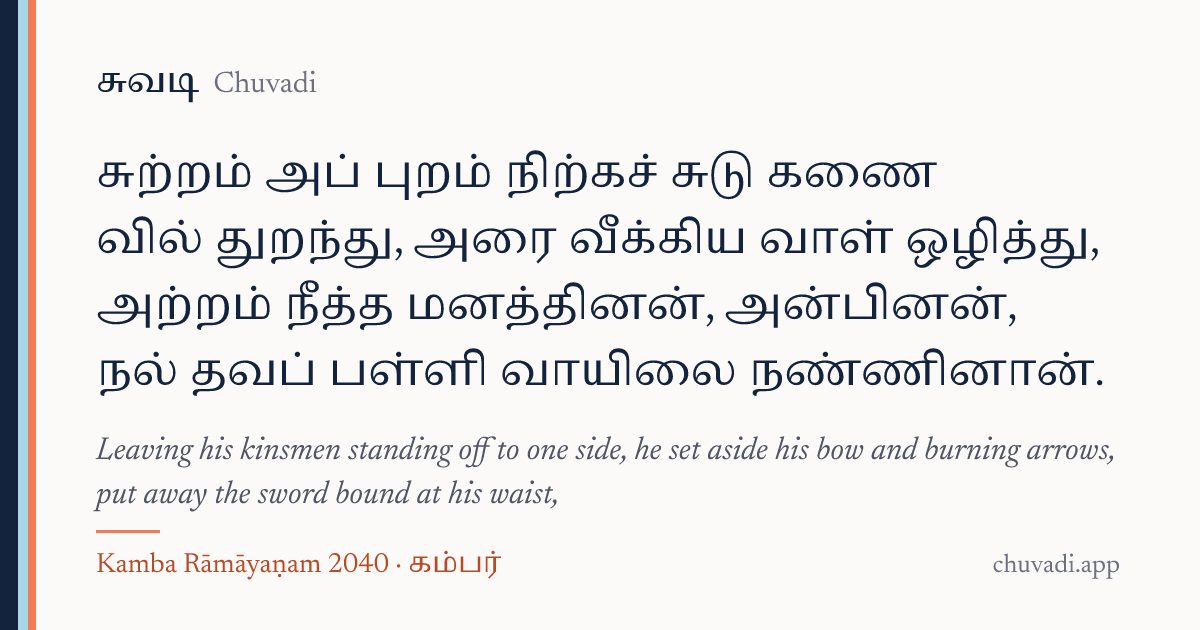
கம்பராமாயணம் 2040 · அயோத்தியா 6.37
பாடல் · The poem
Tap a word to see its gloss in the commentary and where else it occurs.
பொருள் · Meaning in Tamil
சுற்றம் அப்புறம் நிற்க - உடன் வந்த வேட்டுவச் சுற்றம் வேறொரு பக்கத்தில் ஒதுங்கிநிற்க, சுடு கணை வில் துறந்து - பகைவரை அழிக்கும் அம்பையும் வில்லையும் விலக்கி வைத்து; அரை வீக்கிய வாள் ஒழித்து - இடைக்கச்சில் கட்டப்பெற்ற வாளையும் நீக்கி; அற்றம் நீத்த மனத்தினன் - பொய்யற்ற தூய மனம் உடையவனாய்; அன்பினன் - இராமன்பால் கொண்ட சிறந்த பக்தி உடையவனாய்; நல் தவப் பள்ளி வாயிலை நண்ணினான் - நல்ல தவச்சாலையின் வாயிலை அடைந்தான்.
முனிவர் வாழும் இடத்துக்கு அருகில் உள்ளவன் ஆதலின், குகன் முனிவரது தவச்சாலையை அணுகும்போது எவ்வாறு அணுகல் வேண்டும் என்பது அறிந்தவன். அன்றியும் இராமபக்தியுடன் செல்கின்றவன் வேட்டைக்குச் செல்வான் போல வில், அம்பு, வாள் ஆகியவற்றுடனும், சேனையுடனும் செல்லல் ஆகாதன்றோ? ஆதலின், அவற்றையெல்லாம் ஒழித்து அடக்க ஒடுக்கத்துடன் சென்றான் என்றார்.
ஆங்கிலம் · English translationAI
Translation
- Leaving his kinsmen standing off to one side, he set aside his bow
- and burning arrows, put away the sword bound at his waist,
- and with a mind free of all falsehood, full of love,
- he came to the gate of the good hermitage of penance.
What the poem says
Kukaṉ knows how to approach a sages' hermitage, since he lives close to them. He leaves his followers at a distance and lays down his bow, arrows and sword, approaching humbly and with a pure heart.
One who comes in devotion to Irāmaṉ should not arrive as if going on a hunt, armed and with a crowd, so he puts all of that aside.