



கம்பராமாயணம் 2041 · அயோத்தியா 6.38
பாடல் · The poem
Tap a word to see its gloss in the commentary and where else it occurs.
பொருள் · Meaning in Tamil
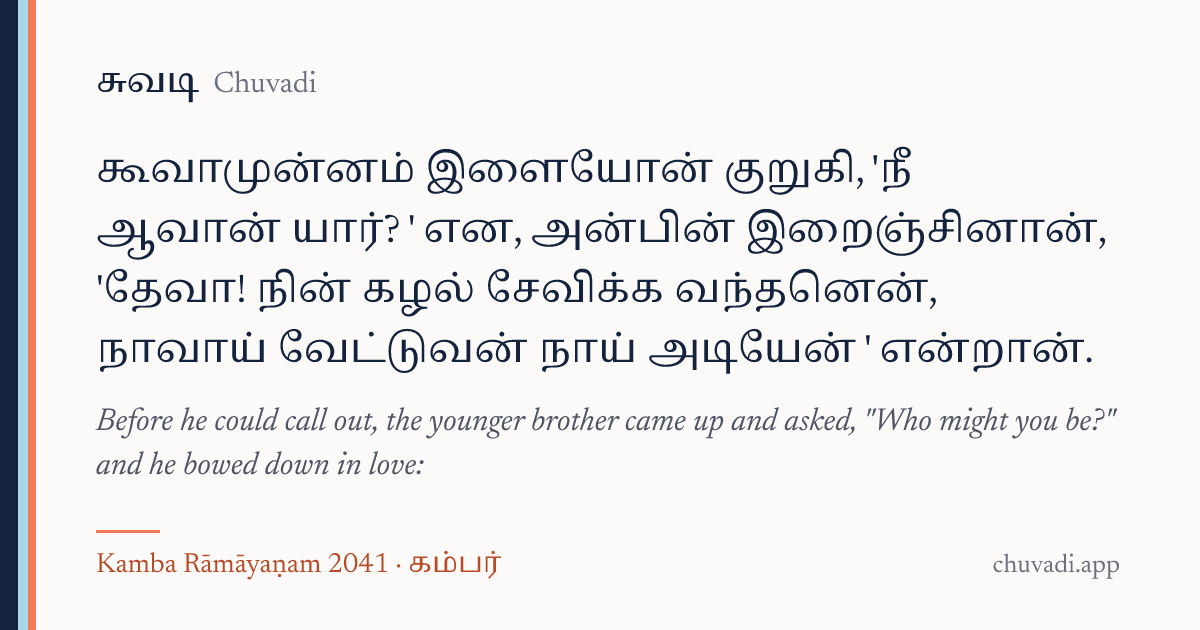
கூவா முன்னம் - குகன் அழைப்பதற்கு முன்னமே; இளையோன் குறுகி - இலக்குவன் அவனைச் சென்றடைந்து; “நீ ஆவான் யார்” என - நீ யார்? என்று வினாவ; அன்பின் இறைஞ்சினான் - அன்போடு குகன் அந்த இலக்குவனை வணங்கினான்; (முன் அறியாதவன் ஆதலின் அவனையே இராமனாகக் கருதி) “தேவா! - அரசனாகிய தெய்வமே!; நாய் அடியேன் - நாய் போலக் கீழான அடிமையாகிய; நாவாய் வேட்டுவன் - கங்கையைக் கடக்க ஓடங்களை உடைய வேட்டுவச் சாதியினனாகிய குகனாவேன்; நின் கழல் சேவிக்க வந்தனன் - உனது திருவடிகளை வணங்கும் பொருட்டு வந்தேன்;” என்றான்.
குகன் அழைப்பதற்கும் இலக்குவன் அங்கே வருதற்கும் இடையே கால இடைவெளியின்மையை அறிவிக்கக் “கூவா முன்னம்” என்றார். இராமனைச் சேவிக்க வந்த குகன் இலக்குவனையே இராமனாக நினைத்துத் “தேவா! நின் கழல் சேவிக்க வந்தனன்” என்பது குழந்தைத் தன்மையான மாசற்ற குகனது அன்பின் பொலிவை எடுத்துக் காட்டும்.
ஆங்கிலம் · English translationAI
Translation
- Before he could call out, the younger brother came up and asked, "Who
- might you be?" and he bowed down in love:
- "Lord! I have come to worship at your feet,
- I, a hunter with boats, your servant, lowly as a dog," he said.
What the poem says
Before Kukaṉ can even call out, Ilakkuvaṉ appears and asks who he is. Kukaṉ, who has never seen Irāmaṉ, takes Ilakkuvaṉ for him and bows, saying he has come to worship at his feet and calling himself the lowliest of servants.
The mistake shows the childlike innocence of Kukaṉ's love. The words before he could call out stress how quickly Ilakkuvaṉ, ever watchful, appeared.