



கம்பராமாயணம் 2043 · அயோத்தியா 6.40
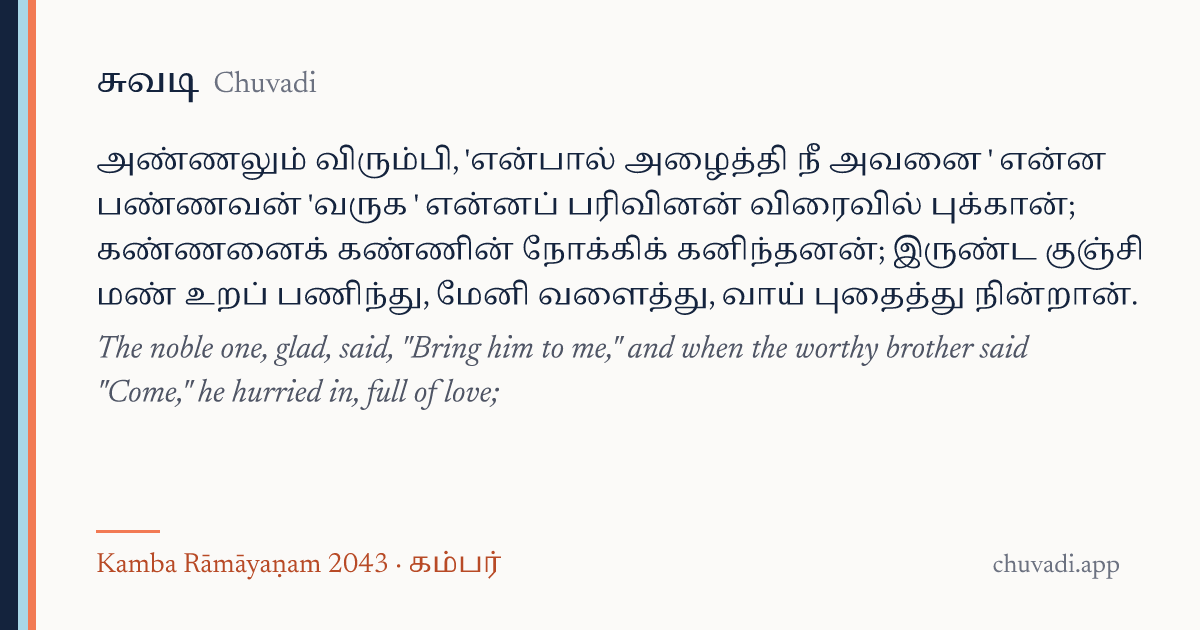
பாடல் · The poem
Tap a word to see its gloss in the commentary and where else it occurs.
பாட வேறுபாடு · Project Madurai reads
பொருள் · Meaning in Tamil
அண்ணலும் - இராமனும்; விரும்பி - குகனை மனத்தால் விரும்பி; “நீ அவனை என்பால் அழைத்தி” என்ன - இலக்குவா! நீ அக்குகனை என்னிடம் அழைத்து வருக என்று சொல்ல; பண்ணவன் - பண்பிற் சிறந்த இலக்குவன்; “வருக” என்ன - (குகனே) வருக என்று அழைக்க; பரிவினன் - (அக்குகனும்) மனத்தில் அன்பு மிக்கவனாய்; விரைவில் புக்கான் - வேகமாக உள்ளே புகுந்து; கண்ணனை - கண்ணழகுடைய இராமனை; கண்ணின் நோக்கிக் களித்தனன் - தன் கண்களால் பார்த்து மகிழ்ச்சி அடைந்து; இருண்ட குஞ்சி - இருள் நிறமான தலைமுடி; மண் உறப் பணிந்து - பூமியில் விழுமாறு விழுந்து வணங்கி, மேனி வளைத்து - உடம்பைக் குறுக்கிக் கொண்டு; வாய் புதைத்து - வாயினைக் கைகளால் மூடிக் கொண்டு; நின்றான்.
பெரியோரைத் தரிசிப்பார் அடக்க ஒடுக்கமாக நிற்கும் முறையில் இராமனாகிய தெய்வத்தின் முன்னிலையில் குகன் நின்றமை அறியத் தக்கது. “அடக்கம் என்பது அடங்கி ஒழுகும் ஒழுக்கம். அது பணிந்த மொழியும் தணிந்த நடையும் தானை மடக்கலும் வாய்புதைத்தலும் முதலாயின” என்னும் பேராசிரியர் உரை இங்கு அறியத் தக்கது (தொல். பொருள். மெய்ப். 12). பண்ணவன் - வலிமை உடையவன் எனலும் ஆம்.
ஆங்கிலம் · English translationAI
Translation
- The noble one, glad, said, "Bring him to me,"
- and when the worthy brother said "Come," he hurried in, full of love;
- he looked with his eyes on the lotus-eyed one and melted; he bowed
- till his dark hair touched the ground, then stood, body bent, hand over his mouth.
What the poem says
Irāmaṉ, pleased, asks for Kukaṉ to be brought in. Kukaṉ rushes in, gazes at Irāmaṉ and is overcome with love. He prostrates himself so that his dark hair touches the earth, then stands with his body bowed and his hand covering his mouth.
These are the classical gestures of humility before a superior: the commentary quotes a gloss on the Tolkāppiyam listing humble speech, a quiet gait, gathering in one's garment and covering the mouth as signs of modest conduct.