



கம்பராமாயணம் 2046 · அயோத்தியா 6.43
பாடல் · The poem
Tap a word to see its gloss in the commentary and where else it occurs.
பொருள் · Meaning in Tamil
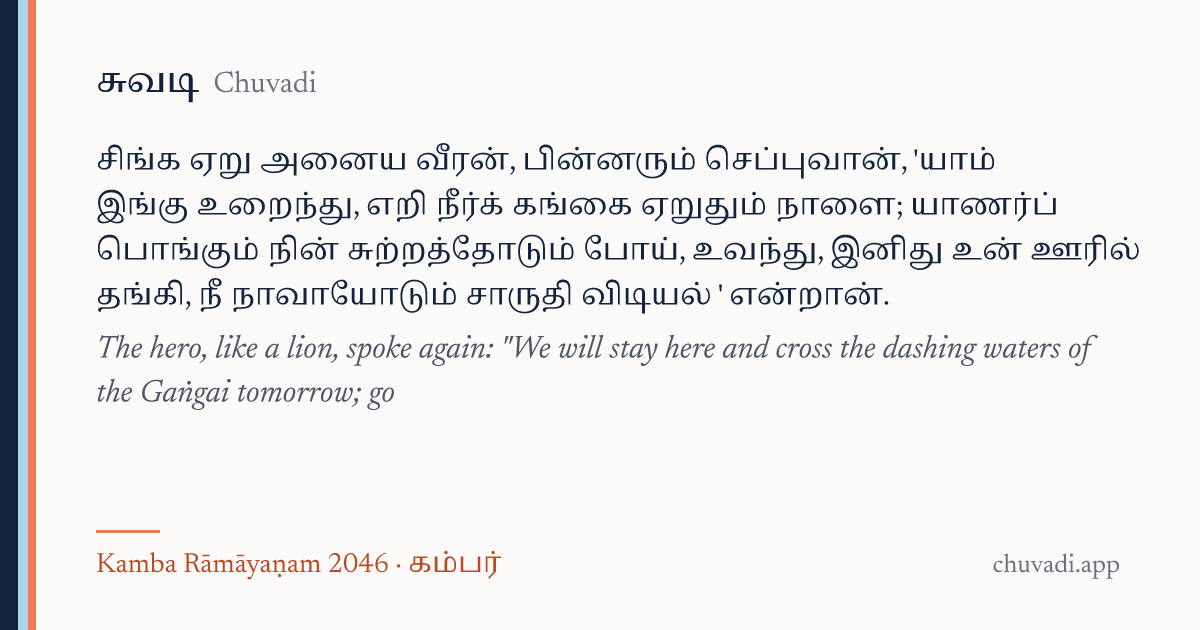
சிங்க ஏறு அனைய வீரன் பின்னரும் செப்புவான் - ஆண்சிங்கத்தை ஒத்த இராமன் மேலும் கூறுவான்; “யாம் இங்கு உறைந்து நாளை எறி நீர்க் கங்கை ஏறுதும் - நாங்கள் இத்தவச்சாலையில் தங்கியிருந்து நாளைக்கு அலைவீசும் கங்கையாற்றைக் கடந்து செல்ல எண்ணியுள்ளோம் (ஆதலின்); நீ -; யாணர்ப் பொங்கும் நின் சுற்றத்தோடும் போய் - புதுமை நிரம்பிய உன் உறவினர்களோடும் சென்று; உன் ஊரில் உவந்து இனிது தங்கி - உன்னுடைய நகரத்திலே மன மகிழ்ச்சியோடு இனிமையாகத் தங்கியிருந்து; விடியல் - நாளைவிடியலில், நாவாயோடும் சாருதி” - மரக்கலங்களோடும் வருவாயாக, என்றான்.
குகனைத் தொடர்ந்து புதிய புதிய உறவினர்கள் மேலும் மேலும் வந்த வண்ணம் இருத்தலின், 'யாணர்ப் பொங்கும் நின் சுற்றம்' என்றான். புதியராய் வந்தாரைக் காணப் பலரும் வருதல் உலகியல்பு.
ஆங்கிலம் · English translationAI
Translation
- The hero, like a lion, spoke again: "We
- will stay here and cross the dashing waters of the Gaṅgai tomorrow; go
- with your kinsmen, whose numbers keep swelling, and stay gladly and at ease
- in your own town, and come to us at daybreak with your boats."
What the poem says
Irāmaṉ tells Kukaṉ that the three of them will spend the night in the hermitage and cross the Ganges in the morning. He asks Kukaṉ to go home with his people, rest comfortably, and come back at dawn with his boats.
Kukaṉ's following is described as ever swelling, because more and more of his kin kept arriving, curious to see the newcomers, as people always do.