



கம்பராமாயணம் 2049 · அயோத்தியா 6.46
பாடல் · The poem
Tap a word to see its gloss in the commentary and where else it occurs.
பொருள் · Meaning in Tamil
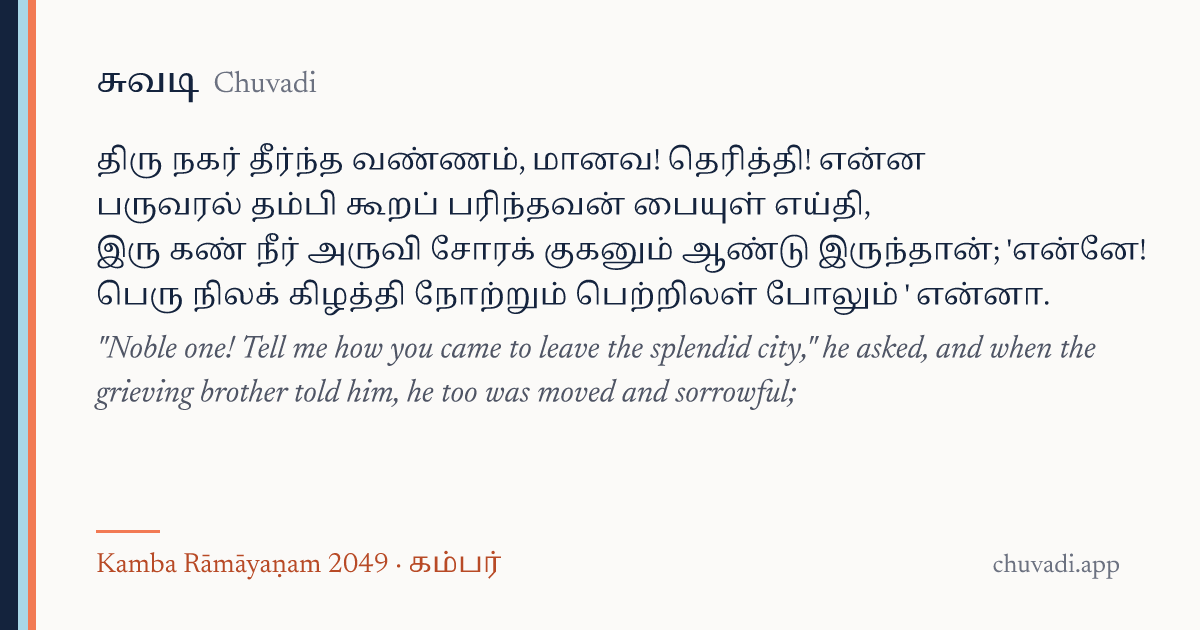
“மானவ - பெருமை படைத்தவனே!; திரு நகர் தீர்ந்த வண்ணம் தெரித்தி” என்ன - அயோத்தி நகரை விட்டு நீங்கி வனம் புகுந்த காரணத்தை விளக்கக் கூறுக என்று குகன் கேட்க; பருவரல் தம்பி கூற - துன்பத்தை உடைய இலக்குவன் எடுத்துச் சொல்ல; குகனும் பரிந்தவன் பையுள் எய்தி - குகனும் இரங்கியவனாய்த் துன்பமுற்று; இரு கண் நீர் அருவி சோர - இரண்டு கண்களிலிருந்து நீர் அருவிபோலக் கீழே விழ; “என்னே! பெருநிலக்கிழத்தி நோற்றும் - ஐயகோ! பெருநிலமகள் இராமனால் ஆளப்படுதற்கும் தவம் செய்திருந்தும்; பெற்றிலள் போலும் - அந்தப் பாக்கியத்தைப் பெற்றாளில்லையே; என்ன - என்று சொல்லி; ஆண்டு இருந்தான் - அத்தவச் சாலைக்குப் புறம்பே தங்கியிருந்தான்.
என்னே! என்பது இரக்கக் குறிப்பு; பூமிதேவிக்கு நேர்ந்த பாக்கியம் இழப்பு என்ற இரண்டையும் ஒருசேர எண்ணியதனால் ஏற்பட்டது. தசரத குமாரனாகியதால் இராமனால் ஆளும் பாக்கியம் பெற்ற பூதேவி, அதனை வரத்தால் இழந்தபடியை நினைத்து இரங்கினான் குகன். இராமனைக் கேட்கும் இடங்களில் எல்லாம் இலக்குவன் பதில் உரைப்பது அறியத் தக்கது. இராமனே அதனை விரிவாகக் கூறல் நாகரிகம் ஆகாமை அறிக.
ஆங்கிலம் · English translationAI
Translation
- "Noble one! Tell me how you came to leave the splendid city," he asked,
- and when the grieving brother told him, he too was moved and sorrowful;
- with streams of tears pouring from both eyes, Kukaṉ stayed there, saying, "Alas!
- It seems the great lady Earth, though she did penance, has not won him."
What the poem says
Kukaṉ asks how Irāmaṉ came to leave Ayōttī, and Ilakkuvaṉ, himself grief-stricken, tells him the story. It would not be fitting for Irāmaṉ to recount at length a tale that blames his own family, so here as elsewhere his brother answers for him.
Kukaṉ weeps and laments that the goddess Earth, who had earned by her austerities the good fortune of being ruled by Irāmaṉ, has lost it through Kaikēyi's boon.