



கம்பராமாயணம் 2056 · அயோத்தியா 6.53
பாடல் · The poem
Tap a word to see its gloss in the commentary and where else it occurs.
பொருள் · Meaning in Tamil
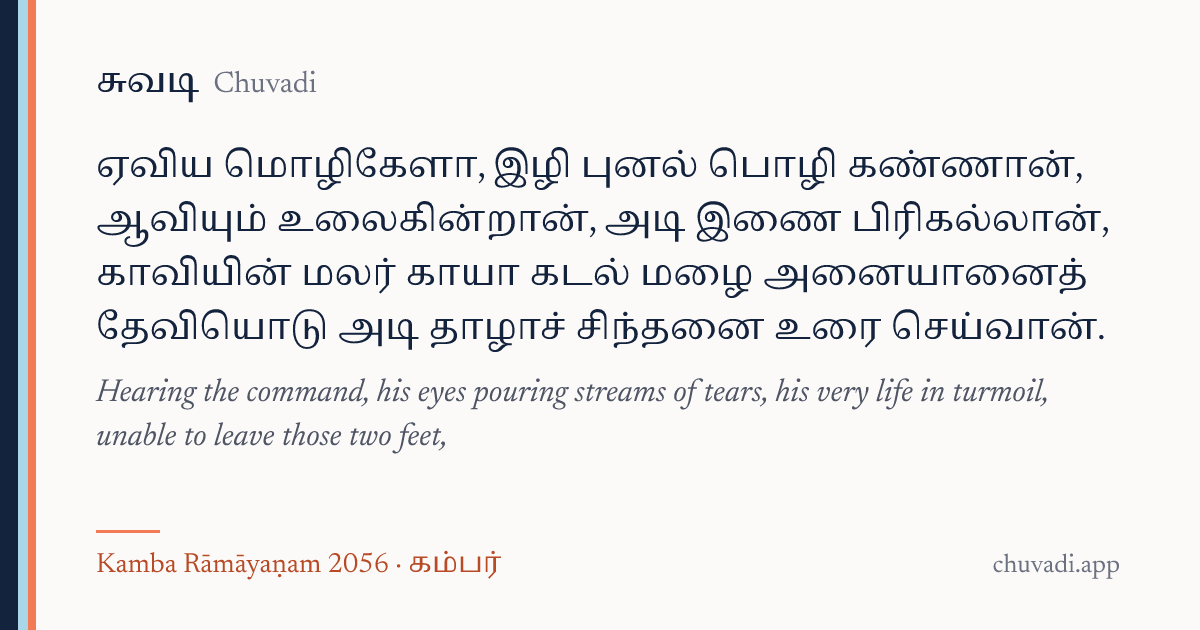
ஏவிய மொழி கேளா - இராமன் நாவாய் கொணரும்படி கட்டளையிட்ட வார்த்தையைக் கேட்டு (எங்கே இராமன் தன்னைப் பிரிந்து சென்றுவிடுவானோ என்னும் ஏக்கறவால்); இழிபுனல் பொழி கண்ணான் - இறங்குகின்ற நீர் இடையறாது சொரிகின்ற கண்ணனாய்; ஆவியும் உலைகின்றான் - உயிர் துடிக்கப் பெறுபவனாய்; அடி இணை பிரிகல்லான் - இராமனது திருவடிகளை விட்டுப் பிரிய மாட்டாதவனாய்; காவியின் மலர் காயா, கடல், மழை அனையானை - நீலோற்பல மலர் பூவைப் பூ கடல், மேகம் இவற்றை ஒத்த கருநீல நிறம் படைத்த இராமனை; தேவியொடு அடி தாழா - சீதையோடு சேர்த்து அடியில் வீழ்ந்து வணங்கி, சிந்தனை - தன் எண்ணத்தை; உரை செய்வான் - கூறத் தொடங்கினான்.
அன்பு மீக்கூர்ந்த அவலத்தின் மெய்ப்பாடுகள் புனல்பொழிகண், உலையும் ஆவி என்பன. இராமனுடைய நிறத்துக்கு நான்கும் உவமை. இங்ஙனம் பல உவமைகளை ஒருசேரக் கூறி இராமனது பேரழகினை அனுபவித்தல் கம்பர் இயல்பு; எடுத்துக்காட்டு: 1926.
ஆங்கிலம் · English translationAI
Translation
- Hearing the command, his eyes pouring streams of tears,
- his very life in turmoil, unable to leave those two feet,
- bowing at the feet of him who was like the blue lily, the kāyā flower, the sea and the rain cloud,
- and of his queen, he began to speak what was in his mind.
What the poem says
Kukaṉ realises that once he brings the boats Irāmaṉ will leave him. Weeping, shaken to the core and unable to tear himself away, he falls at the feet of Irāmaṉ and Cītai and speaks his heart.
Irāmaṉ's dark complexion is again given four comparisons at once: the blue water lily, the dark kāyā blossom, the sea and the rain cloud. Piling up similes to savour Irāmaṉ's beauty is a habit of the poet's.