



கம்பராமாயணம் 2057 · அயோத்தியா 6.54
பாடல் · The poem
Tap a word to see its gloss in the commentary and where else it occurs.
பொருள் · Meaning in Tamil
“கொய்ம் முறை உறு தாராய்! - கத்திரிகையால் ஒழுங்குசெய்யப் பெற்றுப் பொருந்திய மாலையை அணிந்தவனே! பொய்ம் முறை இலரால் - எம் மக்கள் வஞ்சகம் அறியாதவர்கள்; எம் புகலிடம் வனமேயால் - எங்களுடைய இருப்பிடம் இக்காடே ஆகும்; குறைவிலெம் - எவற்றாலும் குறையுடையோமில்லை; வலியேமால் - (பகைவரை அழிக்கும்) வலிமையும் உடையேம்; செய்ம் முறை குற்றேவல் செய்குதும் - செய்ய வேண்டிய முறைப்படி உனக்கு வேண்டிய சிறு தொண்டுகளைச் செய்வோம்; அடியோமை - உன் தொண்டர்களாகிய எங்களை; இம் முறை உறவு என்னா - இந்த முறையான உறவினர்கள் என்று கருதி; எம் ஊர் - எங்களுடைய ஊரிலே; நெடிது - நீண்ட காலம்; இனிது இரு” - இனிமையாக இருப்பாயாக.
உள்ளொன்று புறம் ஒன்று அற்றவர் வேடுவர் என்பதனைப் “பொய்ம் முறை இலர்” என்று கூறினான். காட்டில் உள்ளவர்கள் ஆதலின் உணவு கிடைக்கும் இடம், பாதுகாப்பான இடம், நீர்நிலைகளுக்குரிய வழிகள் அனைத்தும் எங்களுக்குப் பழக்கம் ஆதலின் உனக்கு அடிமை செய்ய வசதியாகும் என்று நினைப்பித்தான். எங்களையும் உனது உறவு முறையாகக் கருதி எம் ஊரில் தங்க வேண்டும் என வேண்டினான் குகன். 'ஆல்' உரையசை.
ஆங்கிலம் · English translationAI
Translation
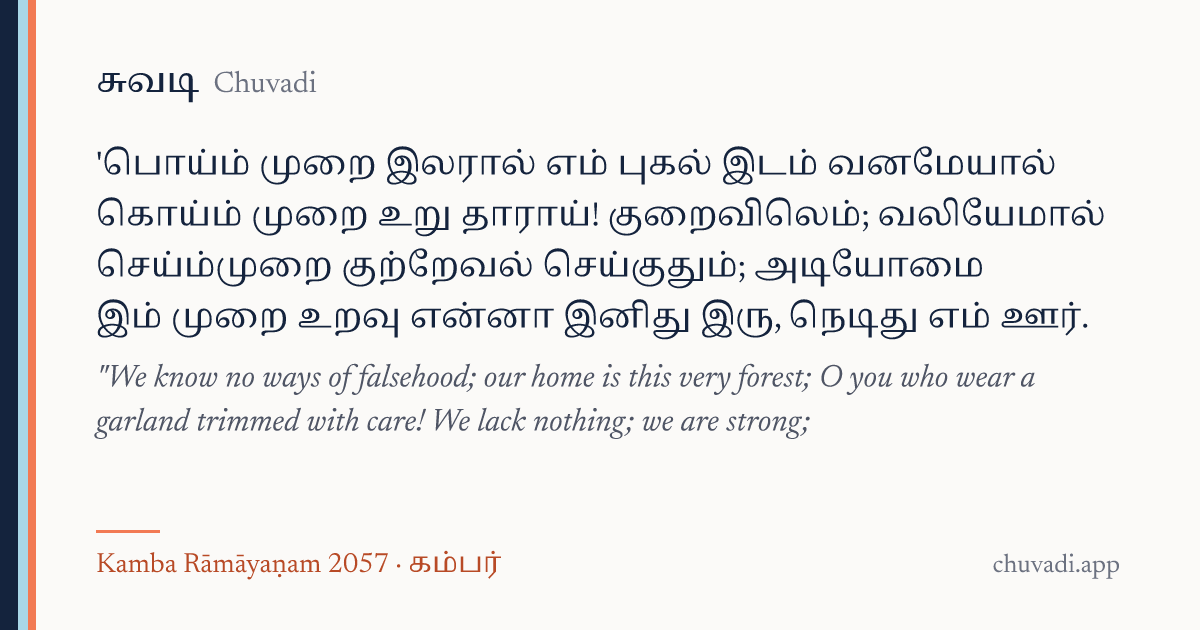
- "We know no ways of falsehood; our home is this very forest;
- O you who wear a garland trimmed with care! We lack nothing; we are strong;
- we will do you every small service as it should be done; think of us, your servants,
- as kin in this way, and stay long and happily in our town."
What the poem says
Kukaṉ pleads with Irāmaṉ to stay with his people instead of going further. His hunters are honest folk without deceit; the forest is their home and they know where to find food, shelter and water; they want for nothing and are strong enough to protect him.
They would serve him in every small task. He asks Irāmaṉ to accept them as his own kin and live in their town for a long time.